Gator
Worked directly with a founder to design a multimodal AI support app for HVAC technicians — concept to MVP in 6 weeks, shipped with zero changes.
Client
Gator (Startup)
Role
Sole Product Designer
Duration
6 Weeks
Platform
iOS Native
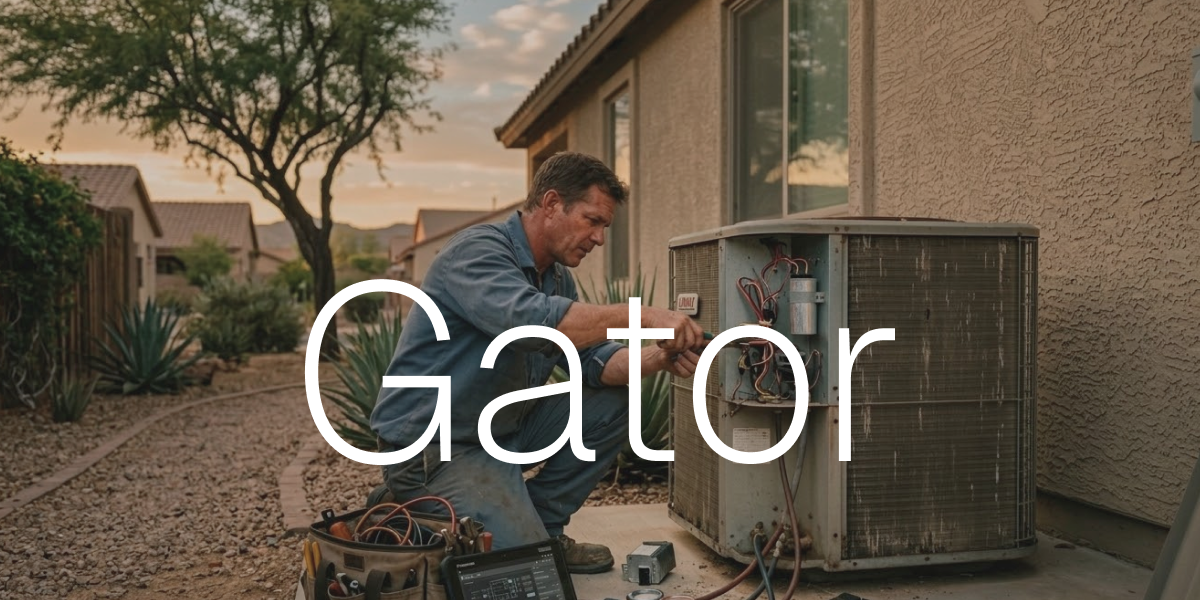
A technician is standing in front of a broken air conditioner. They need an answer in 30 seconds, not 30 minutes.
I worked directly with Gator's founder as the sole product designer, taking the product from concept to a complete MVP in six weeks. I ran 1:1 discovery sessions with him to understand the problem space, created a storyboard narrative of the happy path, and designed the full end-to-end flow for his first product vision.
HVAC technicians work alone, often in unfamiliar buildings, diagnosing equipment they may have never seen before. When they get stuck, the current options are bad: call a senior tech (who might not answer), dig through a 400-page PDF manual on a phone screen, or guess and risk making it worse. Gator reimagines field support as a conversation — point your phone at the unit, scan the barcode, and start talking.
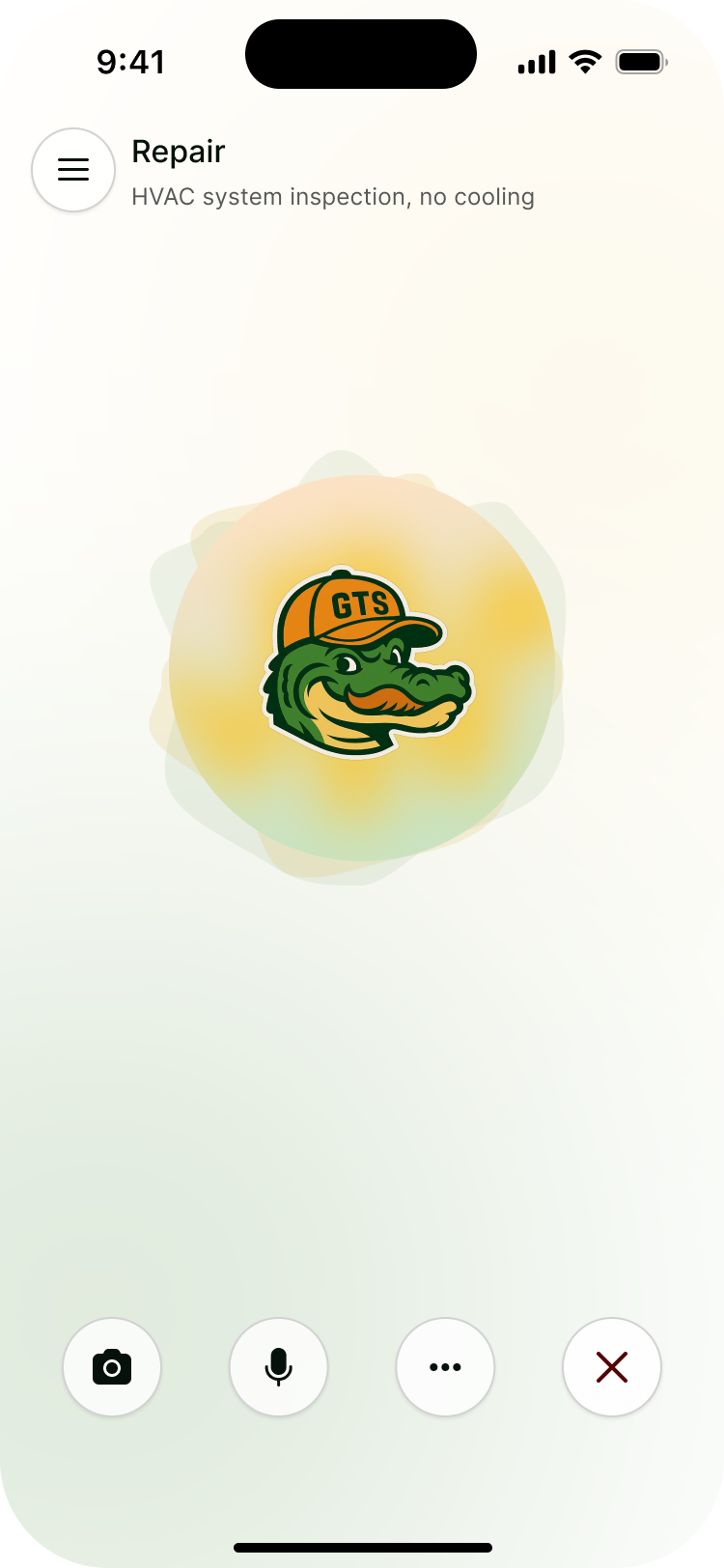
The best interface for a technician with a flashlight is voice mode.
Get technicians in, not through a tutorial
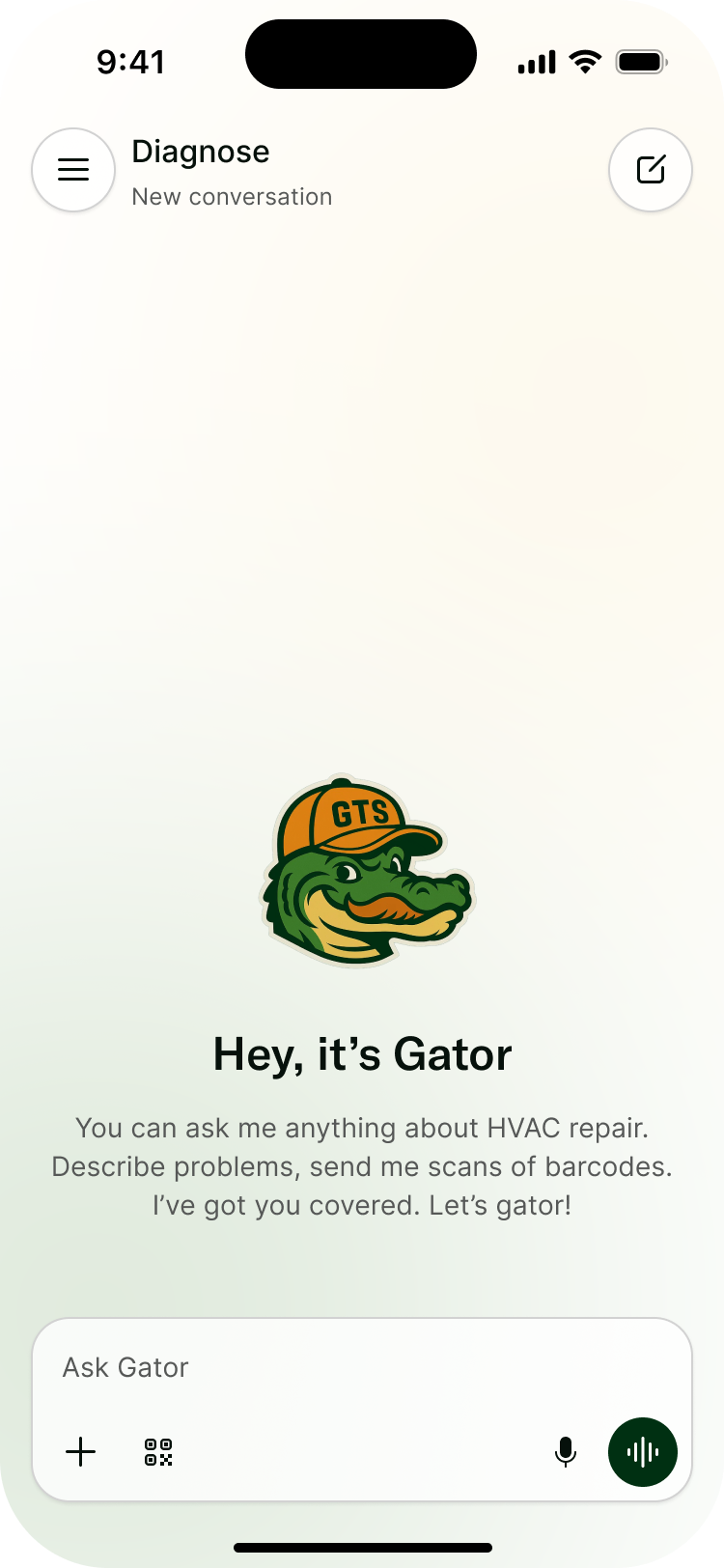
I designed the complete mobile experience — from onboarding through diagnosis to guided repair flows. The design challenge was creating an interface that feels as simple as texting a knowledgeable friend, while handling the complexity of thousands of equipment models and diagnostic pathways underneath.
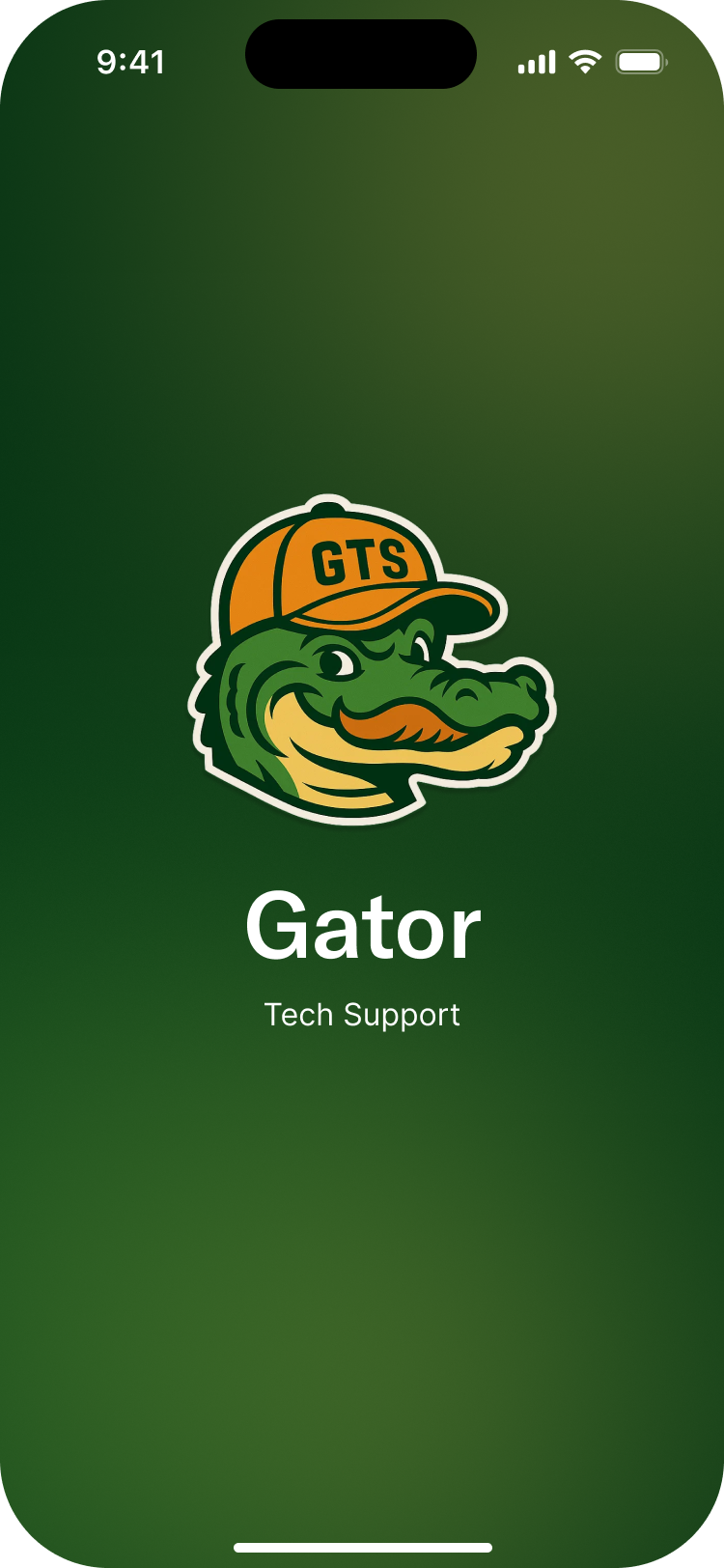
The onboarding is ruthlessly minimal: phone number verification, one permission prompt for the camera, and they’re in. No account creation form. No feature tour. The first thing they see is Gator introducing itself and asking what they need help with.
The camera is the search bar
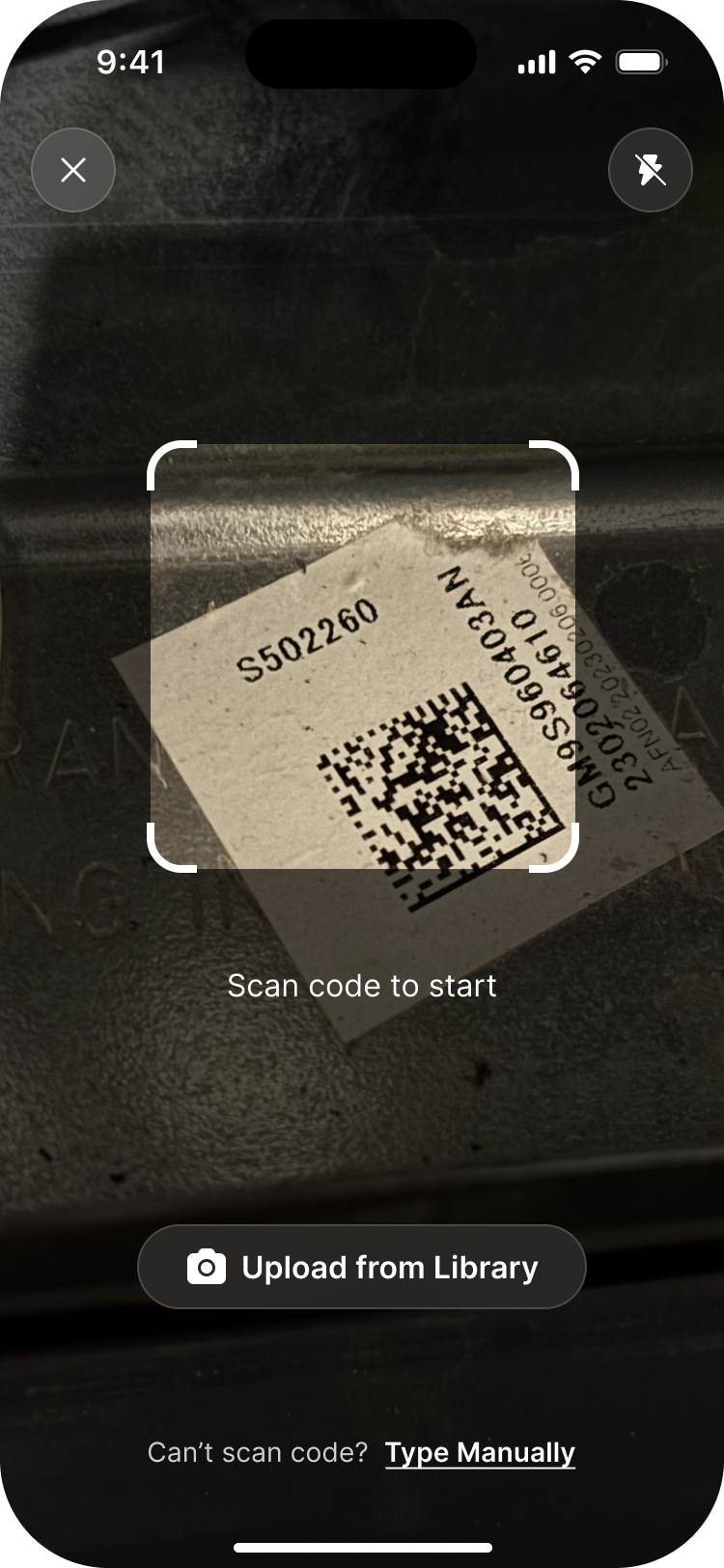
Every HVAC unit has a barcode or serial number plate. Gator’s scanner reads it instantly, pulling the exact make, model, and specs from its product database. No scrolling through menus, no typing model numbers on a tiny keyboard with cold fingers.
For units where the label is damaged or missing, there’s a manual fallback: type the serial number or describe the unit. The AI can often identify equipment from a description of its appearance and the symptoms alone.
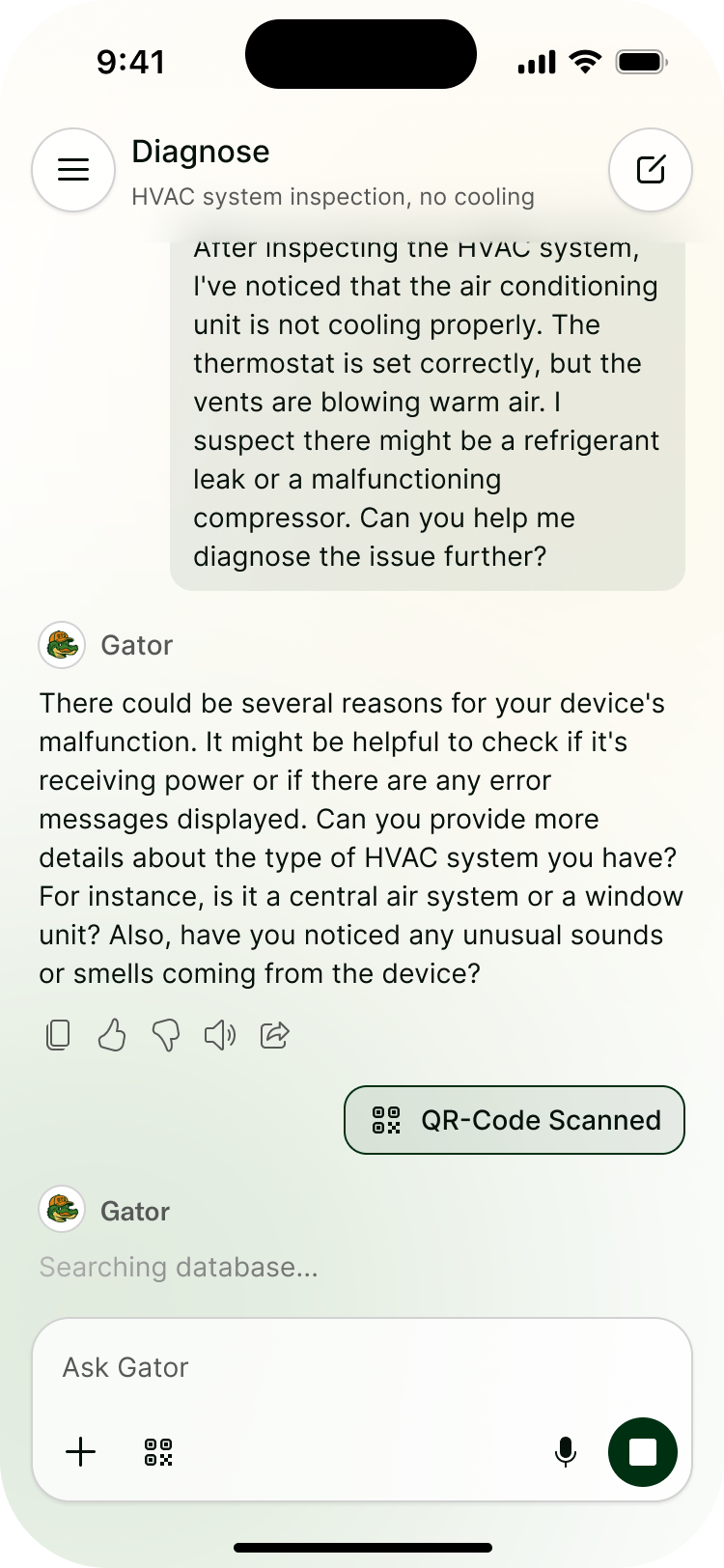
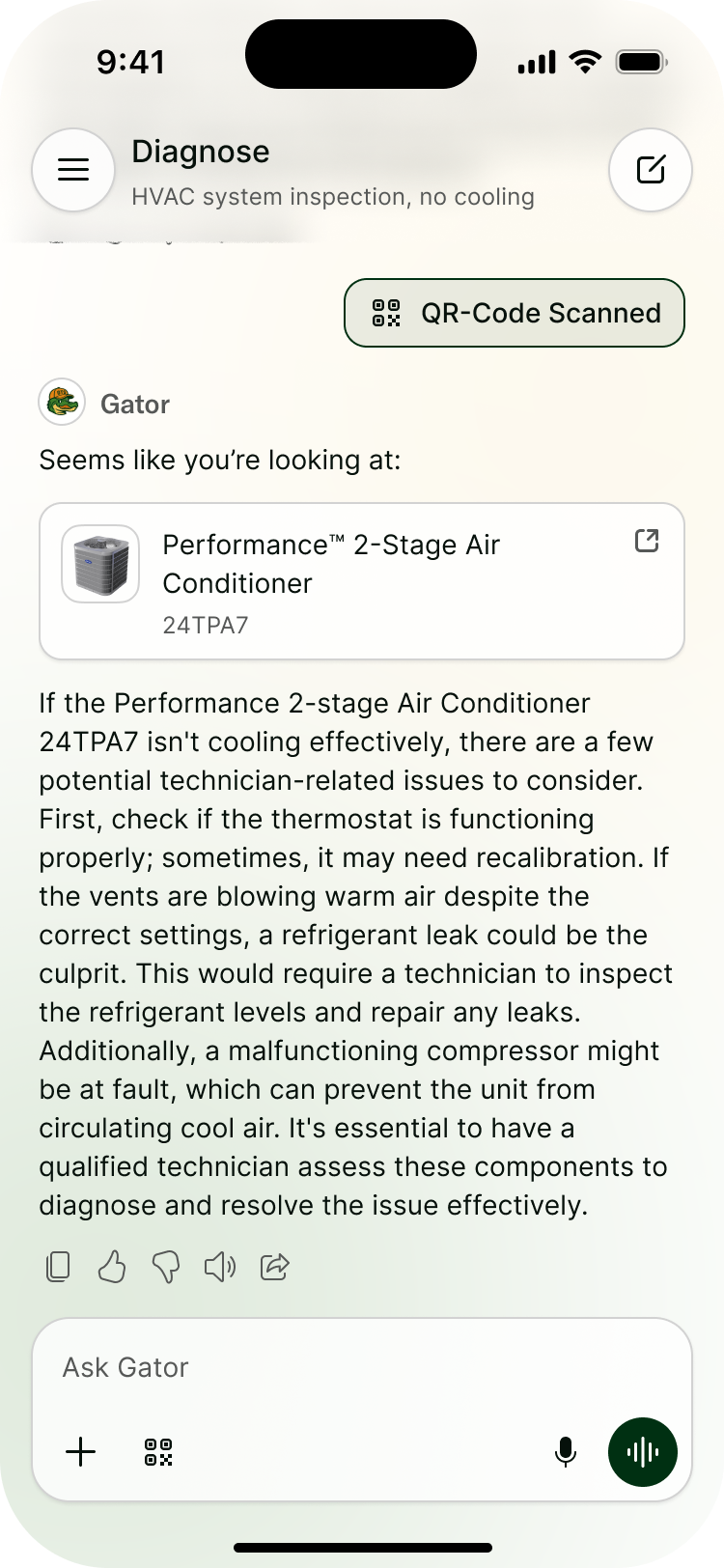
Designing a chat that feels like talking to a senior tech
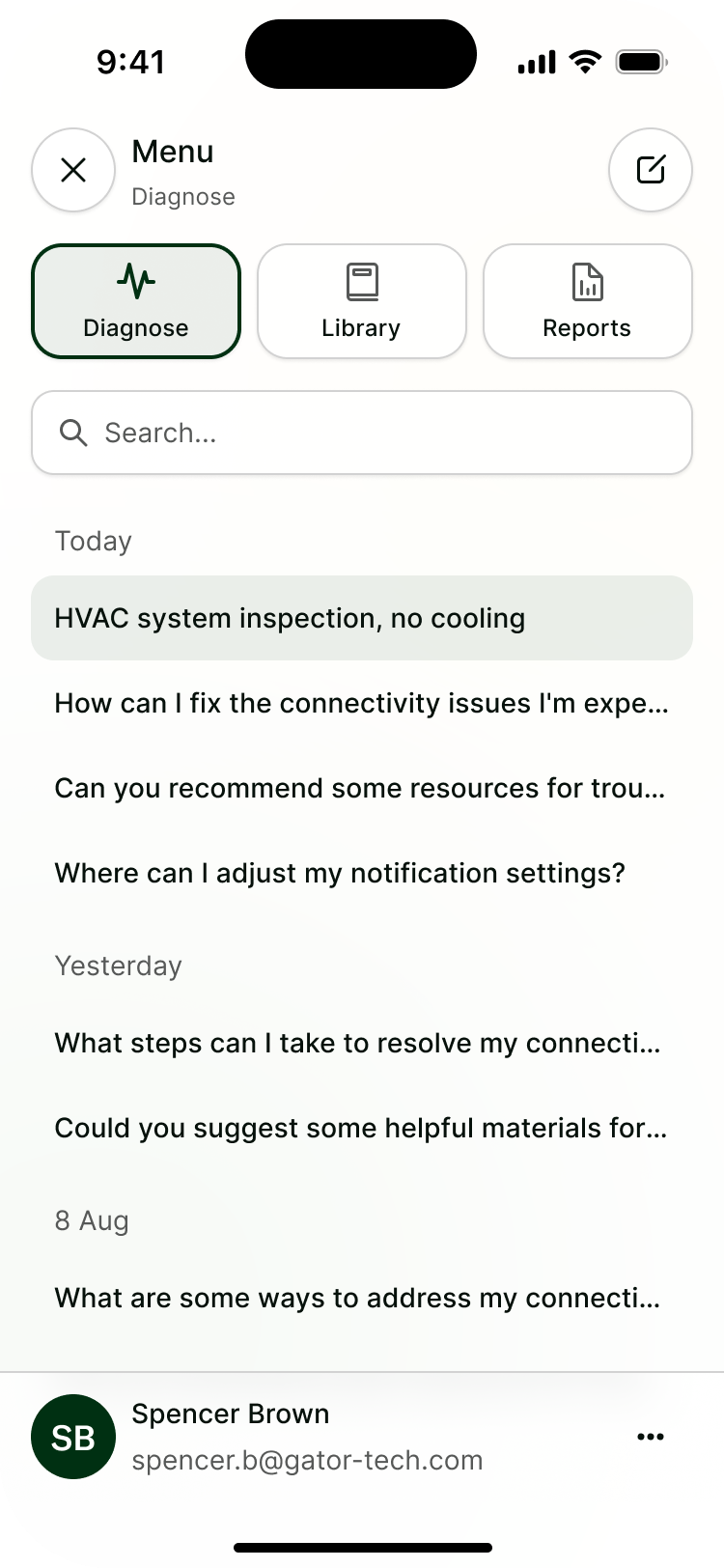
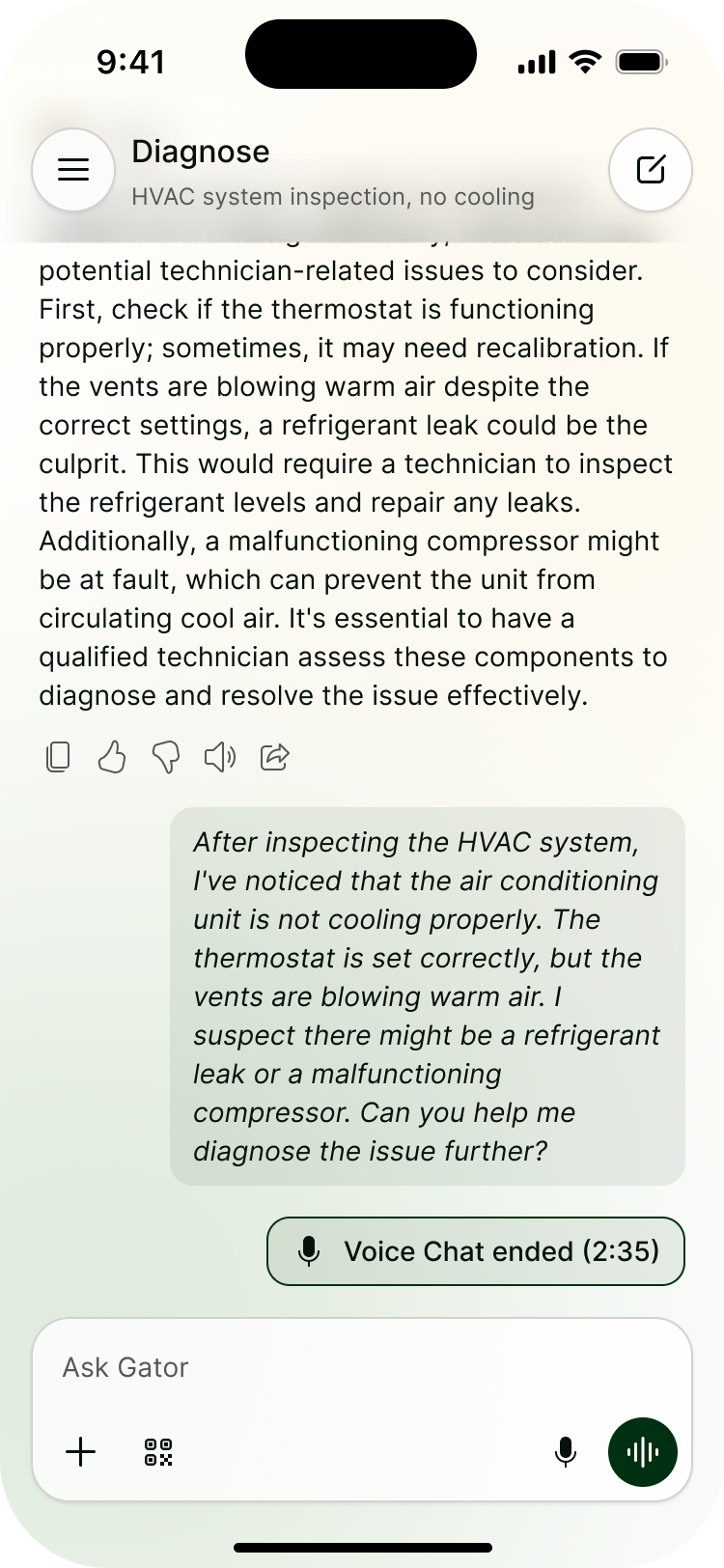
The diagnostic conversation is Gator’s core experience. The AI doesn’t just answer questions — it asks the right ones. Each question narrows down the problem, just like an experienced technician would think through it.
I designed the chat to feel warm and confident without being patronizing. Gator has a personality — it’s knowledgeable but approachable, like a coworker who’s been doing this for 20 years and genuinely wants to help. The tone was as important as the UI.
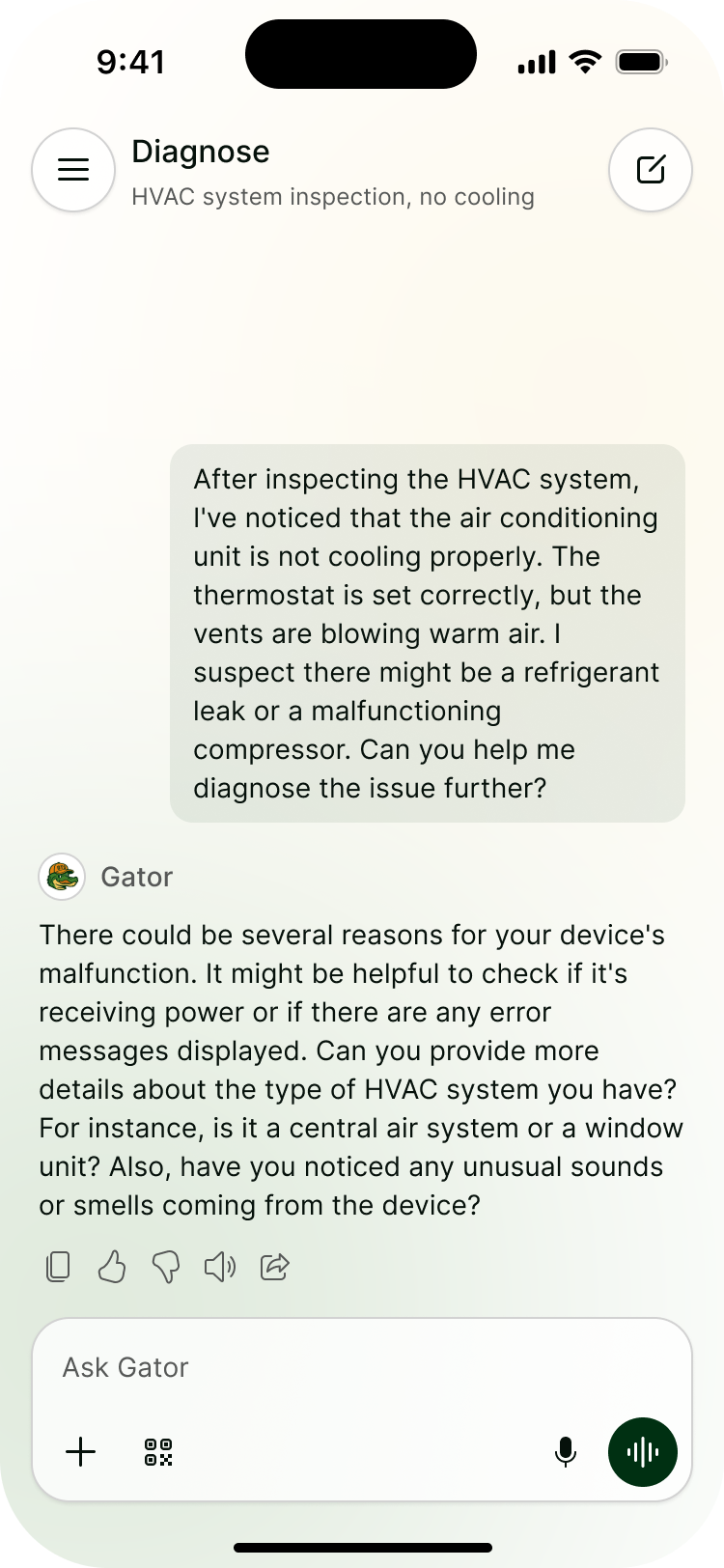
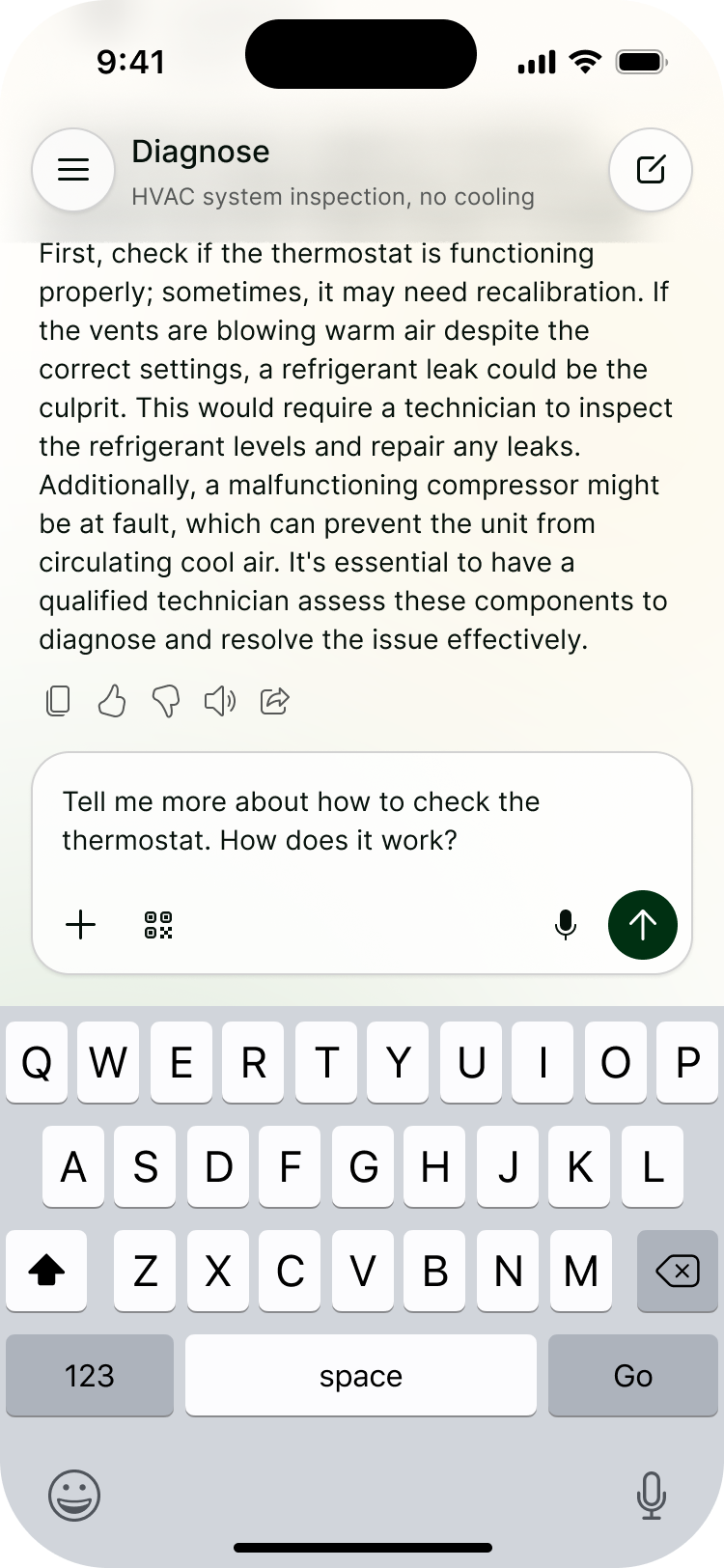
One step at a time, never lost
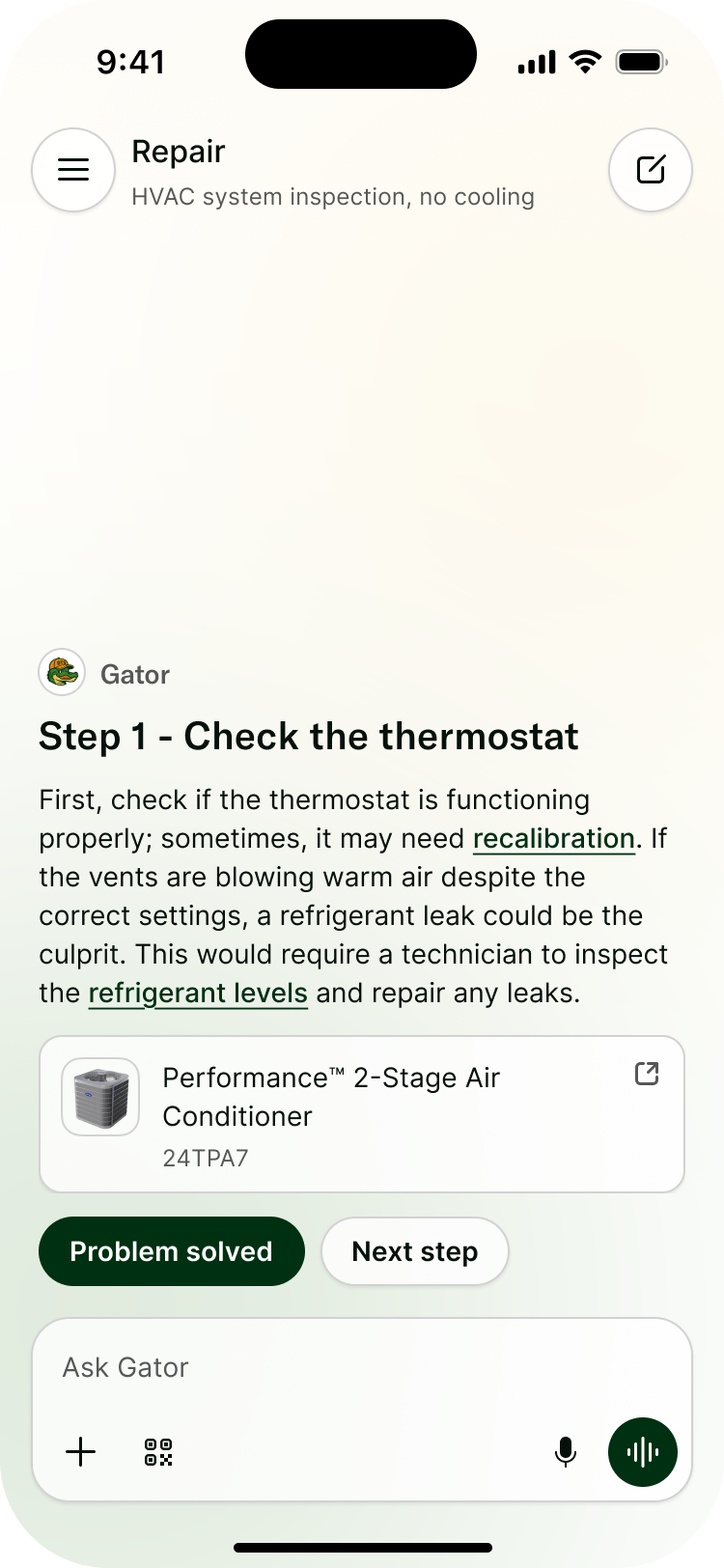
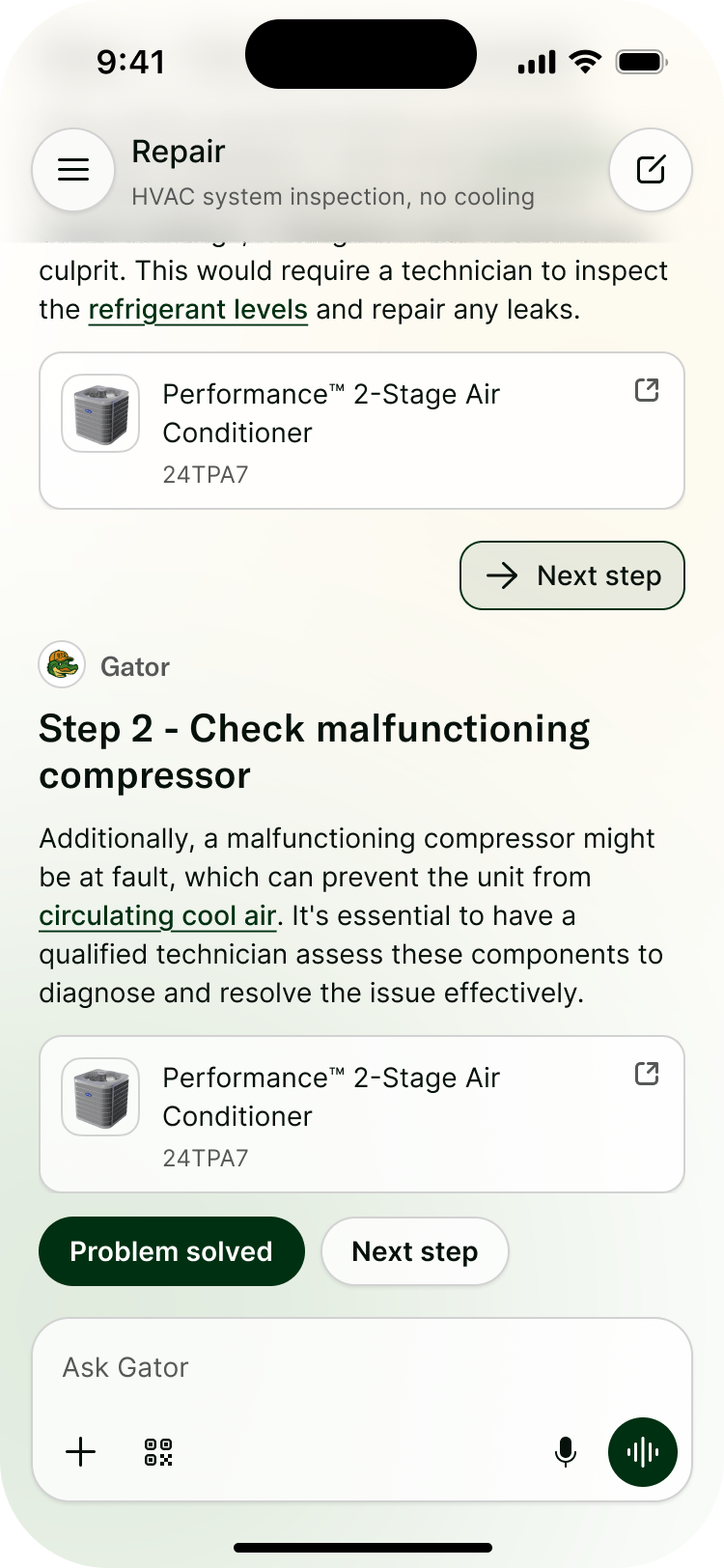
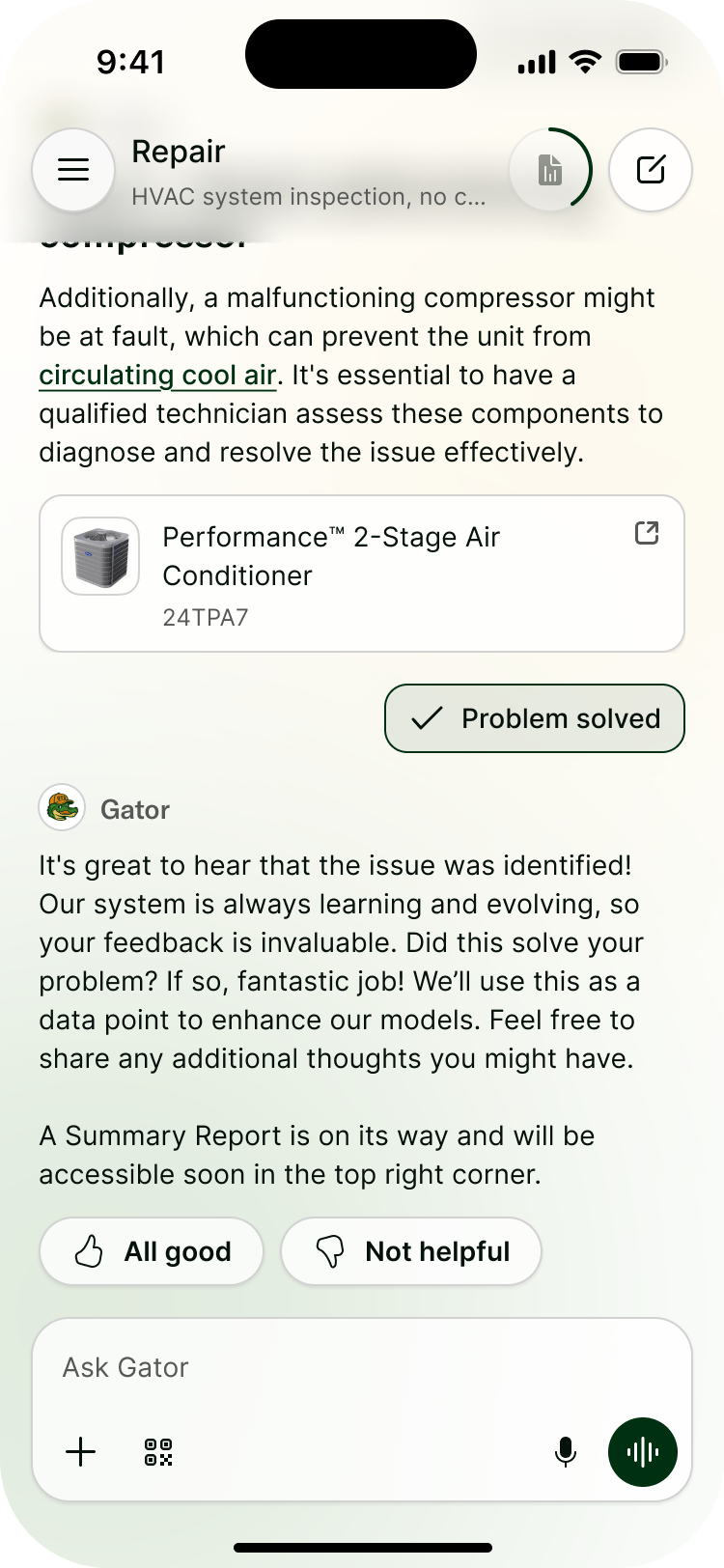
When the AI has enough information, the conversation mode shifts to a structured repair flow. Each step is a discrete card with clear instructions, the ability to ask follow-up questions, and two options: "Problem solved" or "Next step."
This transition from open conversation to guided steps was a critical design decision. Diagnosis is exploratory — it needs the flexibility of chat. But repair is procedural — it needs structure and confidence. The interface adapts its personality to match.
Multimodal diagnosis democratizes expertise. Structured guidance from a deep context layer makes the delivery scalable. The art is to bring next-gen AI to working class folks in a way that fits into their normal lives.
Hands free when it matters
Technicians often can’t hold a phone while working. Voice mode lets them speak naturally to Gator while keeping both hands on the equipment. The interface strips away to just the mascot, a mic button, and a camera option for sending photos mid-repair.
The voice interaction needed to feel like a real conversation, not a voice command interface. Gator listens, confirms understanding, and responds in the same warm tone as the text chat — just spoken aloud.
From concept to MVP in six weeks
I delivered the complete product vision in six weeks: 30+ unique screens, a full click-through prototype, and all states documented. The founder saw no need for changes and took the designs directly into iOS development.
What mattered most was making advanced AI feel useful in the real conditions of field work: fast context gathering, voice-first interaction when hands are busy, and structured guidance when a technician needs the next right step.
My contribution
Sole Product Designer
Discovery & Storyboarding
Interaction Design
Prototyping
Design System
Deliverables
Founder (Direct)
iOS Developer
Tools
Figma
Figma Prototyping
FigJam
Next project
Respond AI
Supply-Chain Logistics with LLM