Respond AI
Cut carrier response latency by designing an LLM dispatch workflow.
Client
McLeod Software
Role
Lead Product Designer
Scope
Product Design & Discovery
Platform
Web / Desktop

Respond AI helps specialists guide long-distance carriers to their next pick-up and drop-off locations.
With an onboard LLM accessing data in nearly real-time, operators now begin with responses pre-populated. They perform a review check, and can focus on adding the human contact that drivers value for the long haul.
Shipping is decentralized, with many different companies running call centers to keep drivers up to date. It takes people time to query data tables and provide the most up to date information. Meanwhile, more messages from drivers keep coming in, leading to costly delays.
Every 30 minutes a fleet is delayed translates to $1.37 million in lost revenue.
Call centers route drivers dynamically to keep everything rolling. But it takes time for human operators to figure it out. What if an LLM could minimize delays?
In designing Respond AI, I created an agnostic solution that can integrate with existing data streams to pre-draft helpful responses. Making this human-in-the-loop keeps operators in the center, with the ability to make edits and add their human insight.
Doing so also provides a runway for operators to rate and annotate model outputs, improving the quality and accuracy of responses.
Human-in-the-loop isn’t a compromise — it’s a feature. Operators stay in control while the AI handles the heavy lifting.
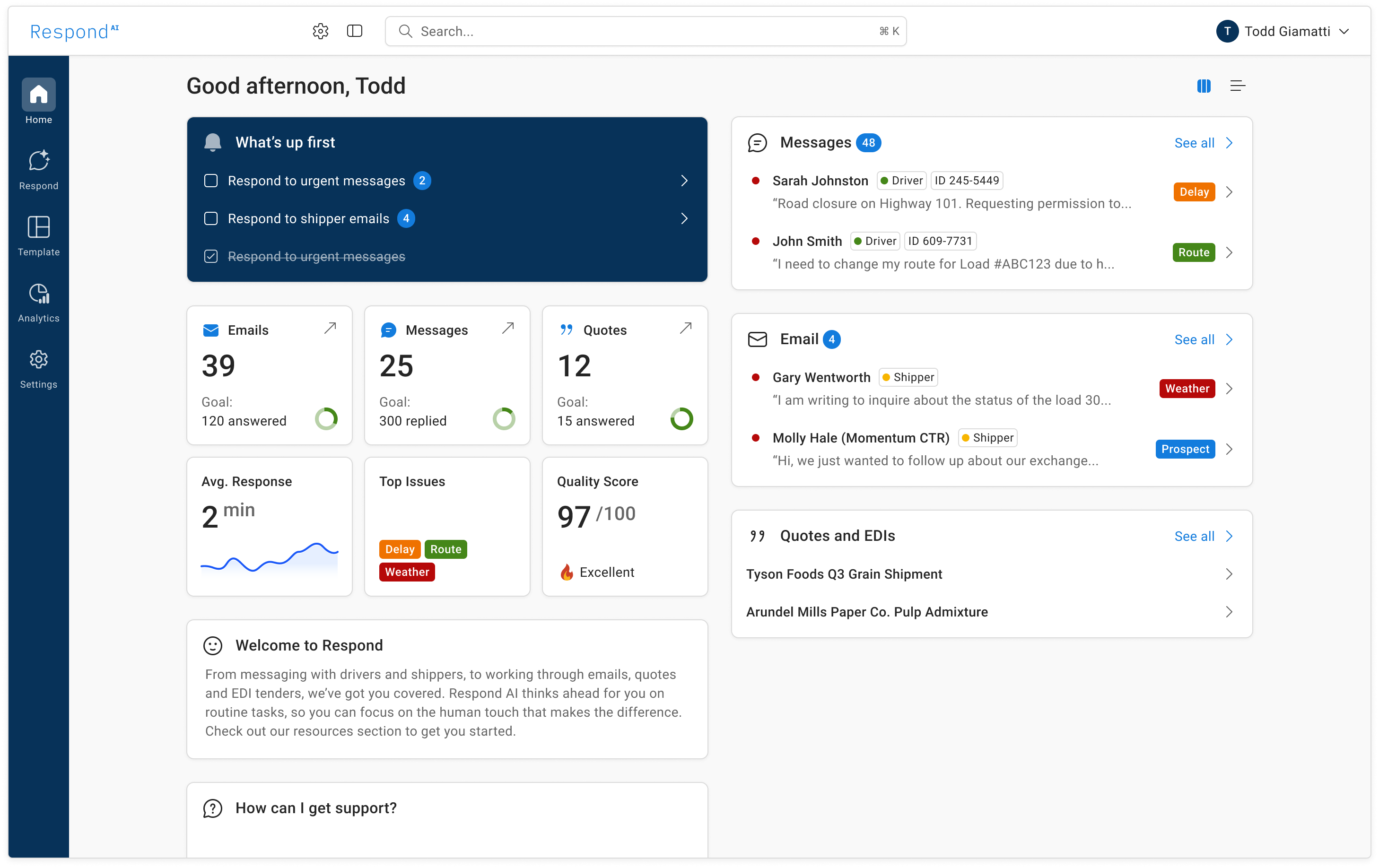
A central dashboard that helps operators get oriented for the day’s work
Each operator begins their day with a prioritized action list, real-time message and email queues, and a quality score tracking AI response accuracy. The command center surfaces what matters most so operators can focus on high-value conversations.
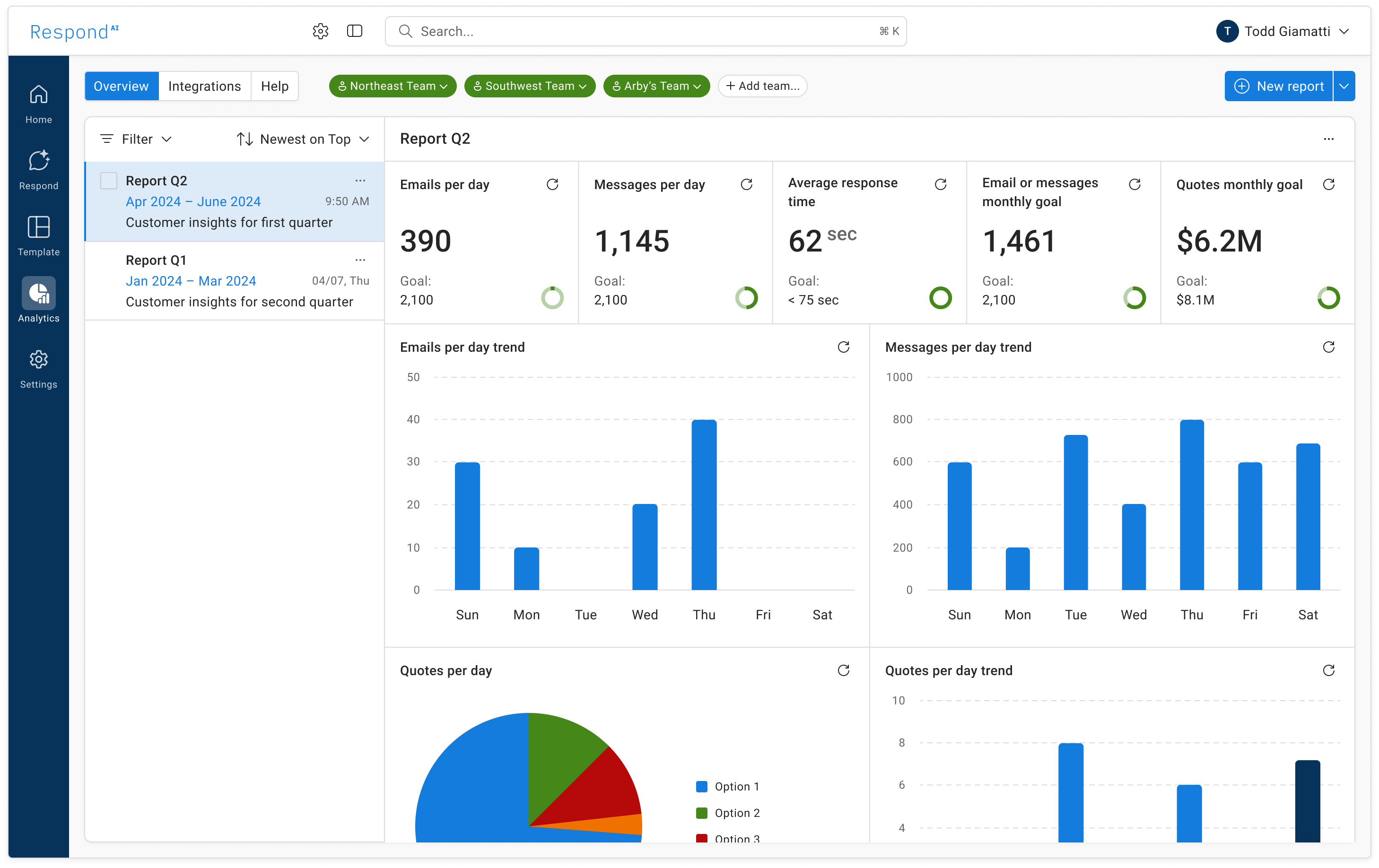
Measuring progress against daily and quarterly goals
The reporting dashboard gives team leads visibility into emails per day, response times, and quote volumes across teams. Operators set daily goals and track trends over time, creating a feedback loop that drives continuous improvement.
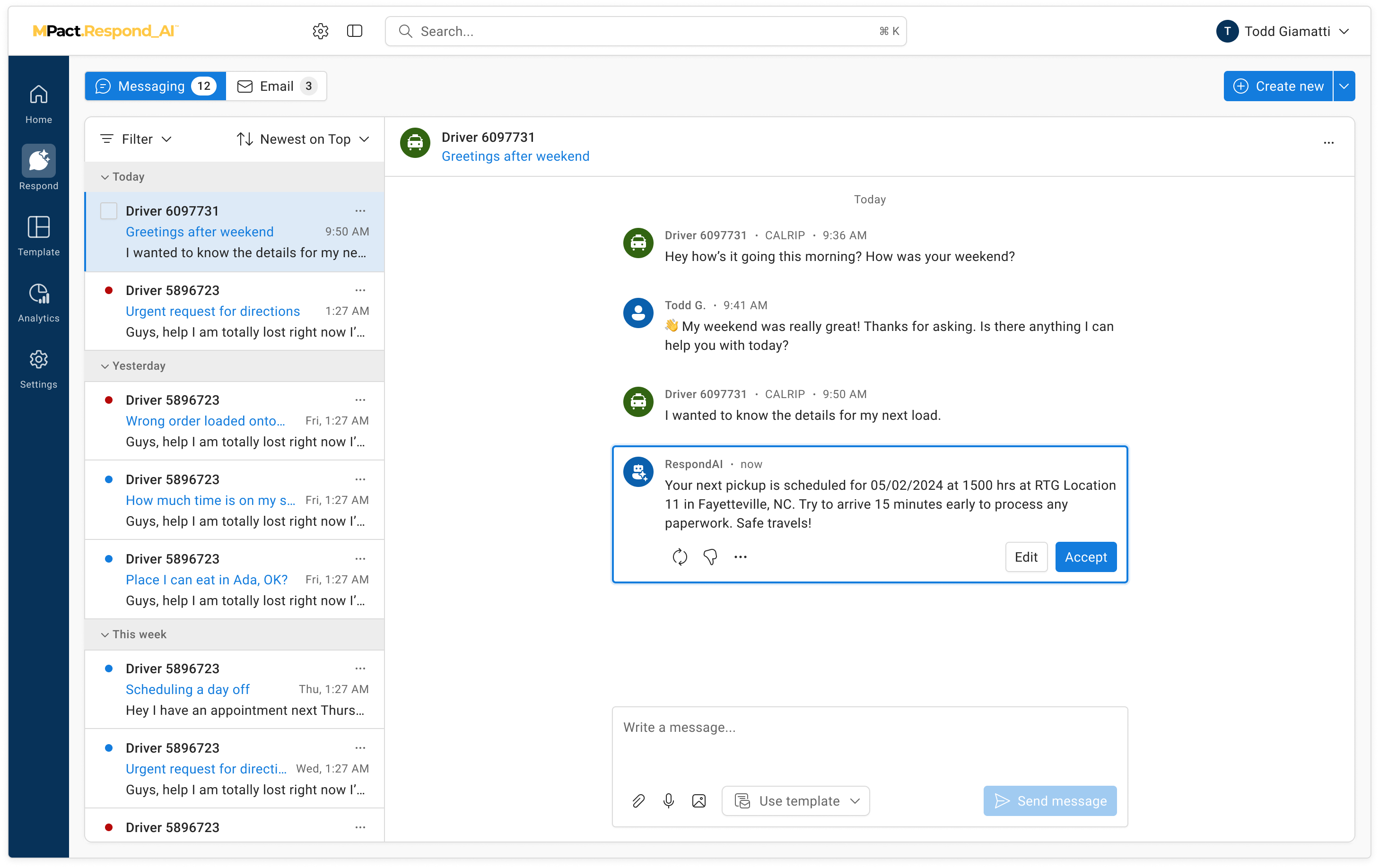
AI pre-drafts responses so operators can review, edit, and send
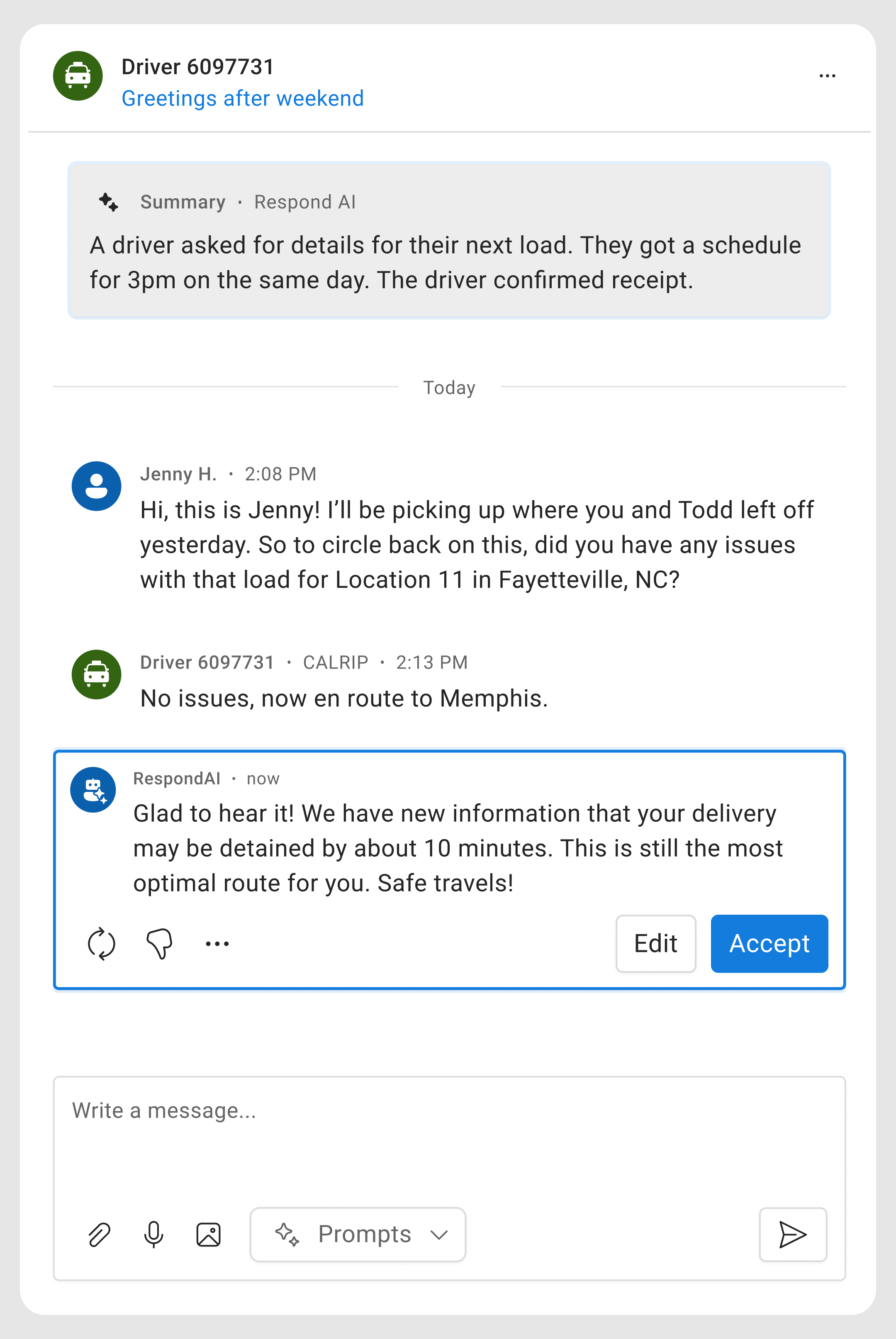
The messaging interface gives operators a queue of driver conversations on the left and a threaded view on the right. The LLM pre-drafts each response using real-time data — operators simply review, make edits if needed, and accept. This same pattern extends to mobile follow-ups, where drivers get quick, contextual answers on the road.
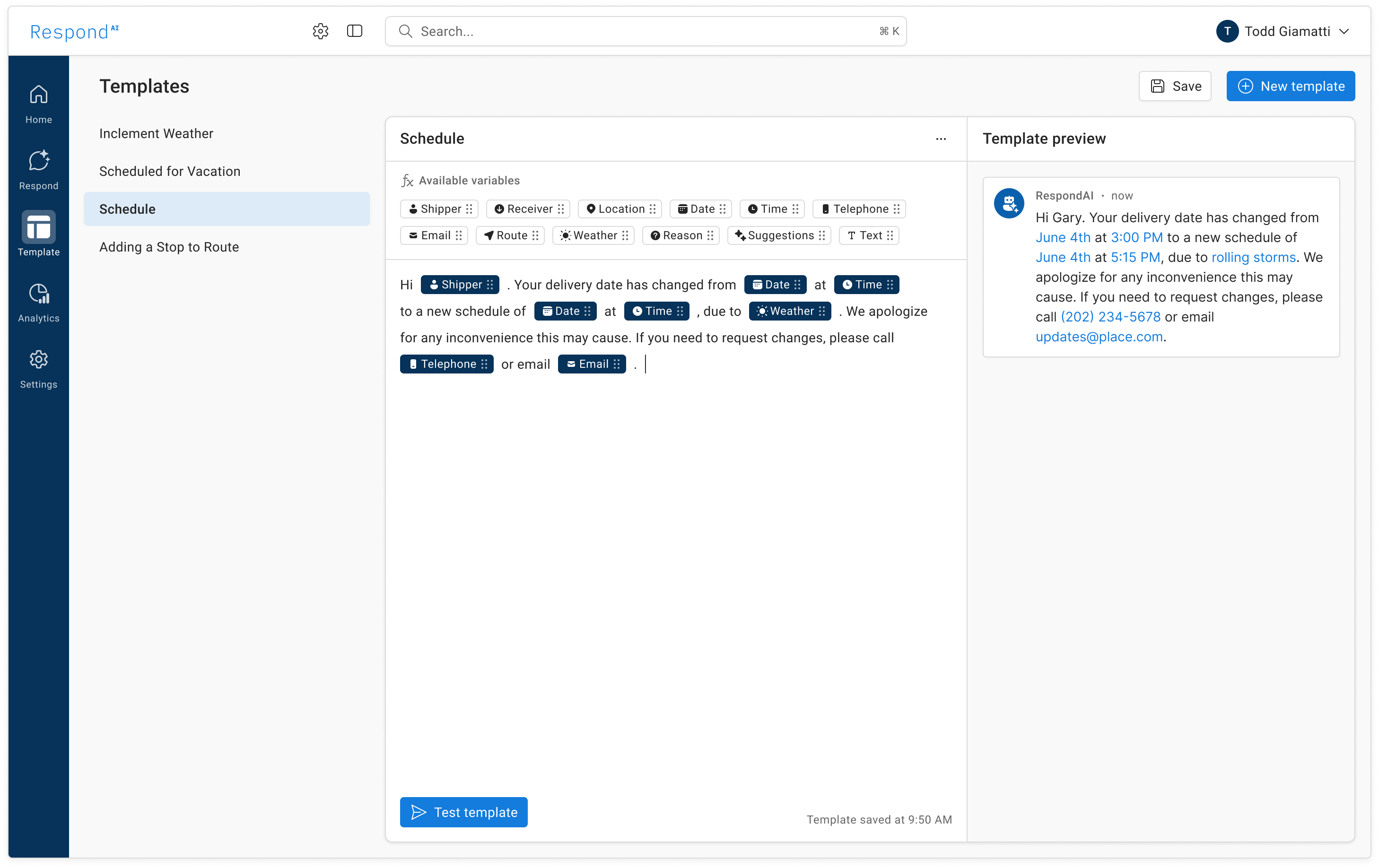
Templates that steer model outputs and ensure quality
To guide the AI’s responses, I designed a template system built around variables. Operators create reusable templates with dynamic fields — shipper, date, route, weather — that inform the mega-prompts and multi-shot prompting behind each response, ensuring consistency and accuracy.
Overwhelmingly positive response from active customers
Using click-through prototypes, several rounds of tests were run with active customers who use the current product. I wrote a conversation guide to structure the interviews, as well as set up a hypothesis board. I educated the team about research methods.
The feedback was overwhelmingly positive, so much so that the company president asked me to look at their other software applications and find opportunities.
From prototype to production
Respond AI moved from concept through user testing to development handoff. The human-in-the-loop design pattern established a framework for integrating AI into existing operator workflows without disrupting the trust and personal touch that drivers rely on.
The project demonstrated that AI in logistics doesn’t need to replace human operators — it needs to give them superpowers.
My contribution
Product Design
Product Discovery
Prototyping
Design Systems
User Research
Collaborators
Van Carlisle (Product Manager)
Sujit Kunwor (Data Scientist)
Engineering Team
Tools
Figma
FigJam
Miro
Notion
Next project
AI Model Training
Evaluating Frontier LLMs