Clarvos
Designed the product vision for an agentic AI platform — from initial MVP through a strategic pivot and rebrand to public launch.
Client
Clarvos
Role
Member of Design Staff
Duration
2024 – Present
Platform
Web SaaS
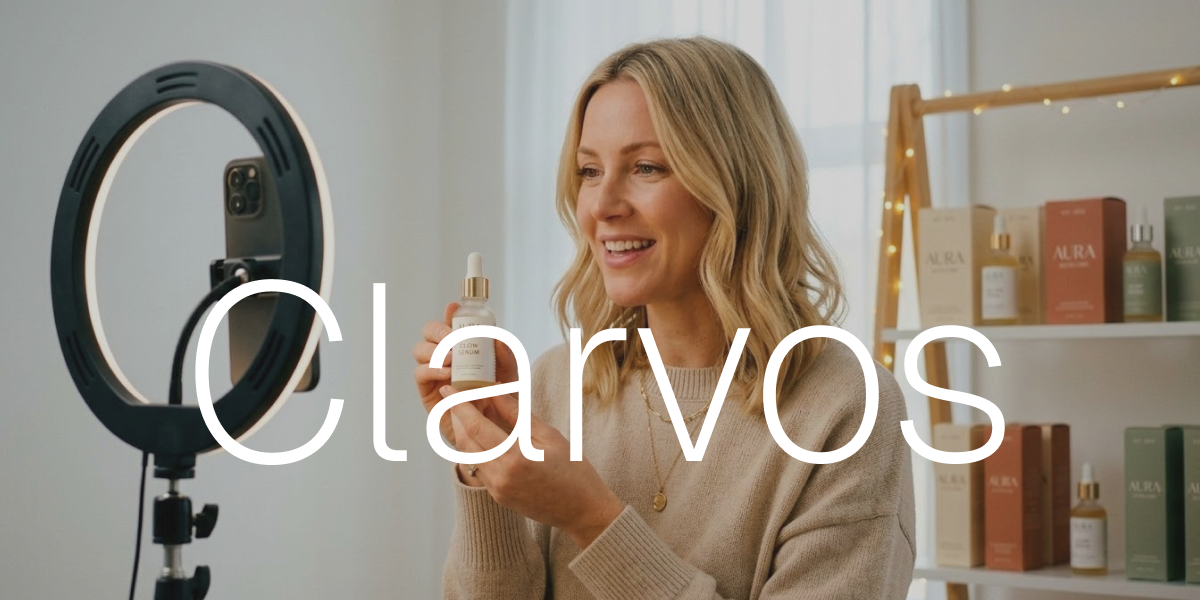
The company started in data science. The product needed to start with people.
Clarvos began as a data science company, recently acquired and spun out of a parent organization. The starting hypothesis was to surface societal trends by analyzing large volumes of posts and documents online — and give marketers the tools to act on them.
From that vantage point, I designed the first end-to-end product: a metrics-oriented platform with parallel feeds of granular posts, daily trend briefings, audience analytics, and a strategy builder. It was functional, comprehensive, and entirely manual — closer to Wix or HubSpot than what the product would eventually become.
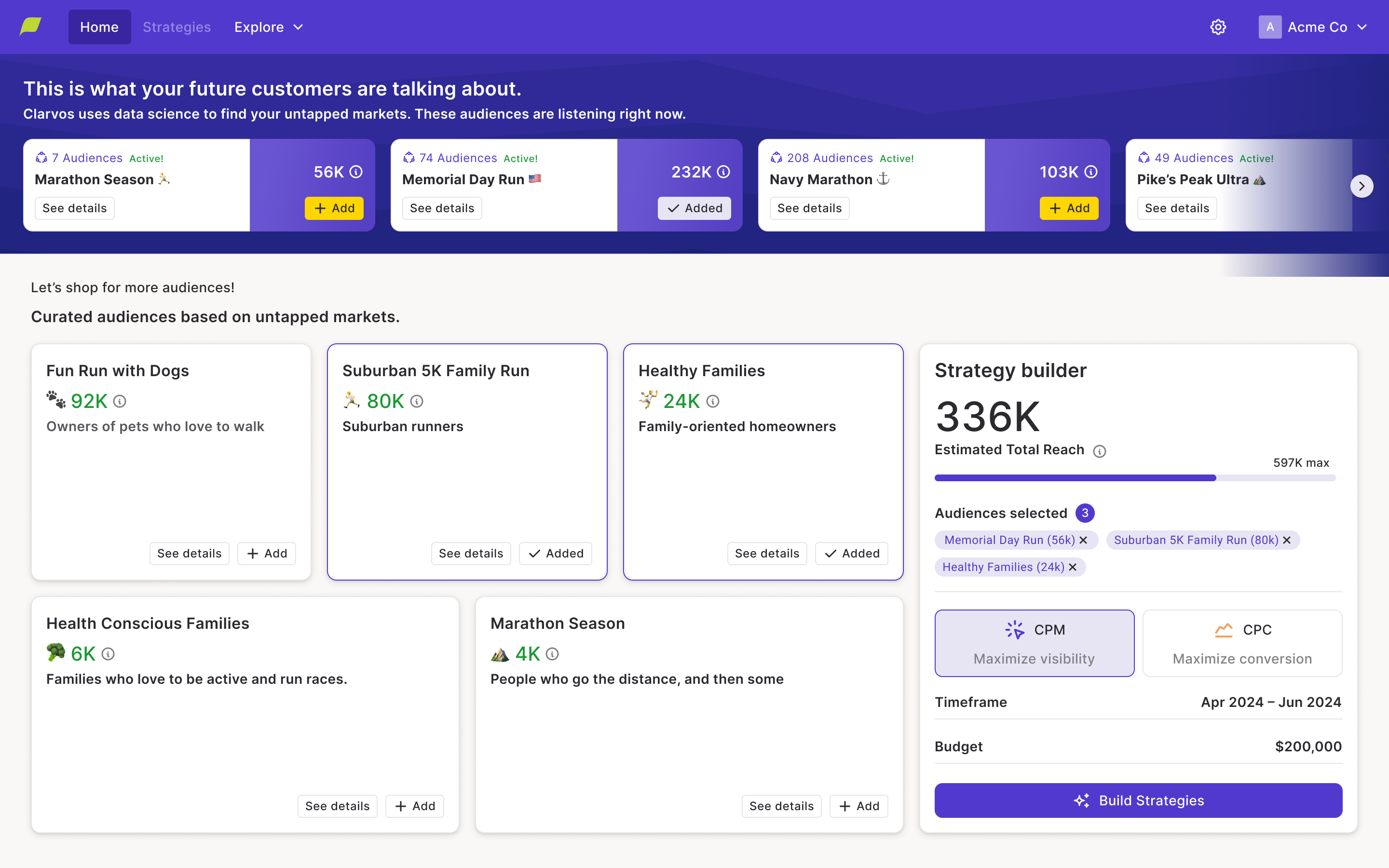
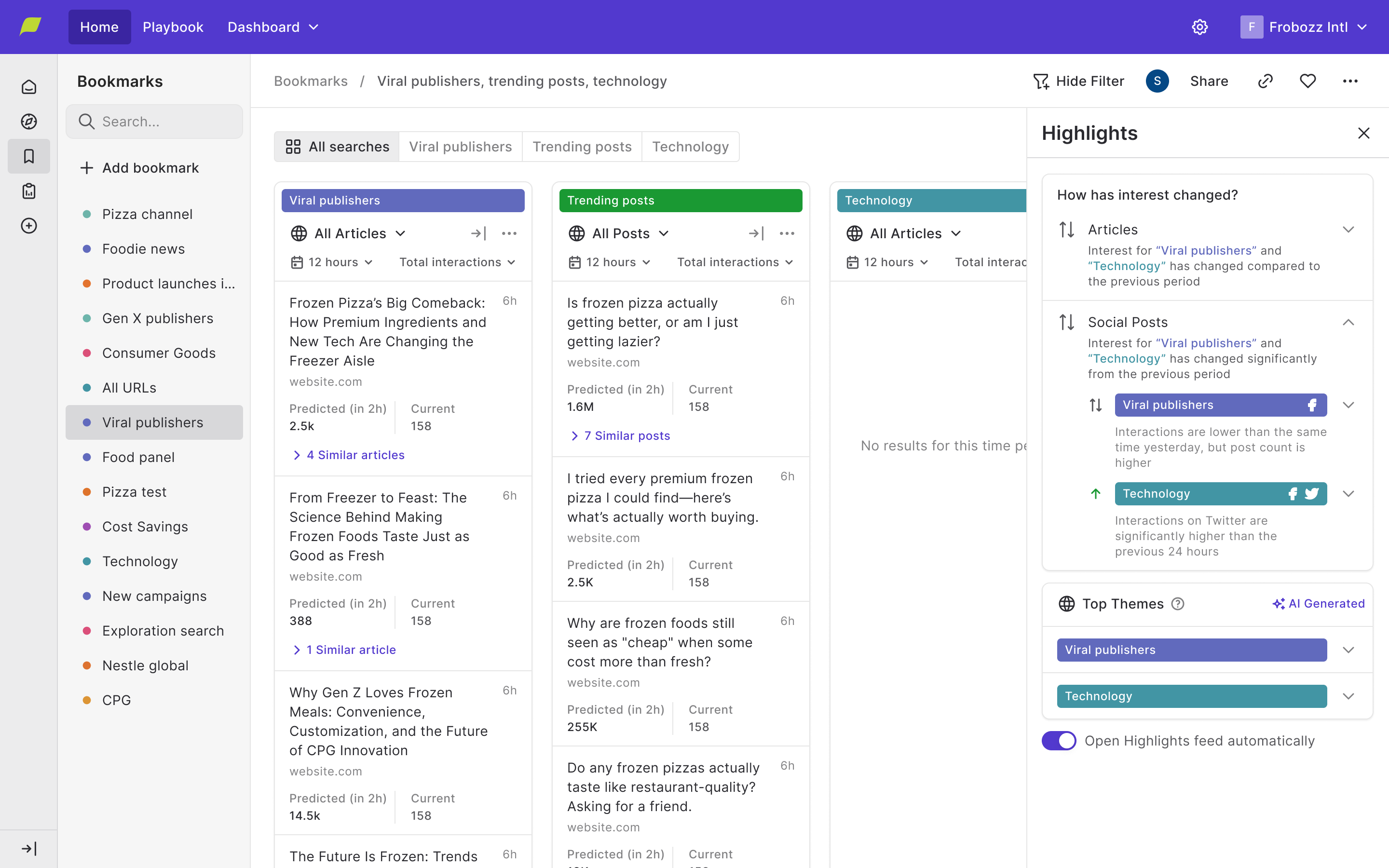
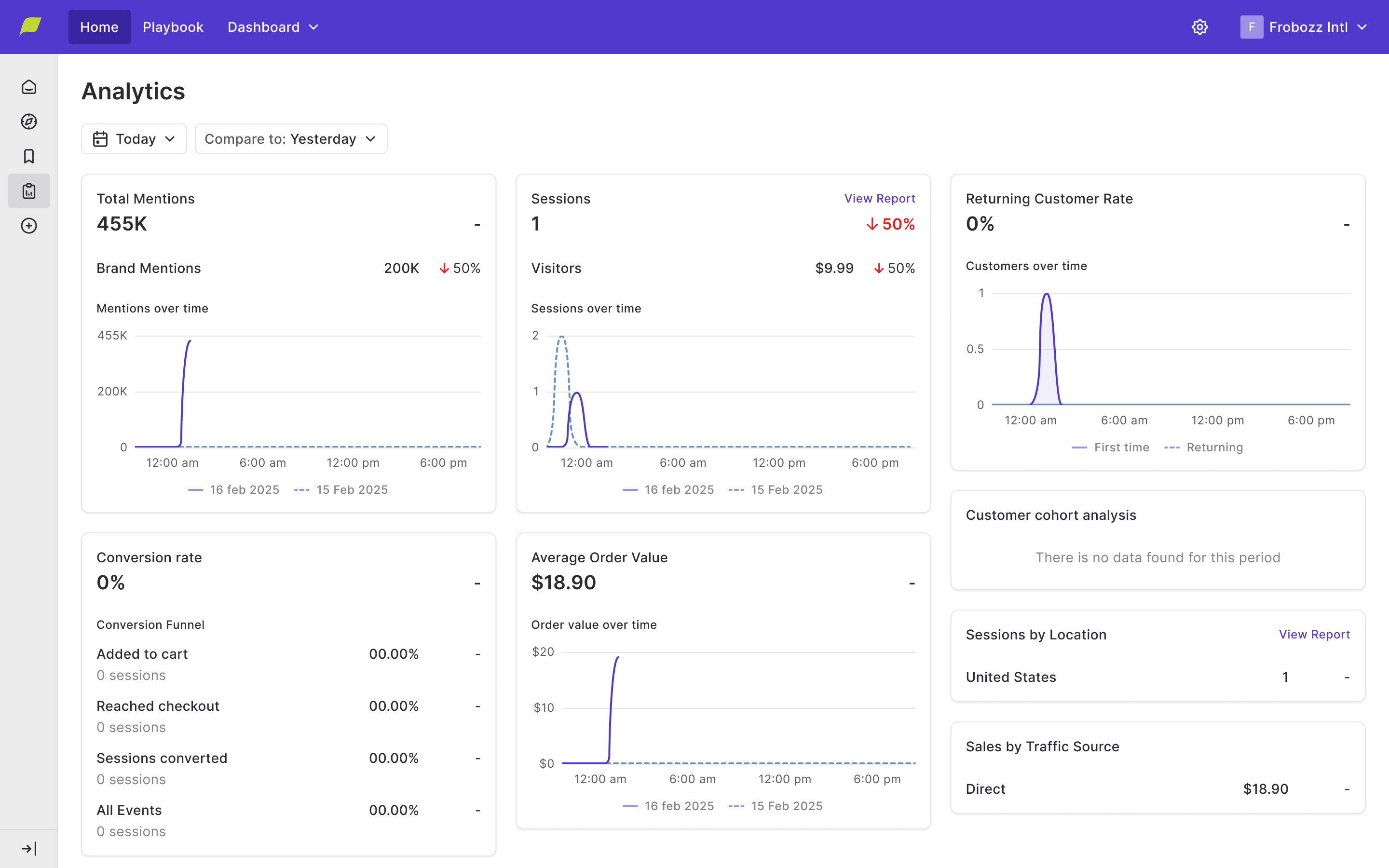
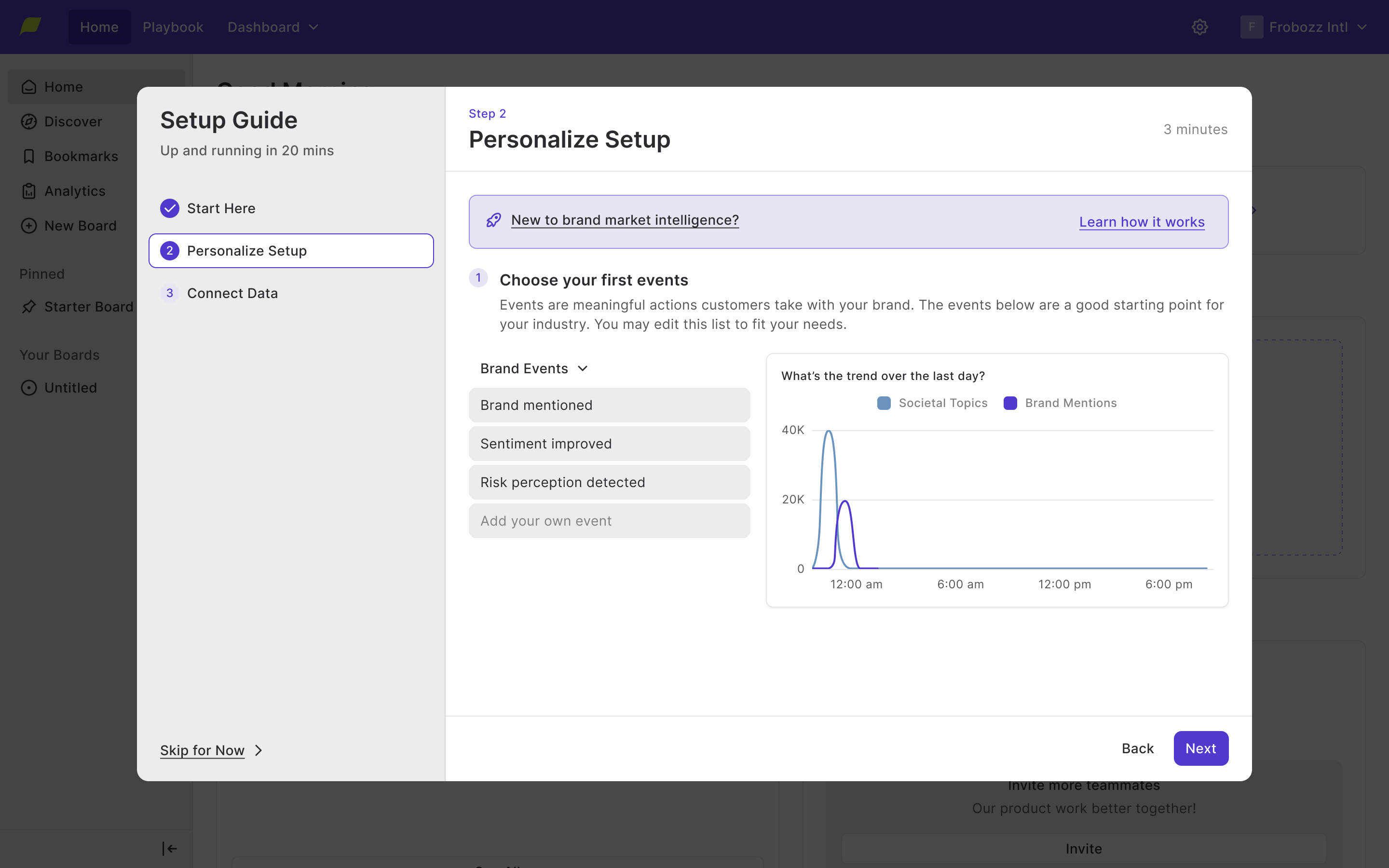
This first version shipped and gave us a working product — but as the company pivoted from data science to an AI-native orientation, the product needed to evolve with it. Data science moved under the product organization, an AI/ML team stood up, and our target market came into focus: small business owners who needed to compete for market share but didn’t have sophisticated marketing experience.
What if the user didn’t have to do anything at all?
The exec team asked for a complete product rethink — and it had to happen fast. They flew me down for a two-day private brainstorm retreat: me, the CEO, CTO, and CPO. Four people, two days.
I had been studying the opportunity space for agentic AI and arrived with a core design principle: non-action, non-doing. The user should never have to take actions that the system could handle autonomously. I designed an architecture where AI agents would surface social trends, generate campaign plans, create micro-targeted creatives, and package everything up — so that from the user’s perspective, a Pinterest-style feed of ready-to-run campaigns would appear each morning, powered by ongoing social listening and a behind-the-scenes orchestration layer.
I mocked up the full end-to-end vision in two days using Claude Code and Figma. The CEO’s response: "This is it."
The scariest part was that a seamless agentic experience meant orchestrating everything from day one. It was like starting with a driverless car — typically a wave-three vision, not an MVP.
We also ran moderated user research at the workshop. The signal was clear — participants didn’t ask "how does it work" or "what does the algorithm do." They asked, "How do I sign up?"
We flew back with an end-to-end prototype, executive alignment, and a clear path forward. From there, we scaled the engineering team and built it out.
0+
Autonomous agent steps in the pipeline
0
Social platforms managed simultaneously
0%
Reduction in campaign setup time
0x
More creative variants tested per cycle
Designing trust in a system that makes decisions for you
The hardest design problem in agentic AI isn’t the interface — it’s calibrating how much autonomy the system should take, and how to communicate its reasoning. Users needed to understand what the AI was doing, why, and feel confident handing over creative and financial decisions to an autonomous agent.
I led product discovery, interaction design, prototyping, and design system creation. Working closely with product managers, engineers, and the AI/ML team, I shaped both the user experience and the product strategy — defining not just how the system looks, but how it thinks and communicates its decisions.
Campaigns that start with what’s already working
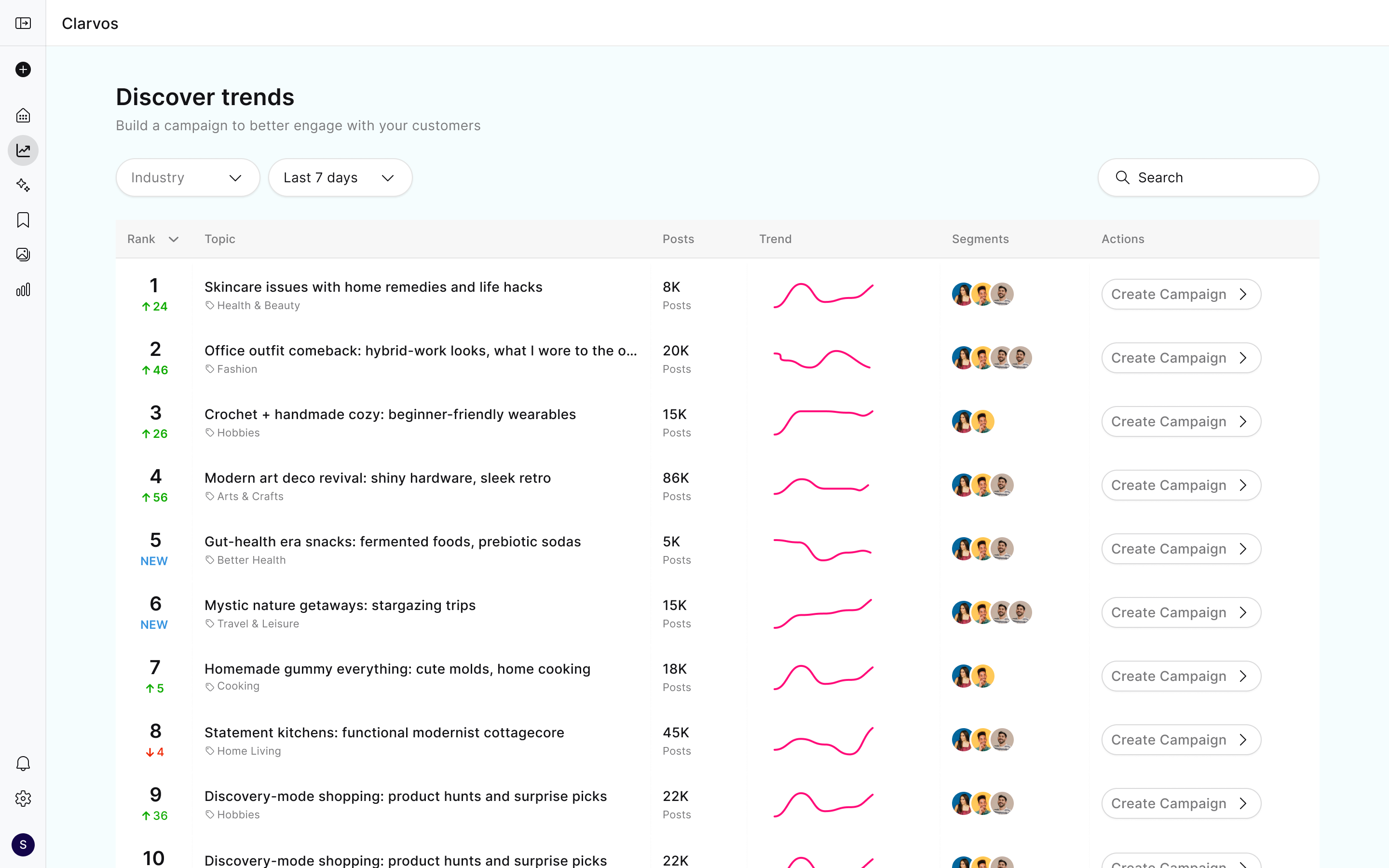
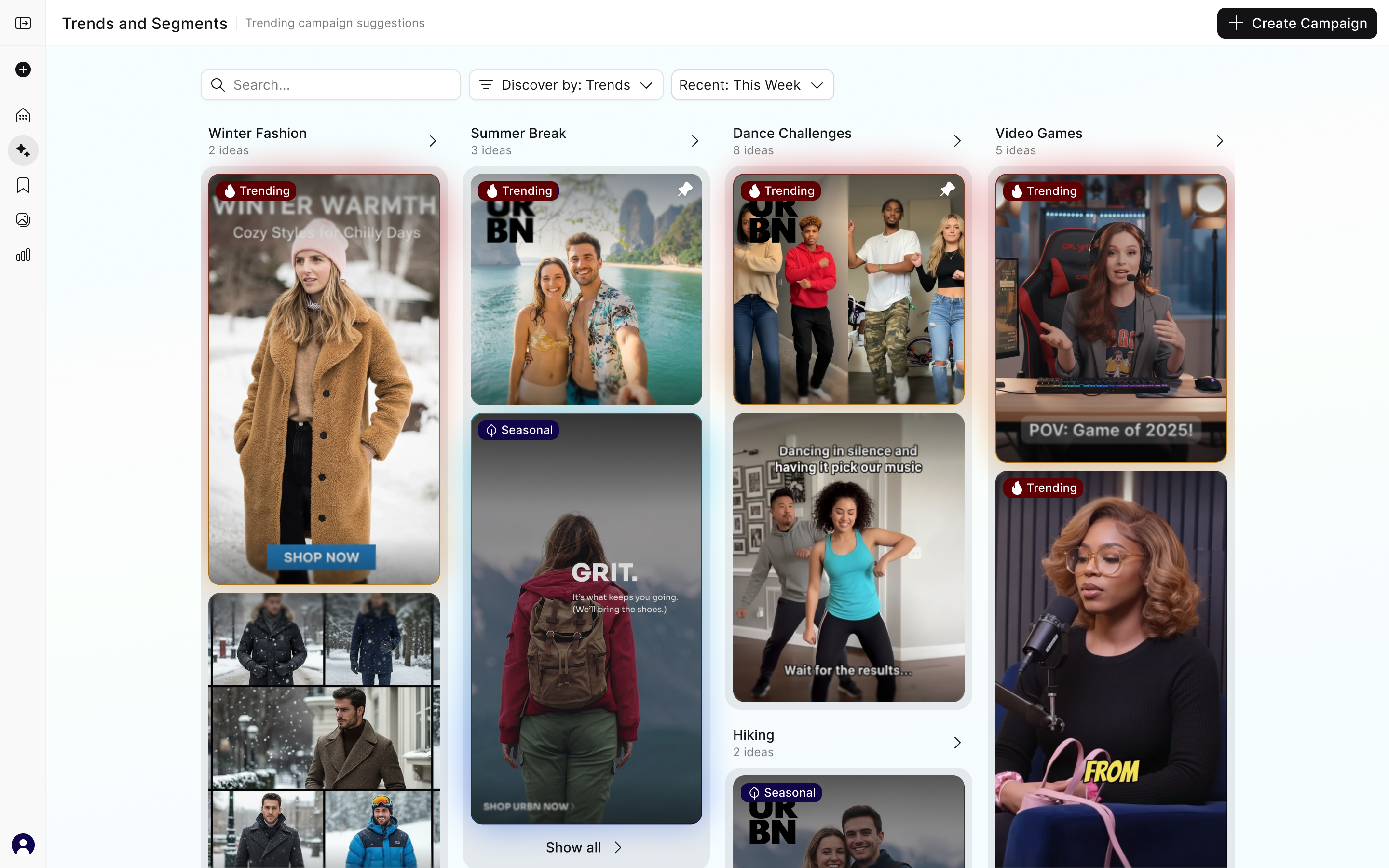
Rather than guessing what content will resonate, Clarvos surfaces trending topics across social platforms in real time. The discover view ranks trends by volume, velocity, and audience alignment — then lets marketers launch a campaign directly from any trend with one click.
I designed two complementary views: a data-driven rankings table for analytical users, and a visual mood board for creatives who think in imagery. Both paths lead to the same outcome — a pre-populated campaign brief built on real audience signals.
AI-generated creatives that actually look good
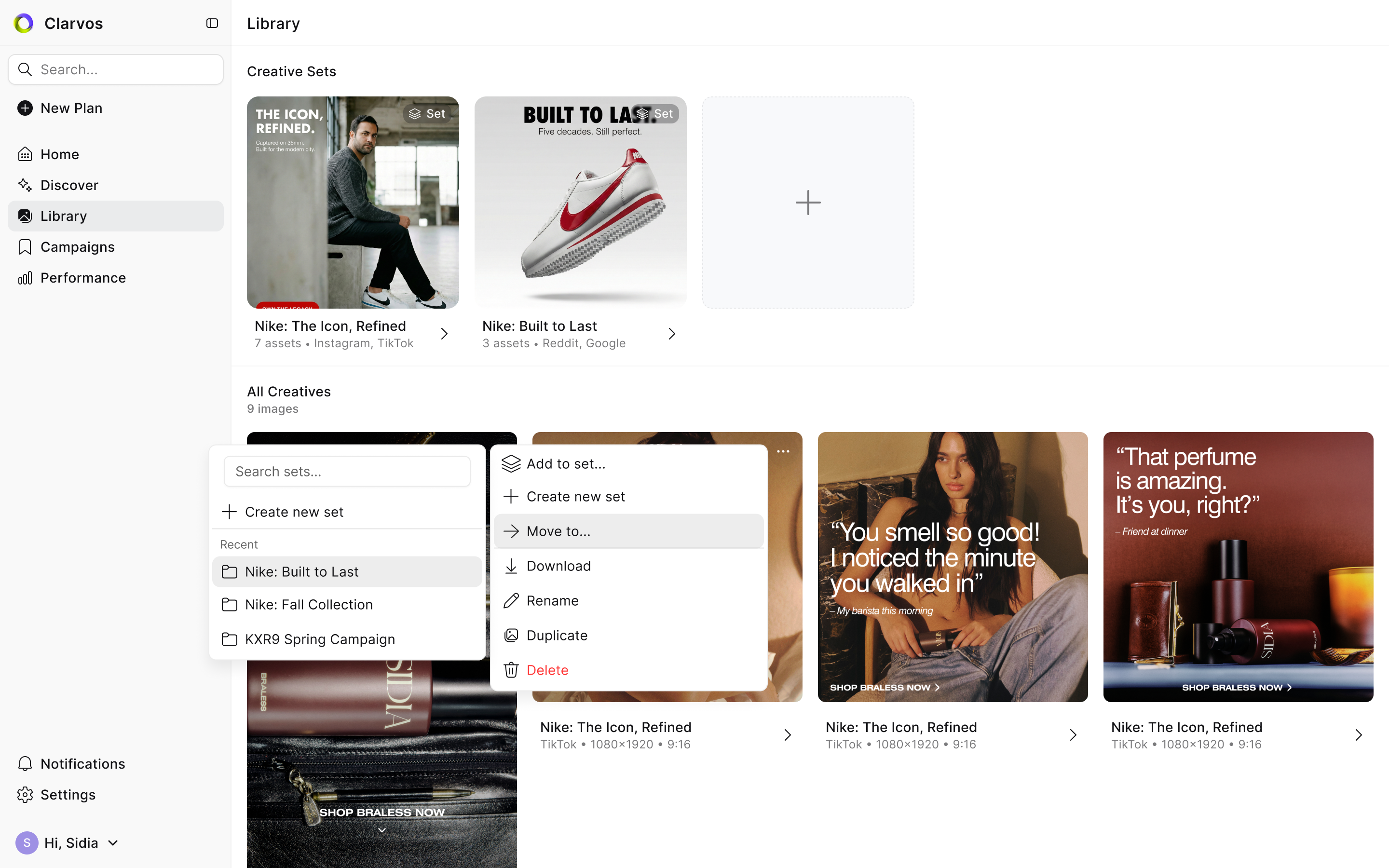
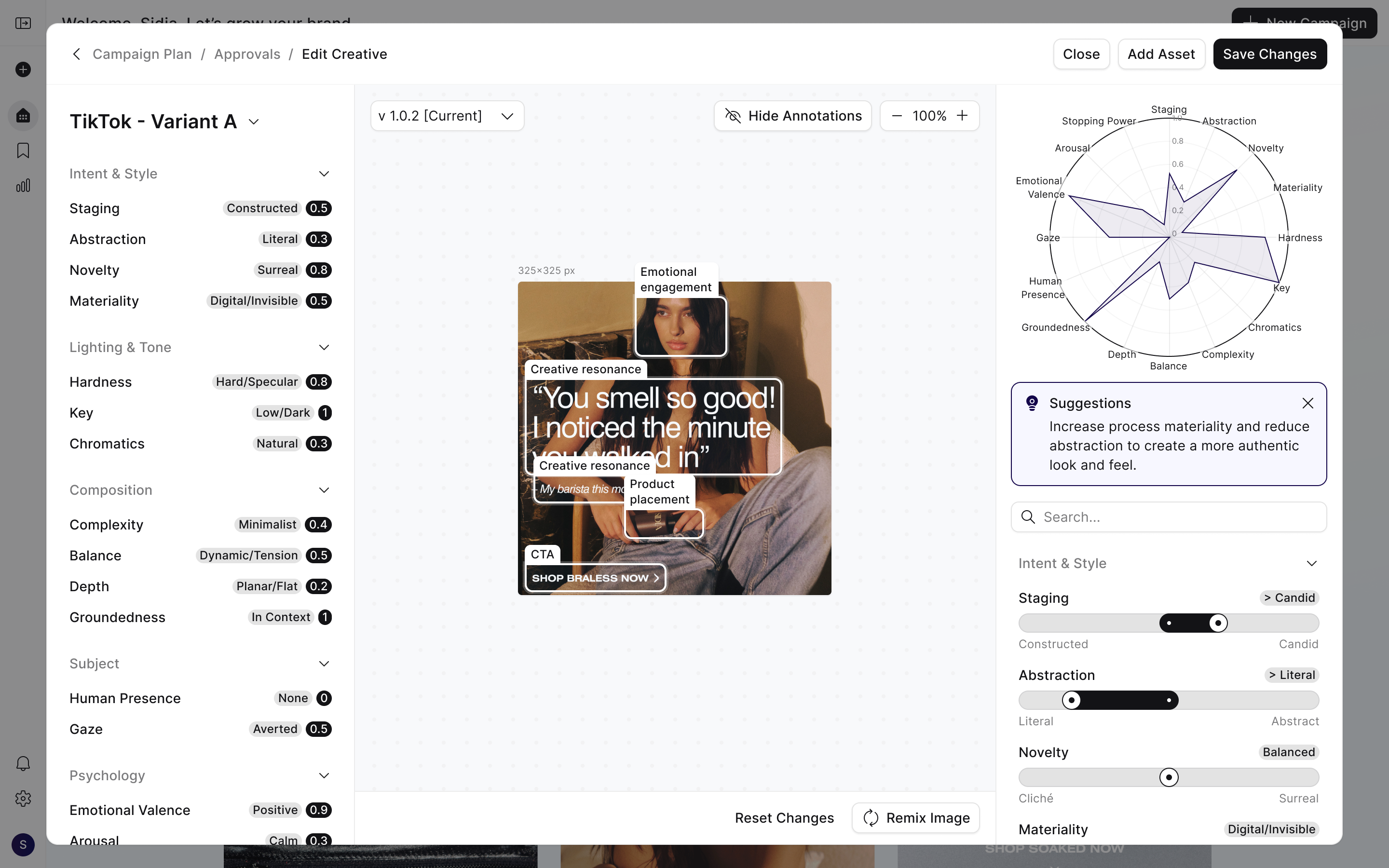
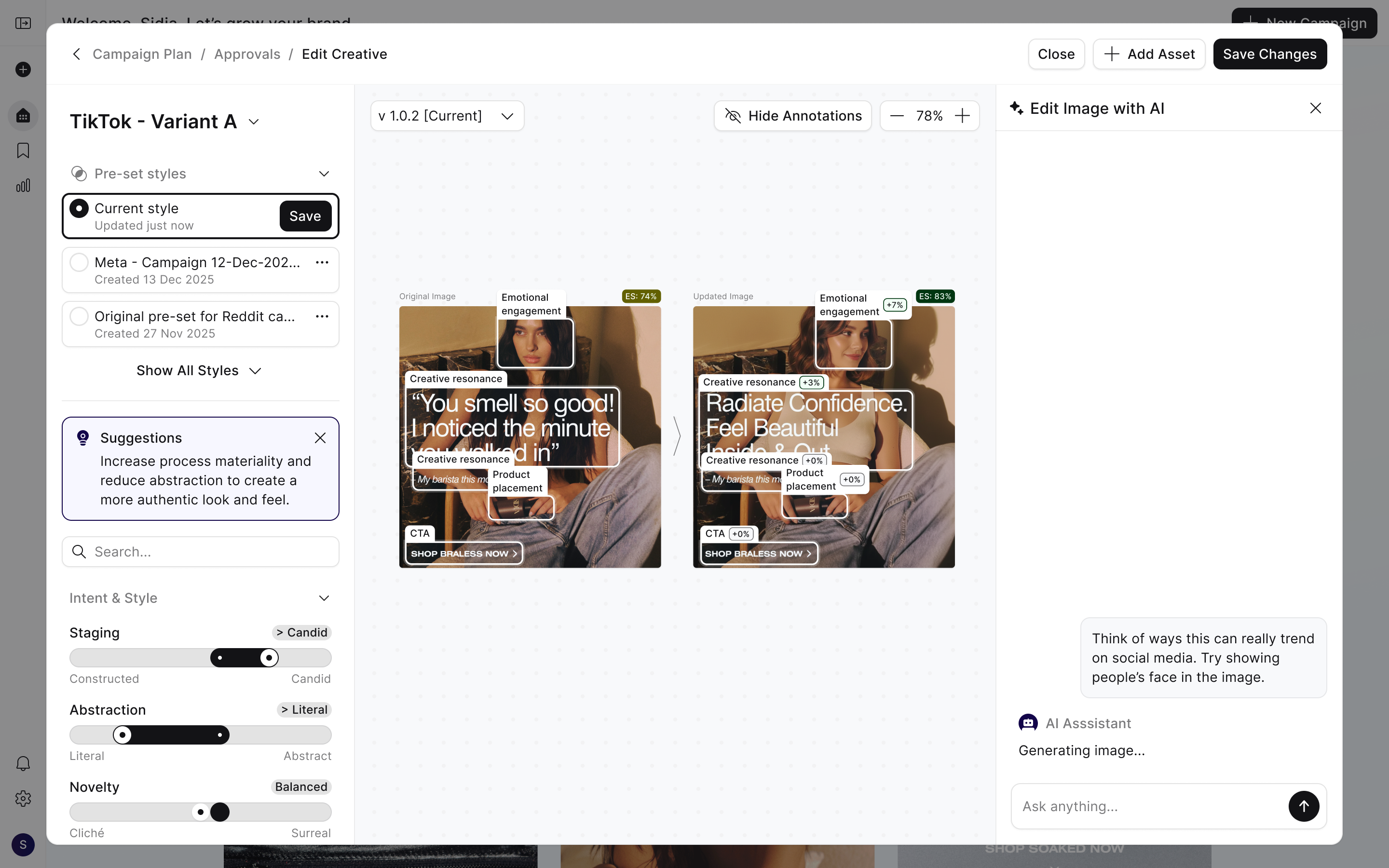
The platform generates on-brand ad creatives — images and video — by understanding a brand’s visual identity, tone, and audience. Rather than outputting generic AI slop, the system produces polished, production-quality assets that feel intentionally designed.
I designed the creative library as a command center where marketers can organize, review, and curate AI-generated variants. Every asset surfaces a hybrid quality score that combines AI analysis with human judgment — evaluating intent, style, composition, and emotional valence.
Building agents behind the interface
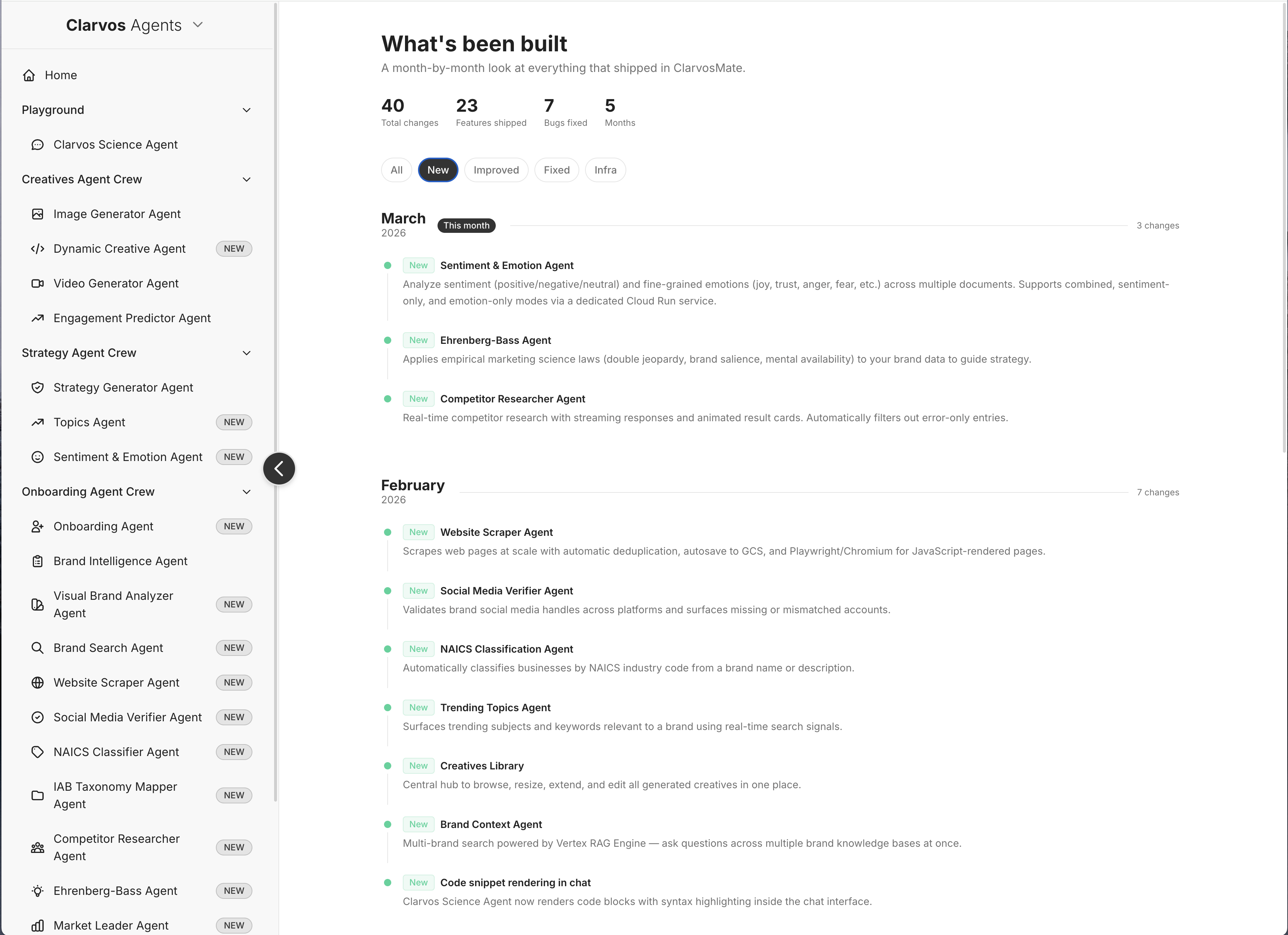
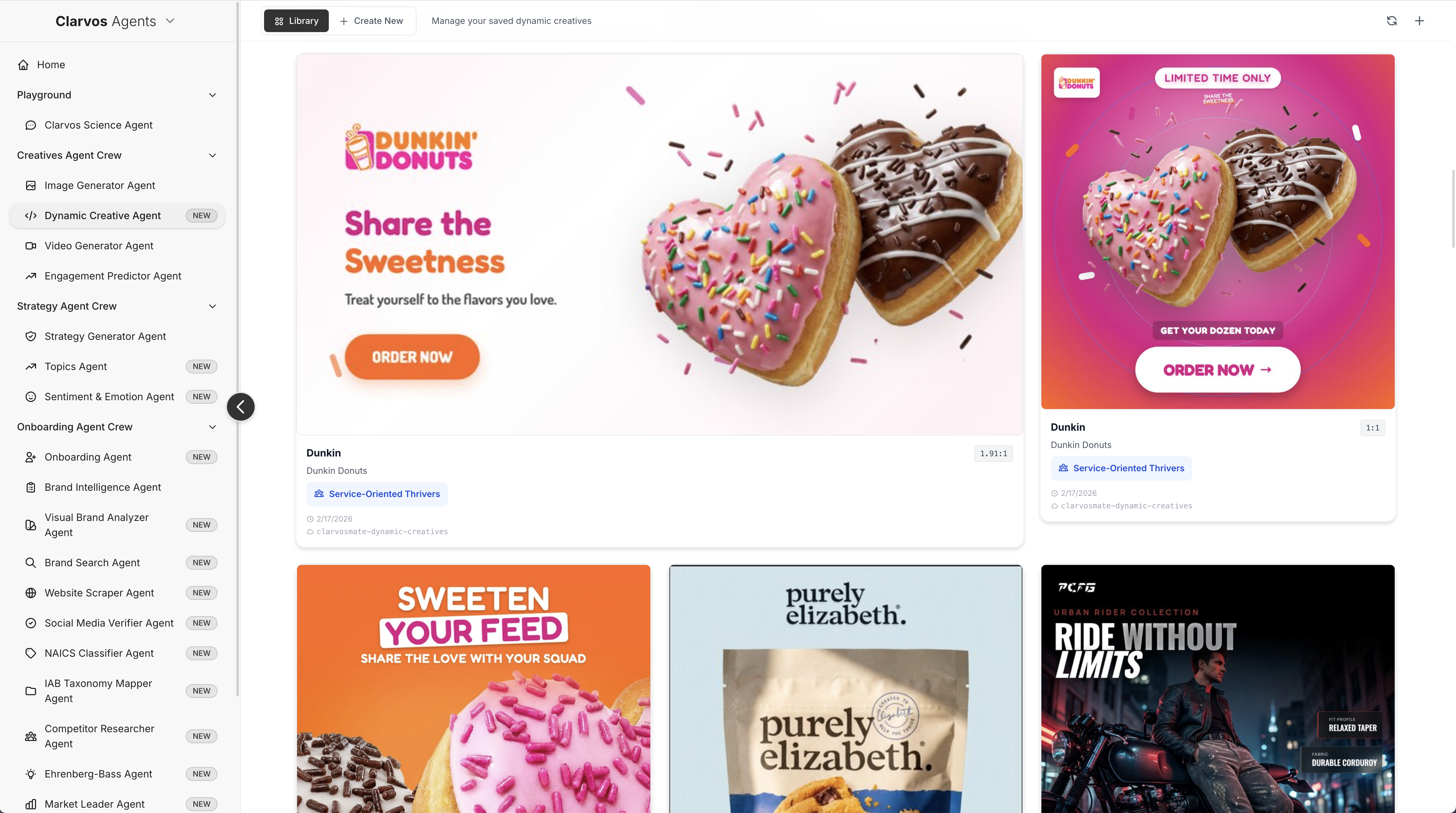
The creative intelligence users see is the output of a crew of specialized AI agents working in coordination. I worked cross-functionally with two AI modeling engineers, an advertising creative, and a PM to build and iterate on the dynamic creatives agent that generates editable images and text layers.
My role extended beyond interface design into the agent system itself. The team architected the structure together. I wrote the initial YAML configurations, contributed the photographic aesthetics encoded in the markdown spec files, and pair-programmed with engineers on the copywriting standards and art director heuristics that shape the image generation agent. The result is a system that produces work for real brands, including Dunkin', purely elizabeth, and PCG, rather than generic AI outputs.
From blank slate to live campaign in minutes
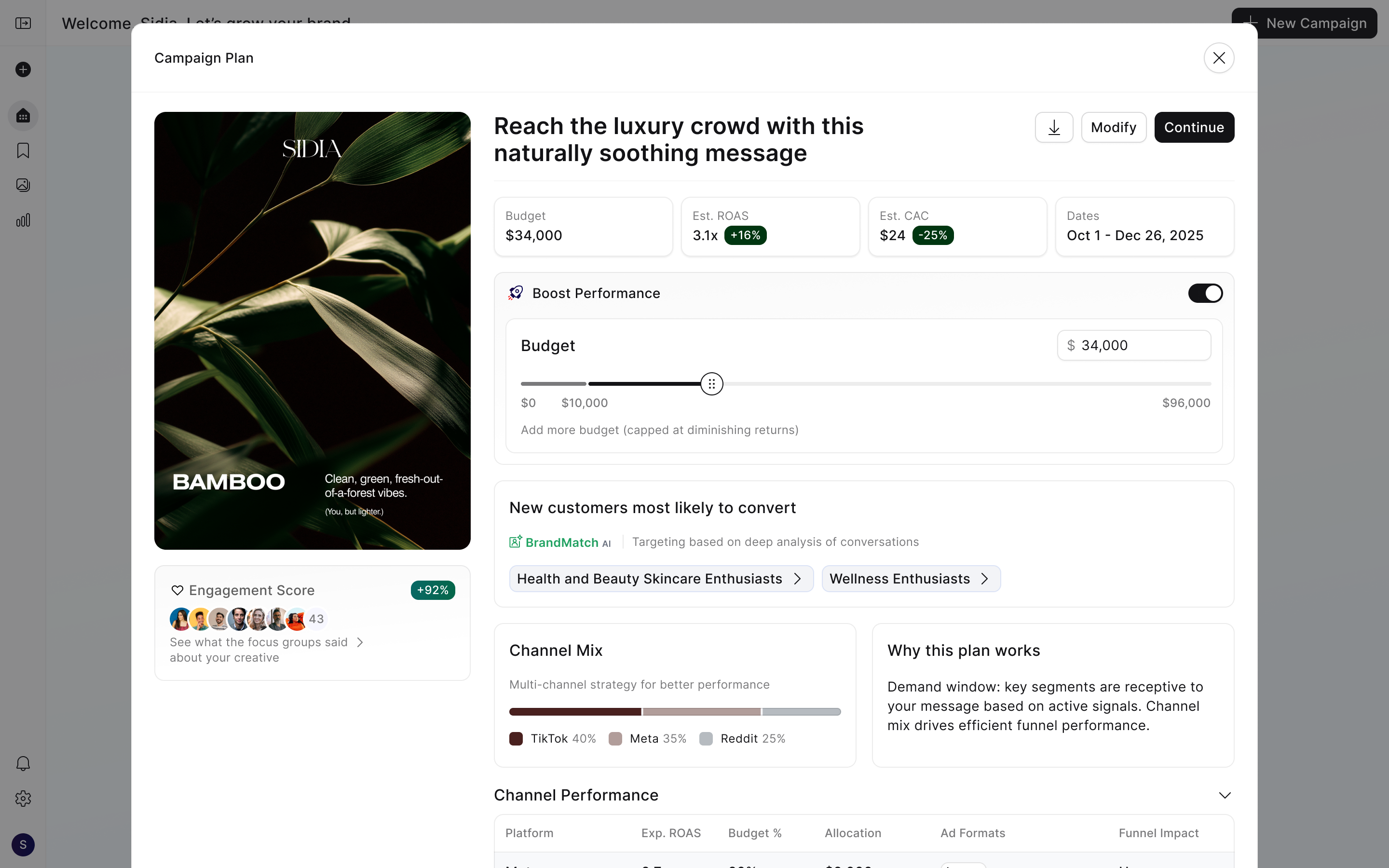
The campaign builder surfaces an AI-generated plan with budget allocation, ROAS predictions, and audience targeting already filled in. Marketers can accept the defaults, adjust any parameter, or override the AI entirely. The system explains why it made each recommendation, building trust through transparency.
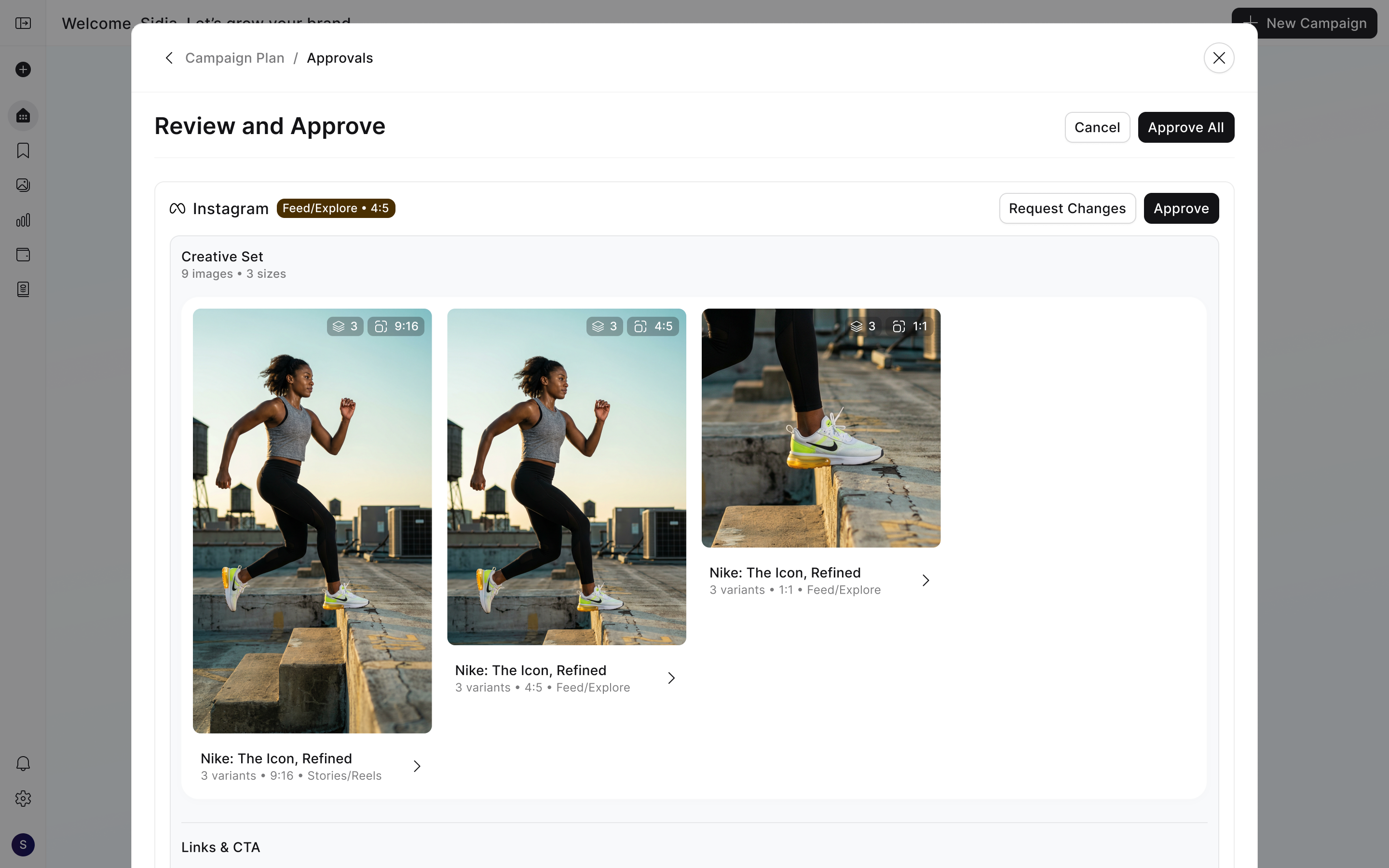
Before anything goes live, every placement runs through a review and approval flow. Creatives are shown in their actual platform context — Instagram feed, TikTok story, Reddit post — so marketers approve what their audience will actually see, not an abstracted preview.
Prompt-driven video editing for non-editors
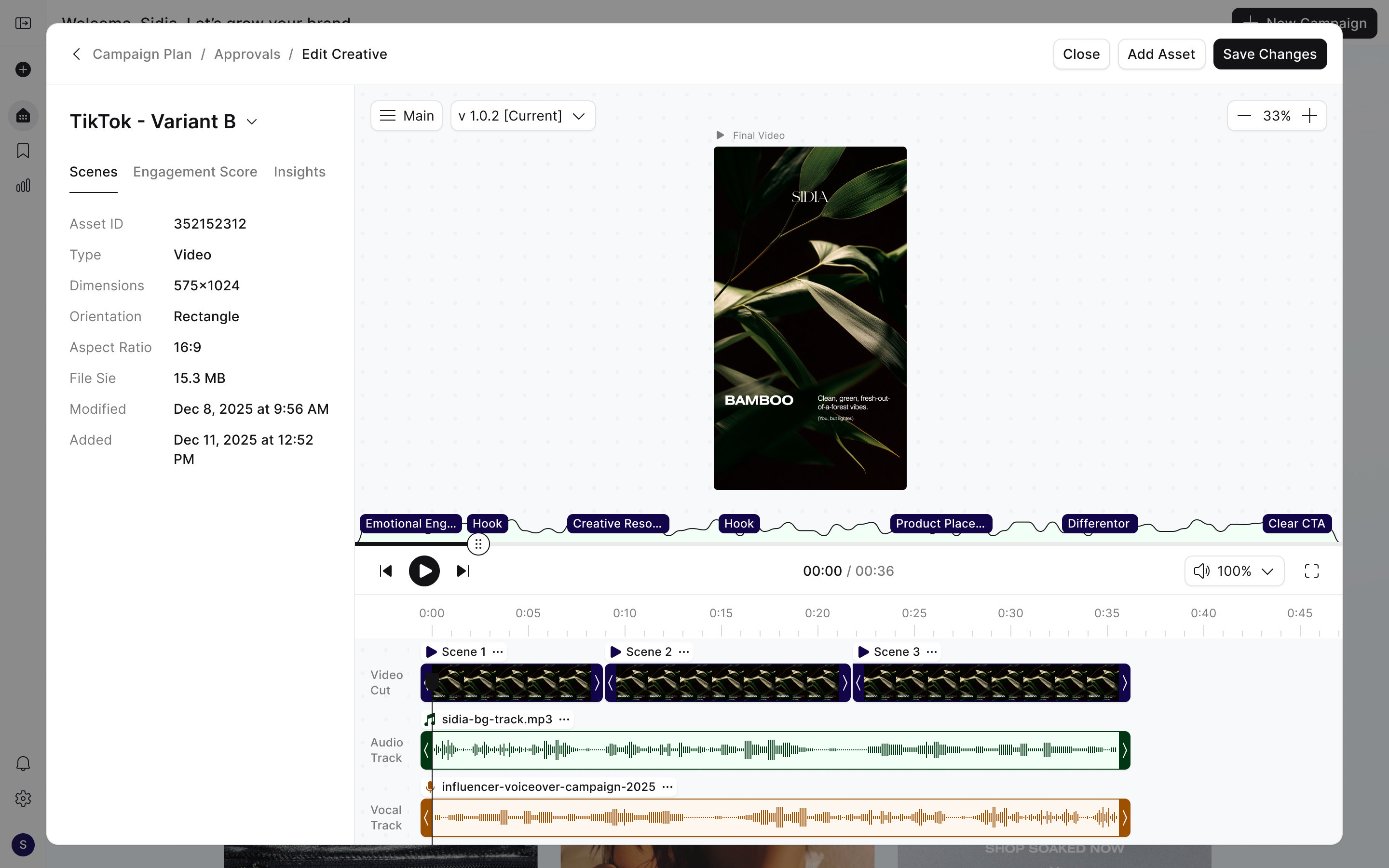
One of the most technically ambitious features: a scene-based video editor that lets marketers describe what they want in natural language. I designed it around a timeline metaphor familiar to anyone who’s used iMovie or Premiere, but replaced the complexity with AI-powered controls. Users compose scenes by describing them, preview variations, and assemble final videos — no editing skills required.
Three weeks from rebrand to public launch
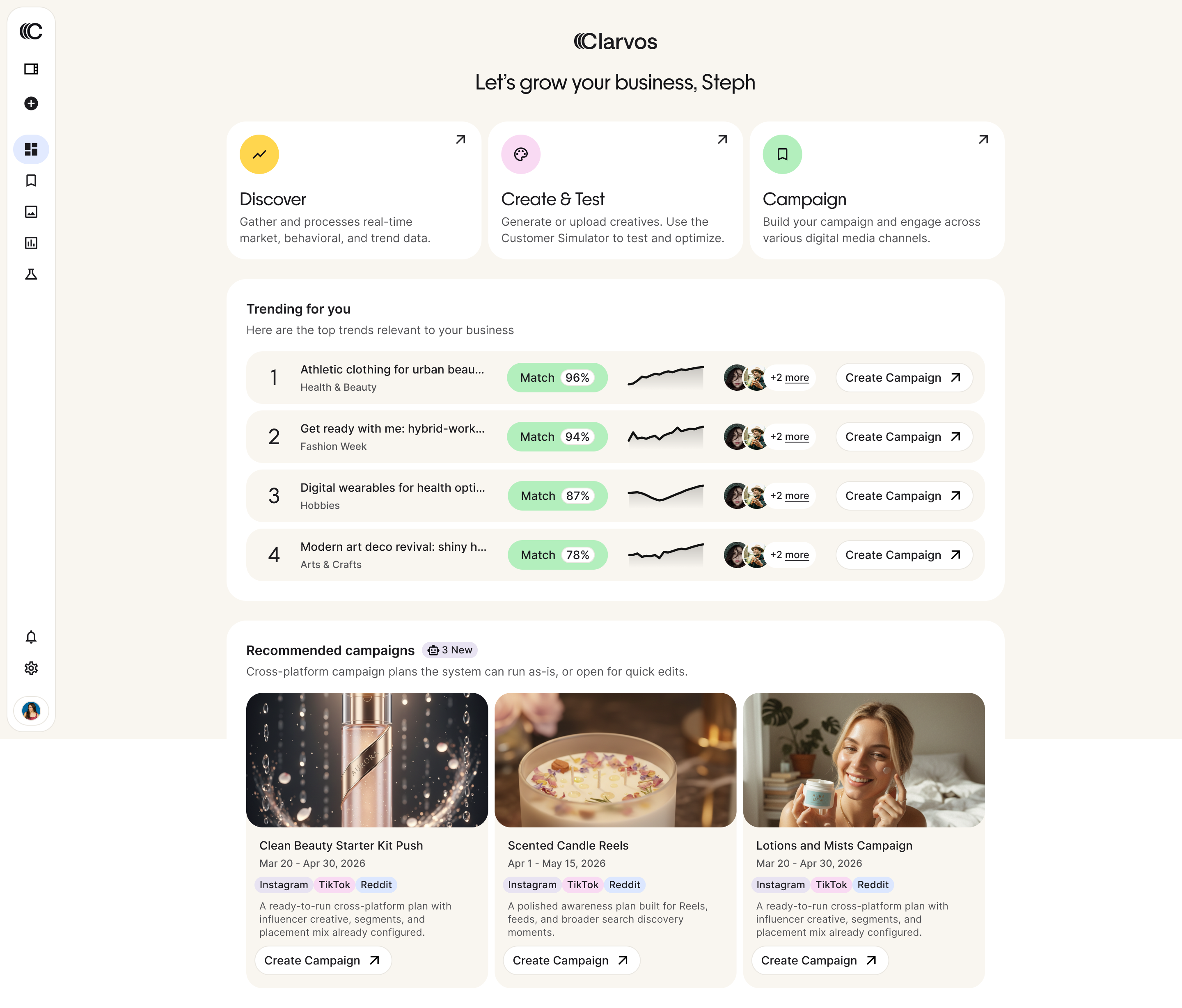
The company initiated a full rebrand, and since the redesign touched every surface end-to-end, it became an opportunity to improve the information architecture — not just reskin it.
From additional user testing, we learned that marketers with existing campaign assets wanted manual flows alongside the agentic ones. I designed a modular architecture where users could take the AI-optimized campaigns ready to run, but also use individual tools independently — just generate creatives, just run the customer simulator, or build a campaign manually from scratch. Maximum flexibility without compromising the core autonomous experience.
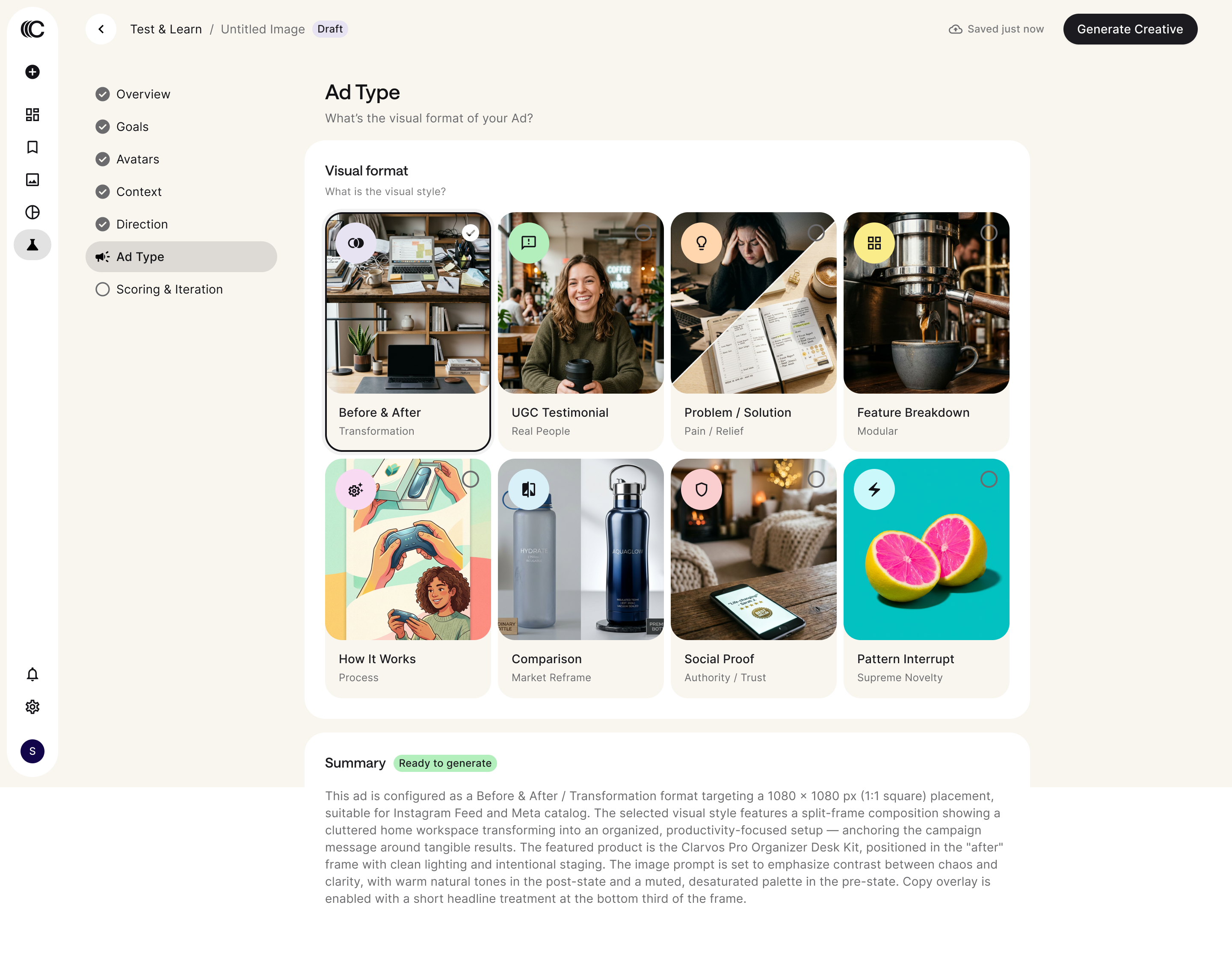
Synthetic focus groups that test creative before it goes live
I designed the synthetic focus group system: LLM swarms of 50 personas modeled on specific consumer segments, providing qualitative feedback with variance smoothing. Rather than one model representing an entire segment, groups of 50 bring the modeling closer to empirical observation — a feature rooted in the company’s data science DNA, expressed through an agentic AI interface.
The "Why This Plan Works" explainer followed a principle from behavioral science: even users who say "just handle everything" gain credibility from knowing an explanation is one click away. The paradigm remained non-action, but with transparency always available.
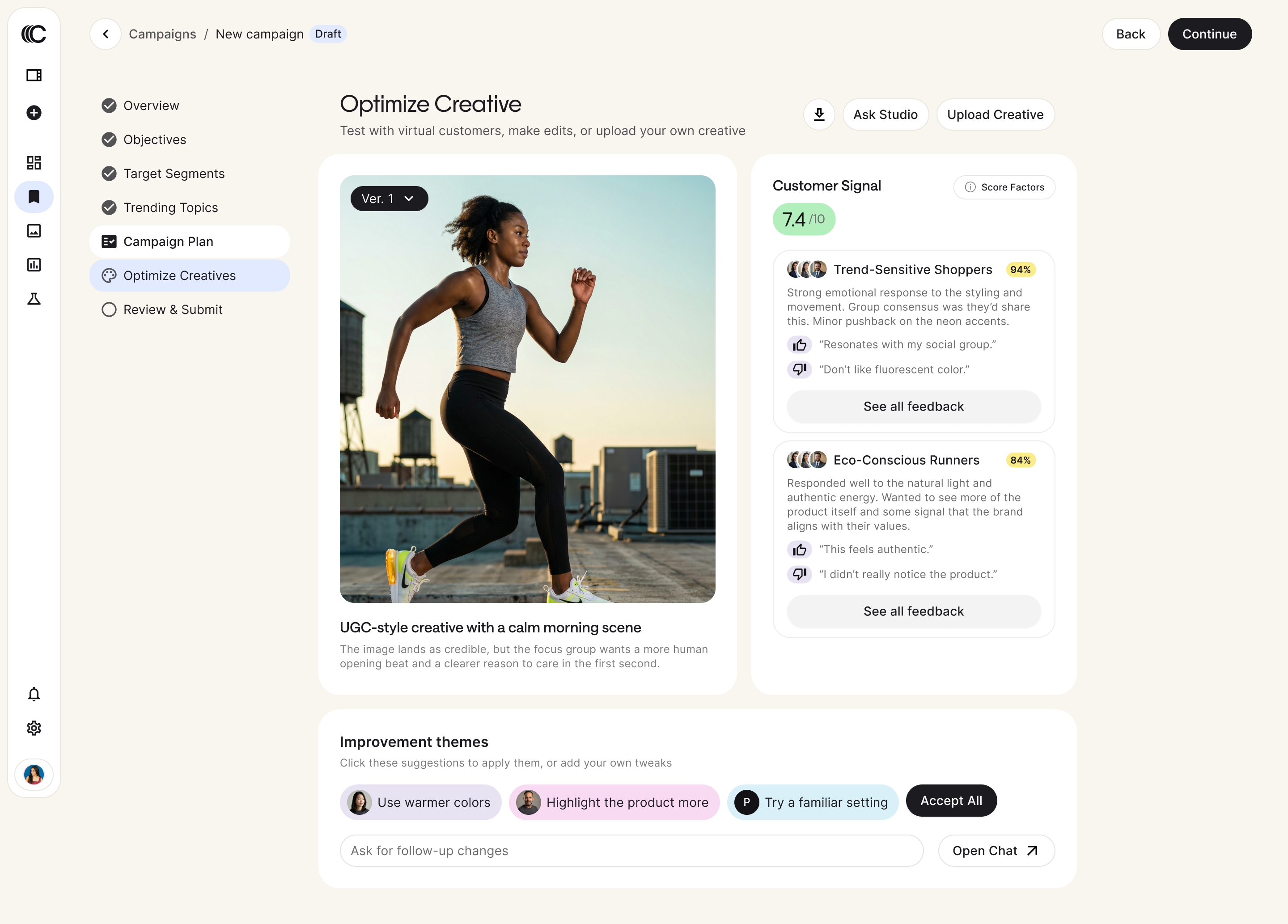
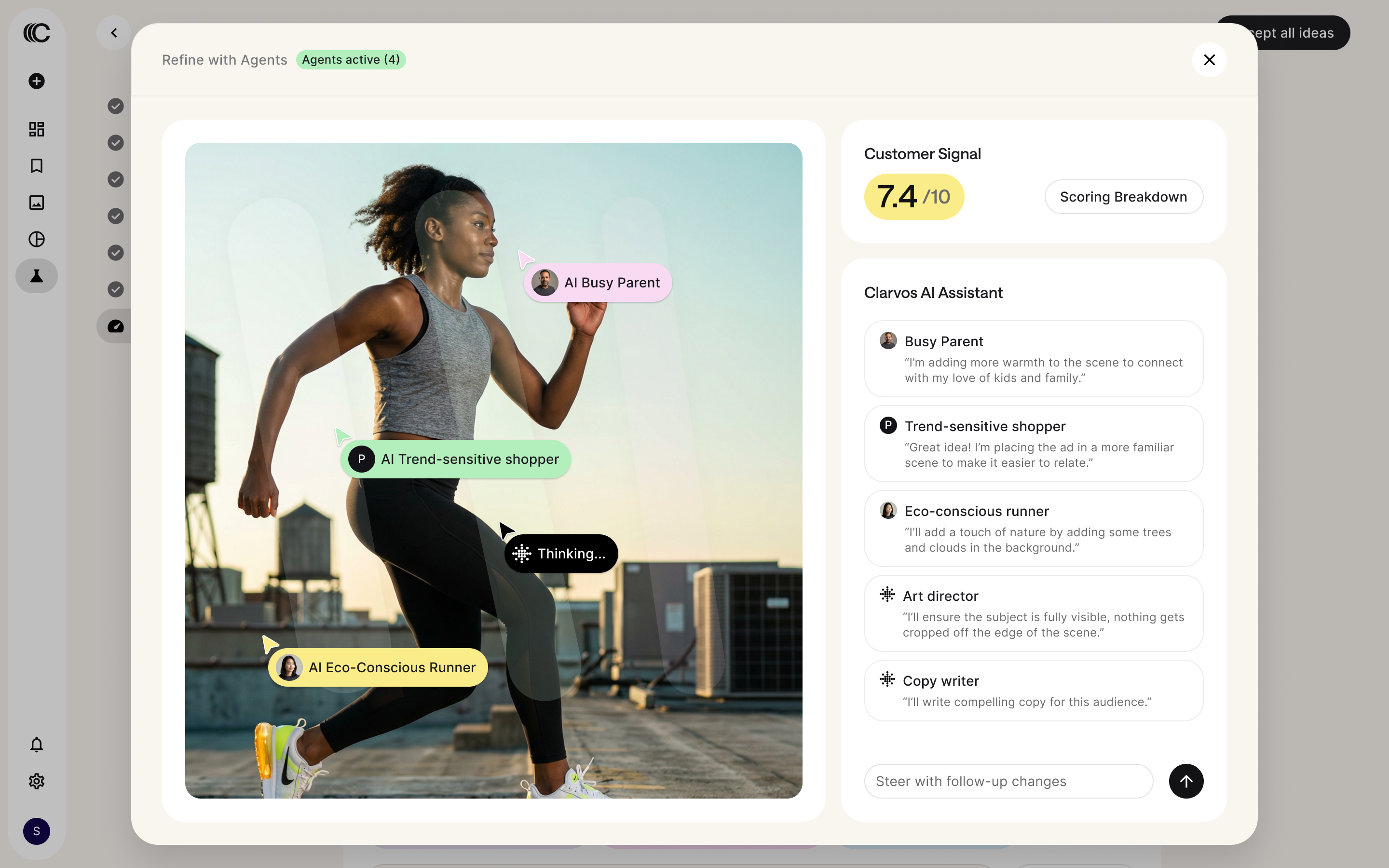
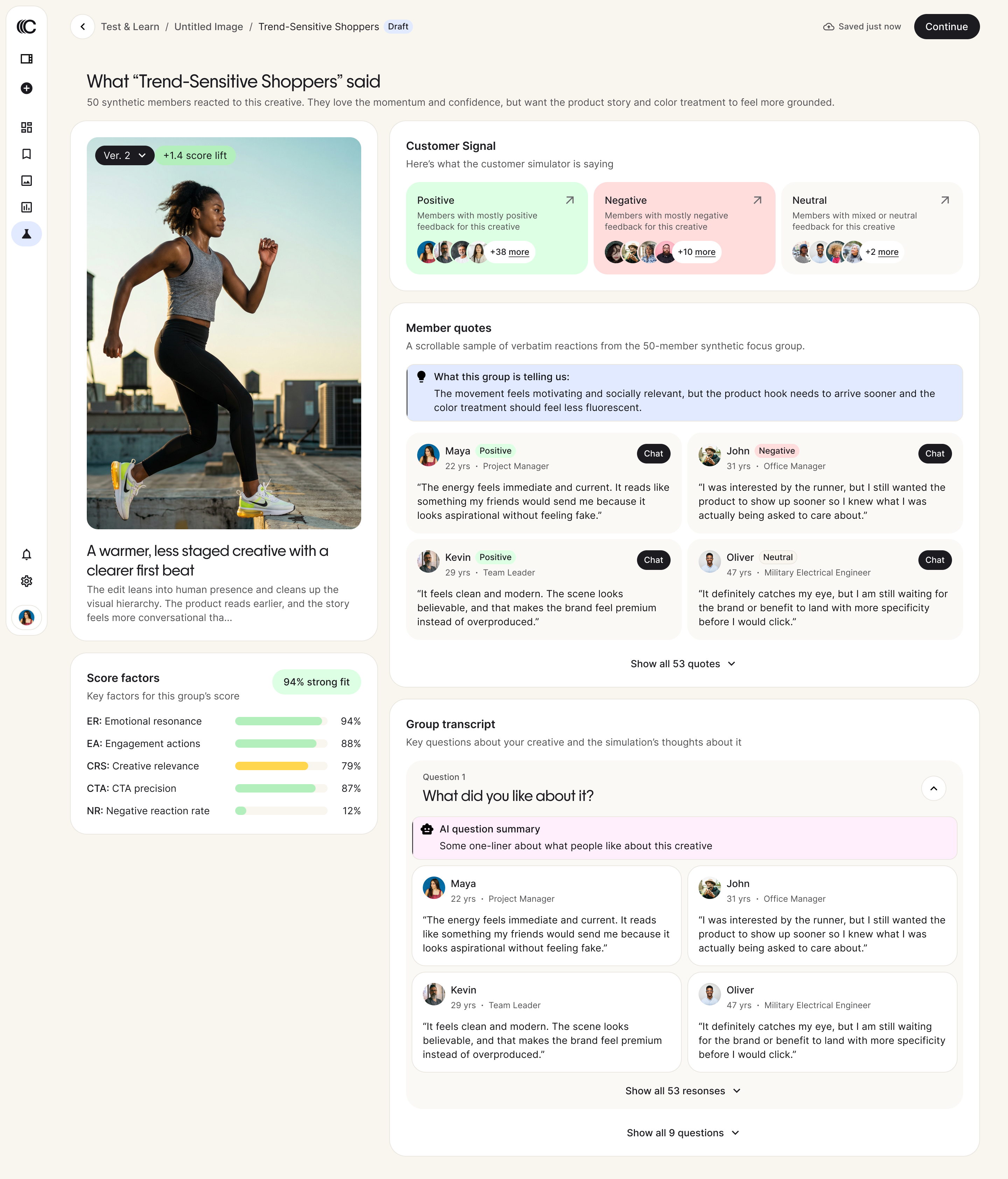
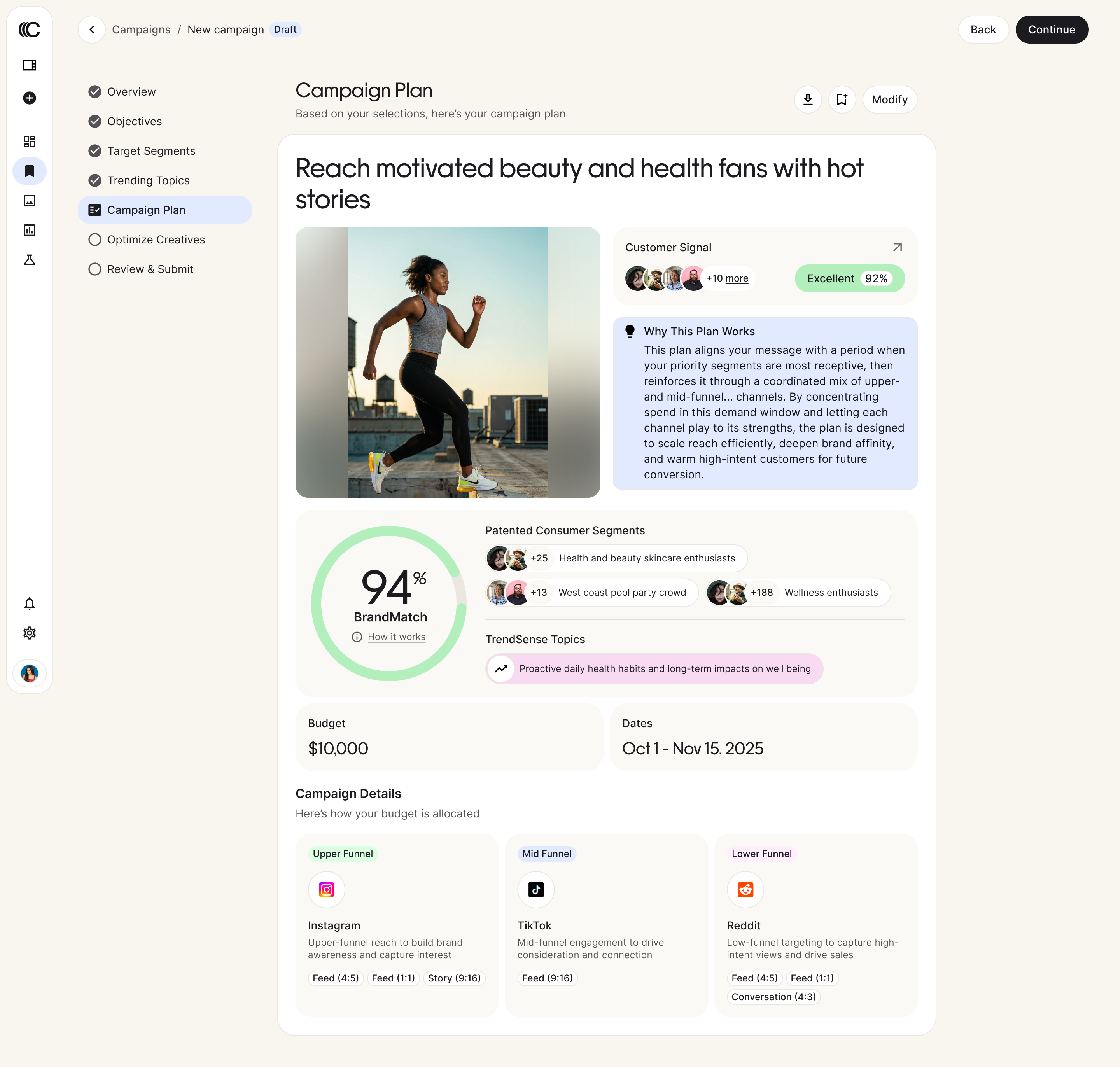
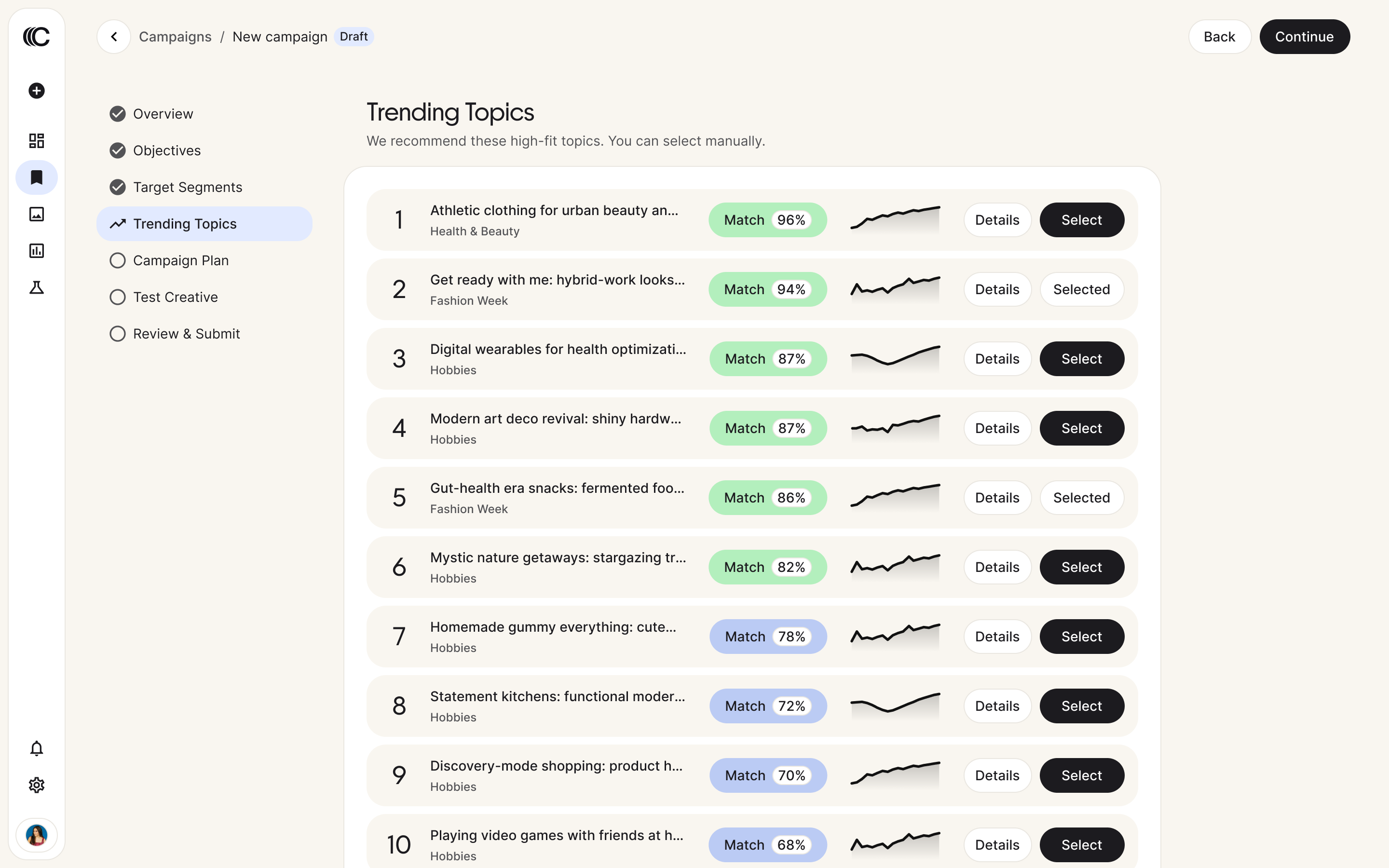
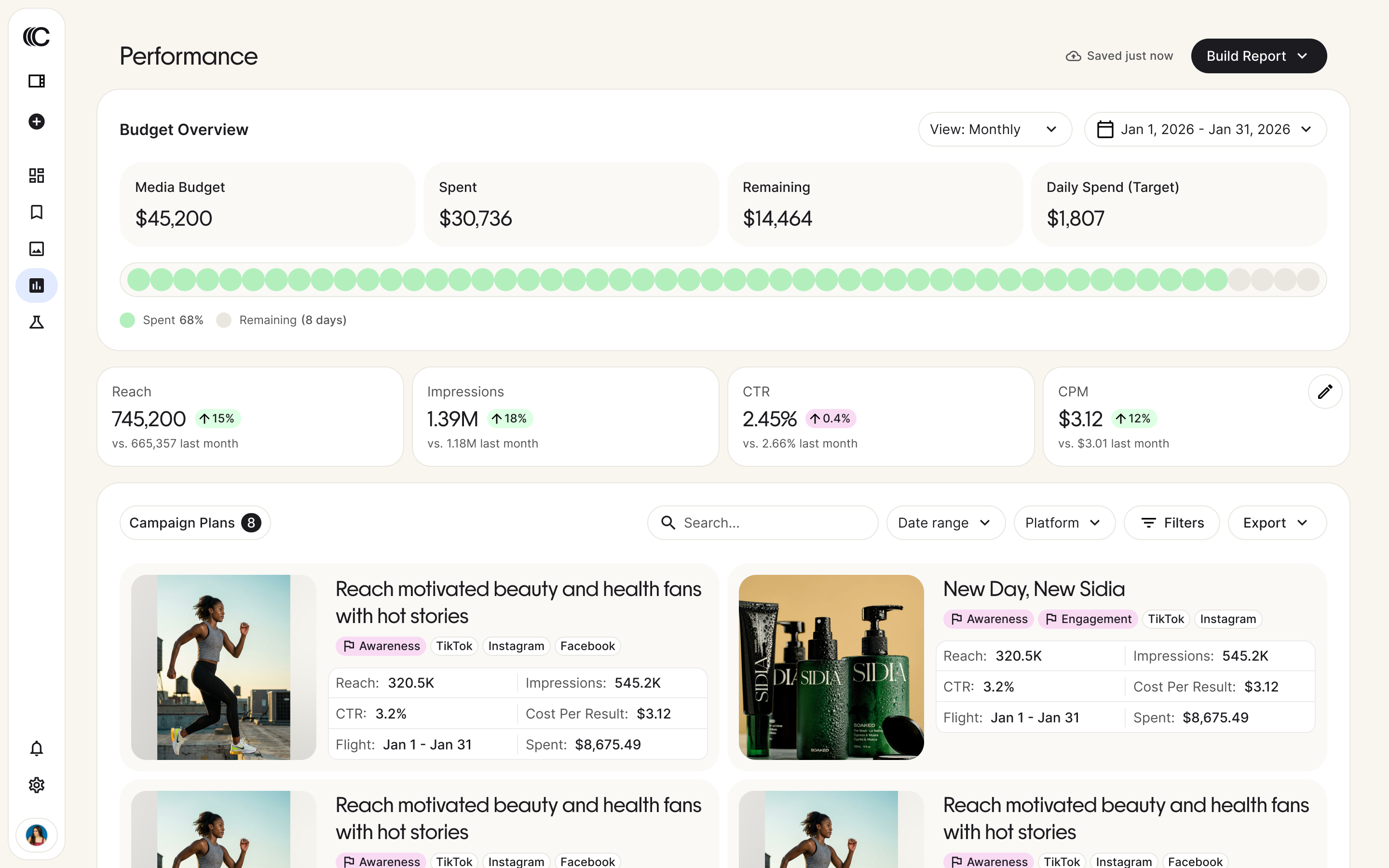
I folded all of this into the v3 redesign — branding, design system, UI styling, and reworked product flows — in three weeks. I used Codex and Figma MCP to accelerate initial designs, then refined visual designs in Figma including all design system components. I also coordinated with the branding agency and GTM team to deploy the new UI on the landing page and in the press release.
This led to a successful public launch on April 7, 2026, covered by BusinessWire, SiliconANGLE, and MarTech Series. Our first beta customers are already in the platform, and we’re gathering voice-of-customer insights to inform further iteration.
From data science startup to agentic AI platform
Over 18 months, I led the product design through three complete iterations — from a metrics dashboard to an agentic platform to a rebranded launch product. The work spanned product strategy, interaction design, design systems, user research, and cross-functional coordination with engineering, AI/ML, branding, and GTM.
The core design principle — non-action, non-doing — survived from the two-day brainstorm through to the shipped product. That’s rare, and it means the initial insight was right and the execution held up.
My contribution
Product Strategy
Product Discovery
Interaction Design
Design System
Prototyping
User Research
Collaborators
CEO, CTO & CPO
AI/ML Engineers
Full-Stack Engineers
Branding Agency
GTM Team
Tools
Figma
Figma MCP
Figjam
Claude Code
Codex
Cursor
Notion
Next project
Gator
AI Tech Support Chatbot