AstraZeneca Care
Enabled remote oncology monitoring through leading research and product design for patient and clinician tools.
Client
AstraZeneca
Role
Product Discovery & Design Lead
Duration
3 Months
Platform
Mobile & Web
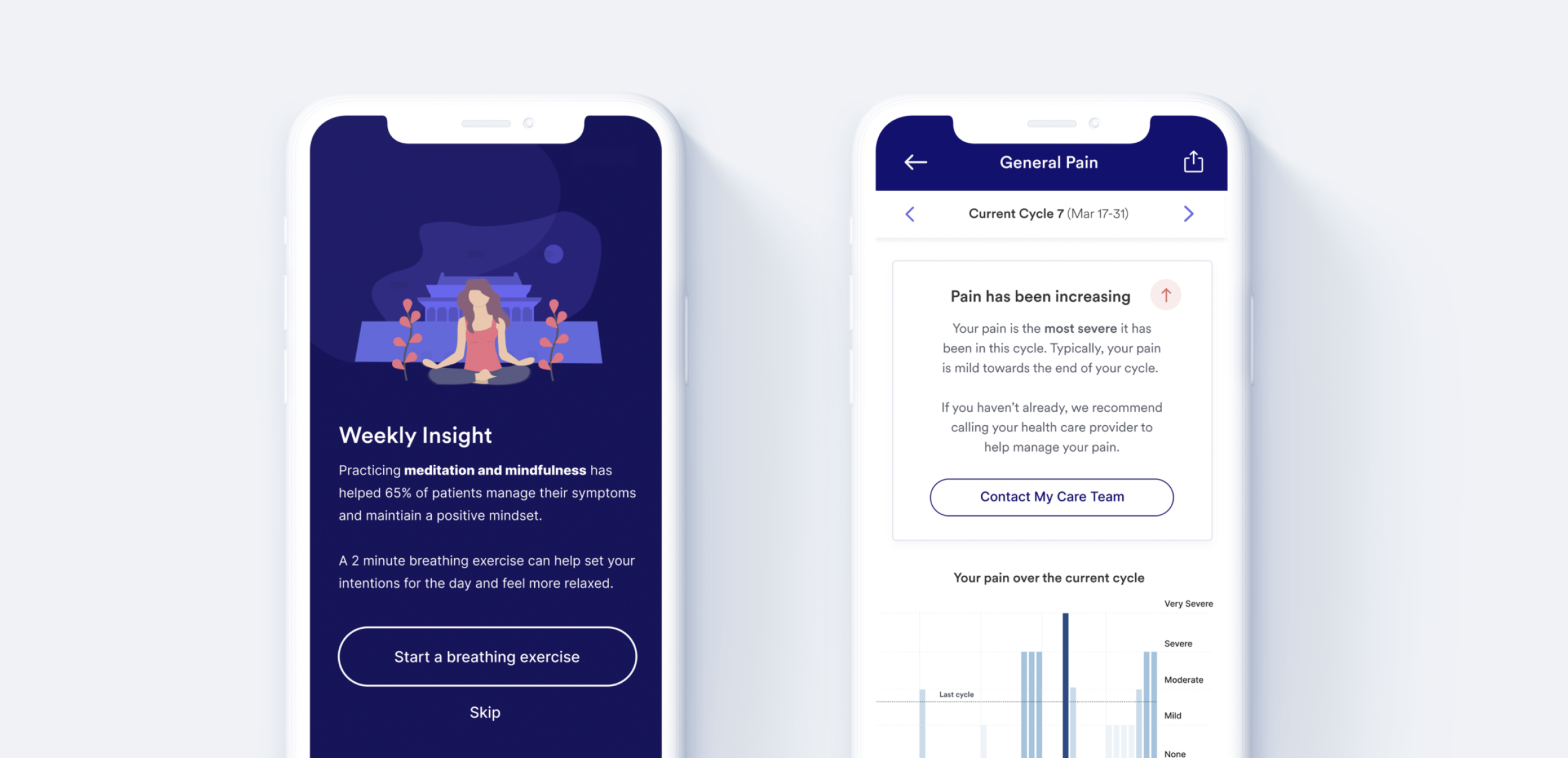
A digital platform to enable remote patient monitoring in the context of clinical research.
As a product design and discovery lead at AstraZeneca, I worked on cancer research platforms in the digital health oncology division. I designed a digital platform to enable remote patient monitoring in the context of patient-reported outcomes (PRO) clinical measures.
In addition to regular doctor visits, patients used the platform to keep track of their symptoms and treatment side effects on a daily basis. Studies have shown that doing so tends to have a very significant benefit to long-term health outcomes, as well as longevity and patient quality of life.
I interviewed dozens of patients, doctors, RNs, and research staff to inform this work. As a team lead, I directed bi-weekly design sprints, each of which had specific hypotheses under consideration, always with user testing via prototype.
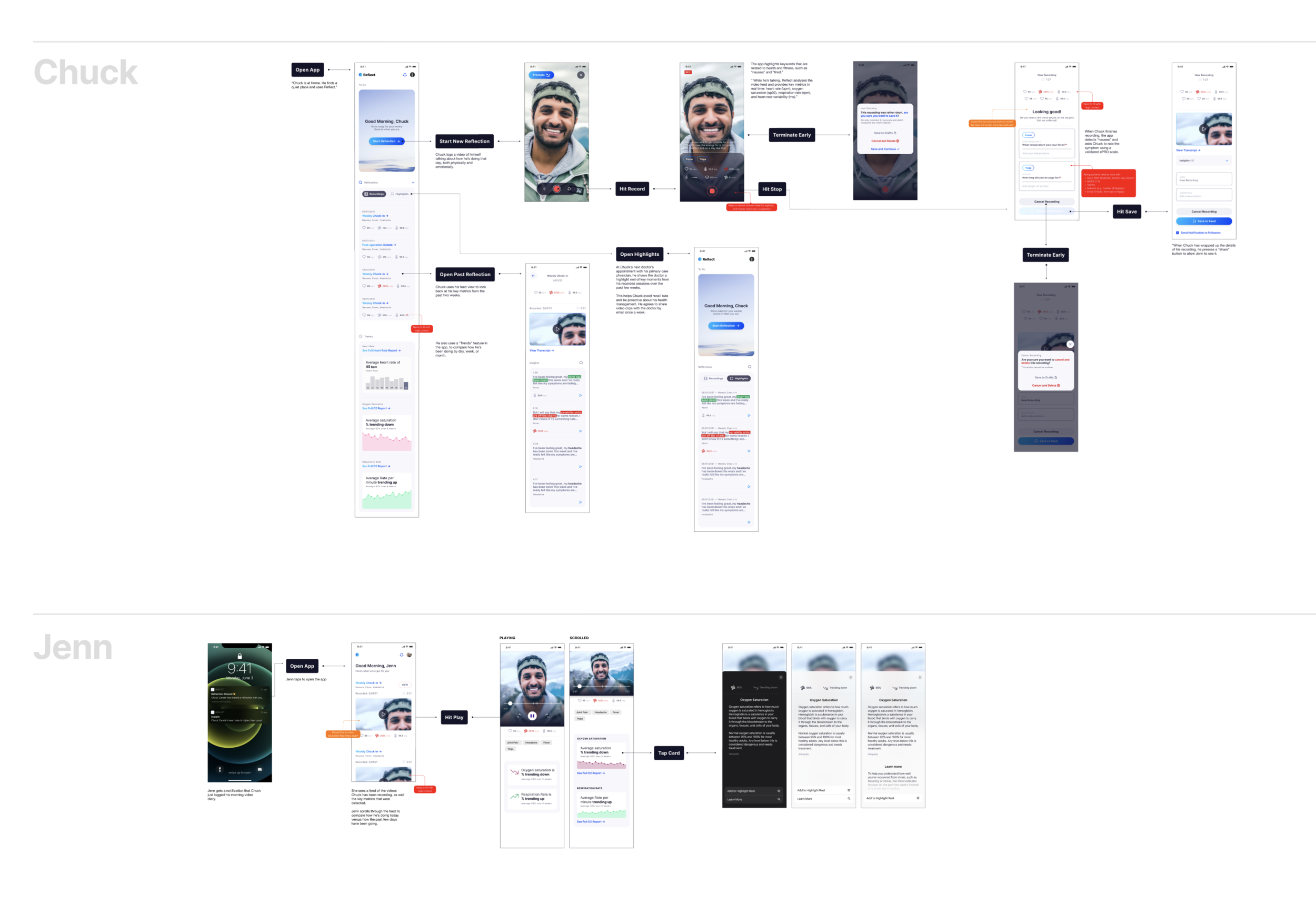
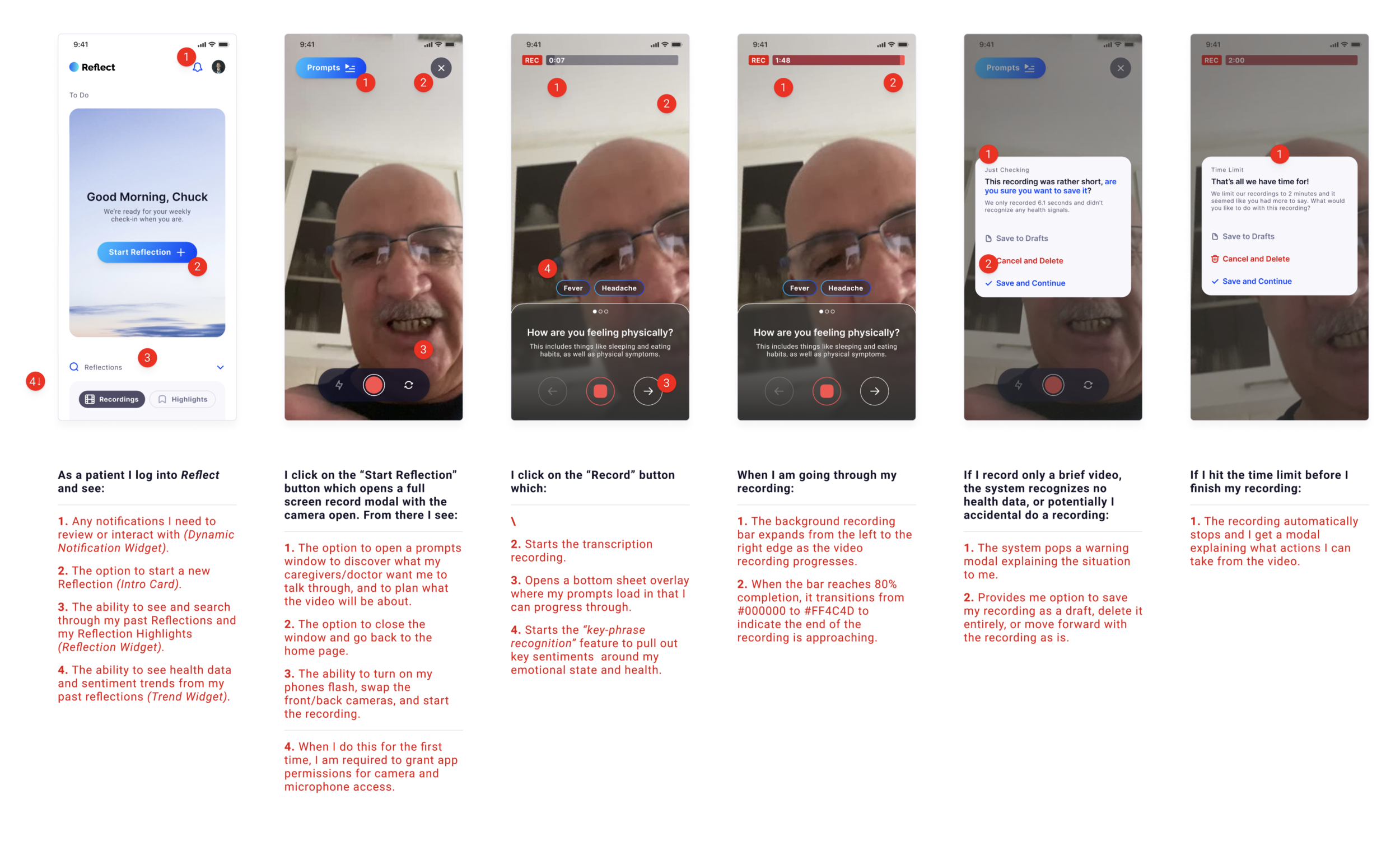
Patients can track their symptoms just by speaking in plain language.
The system uses an LLM to extract and normalize keywords from a one-minute voice recording. PPG technology is also used to gather health metrics by reading the bloodflow through the patient’s skin while they speak.
Two core user journeys for different moments
Some patients would want to do an ad-hoc check in to capture a health update. This needed to take less than one minute. At other key points, patients would need to sit down and do a guided check-in, more comprehensively, which would take up to 10 minutes.
Designing for both ensured rich data capture while giving patients a mechanism for low-impact participation during little pockets of time, fitting with their actual lived experience.
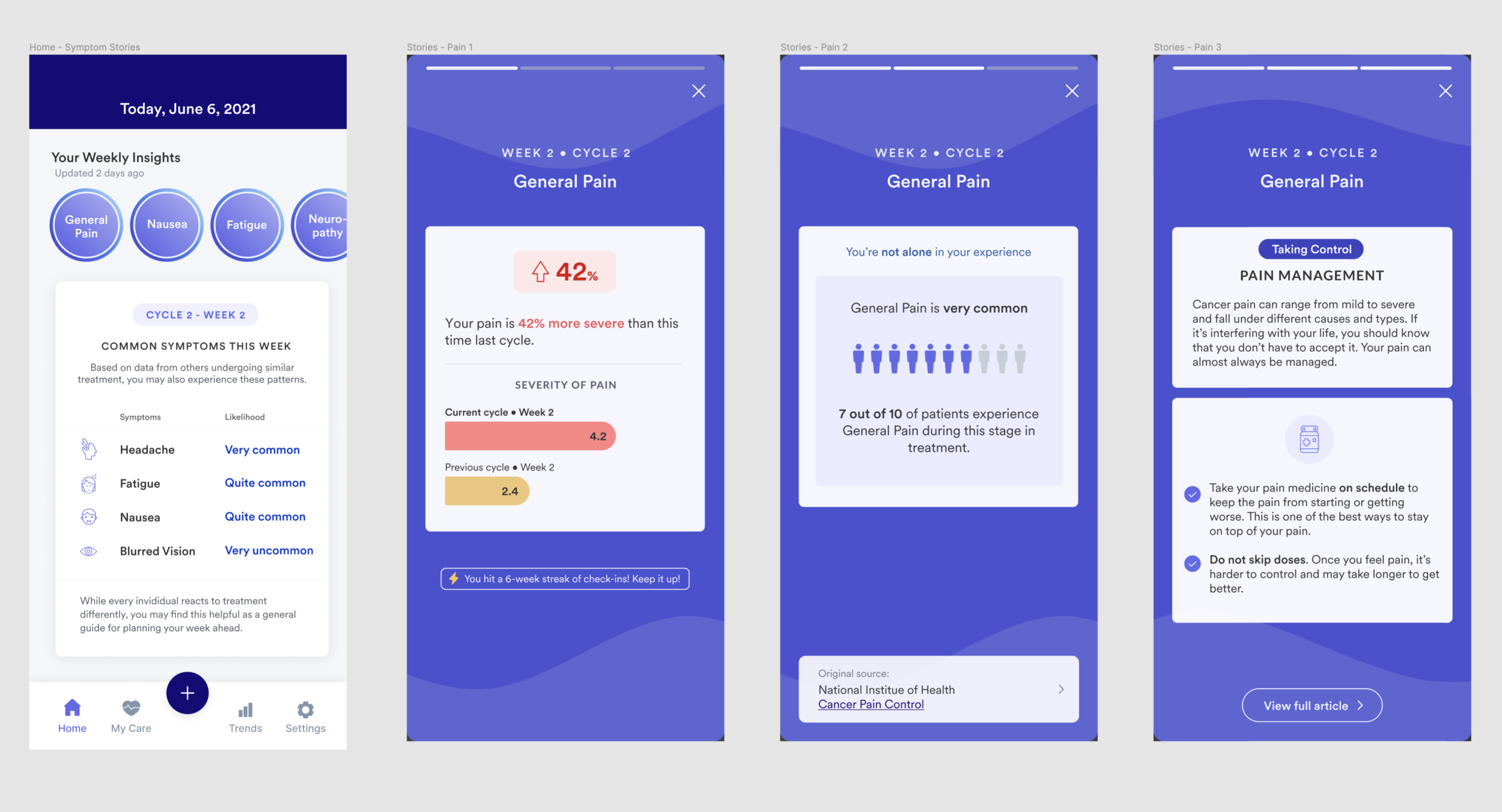
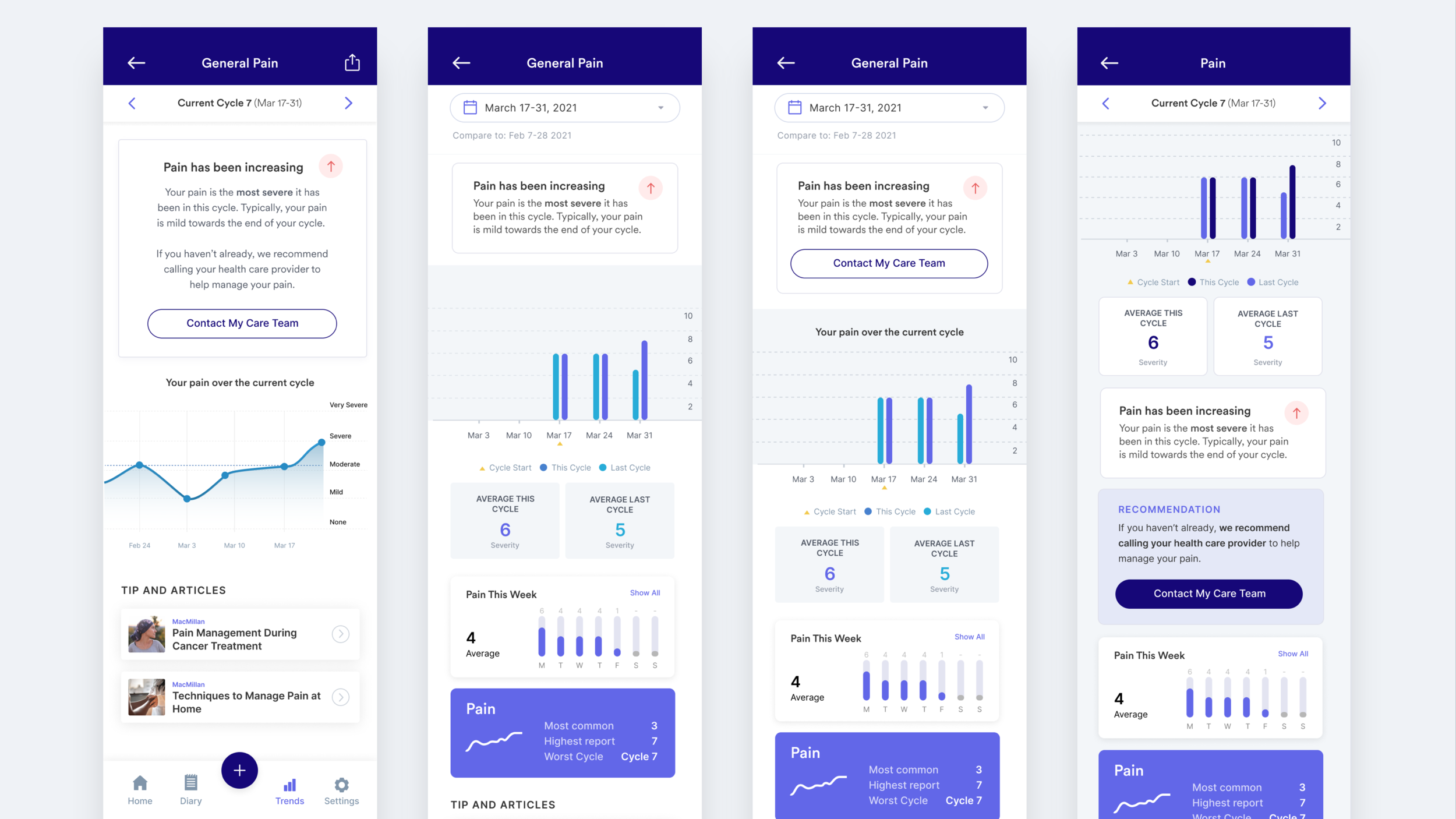
Iterating on data visualization through rapid concept testing
Based on research insights, I led ideation through sketching and collaborative workshops with stakeholders. Multiple concept variations were developed to explore how patients could best understand their symptom data — from weekly insights and community comparisons to actionable pain management articles.
Each concept was tested with real patients to understand which data presentations felt most useful and least overwhelming. This iterative process helped us converge on a design that balanced clinical rigor with genuine patient empathy.
Impact on clinical research
Through the iterative process, I led the team in designing an experience that patients loved, and that delivered rich data for the cancer research team. The platform demonstrated that thoughtful design can make clinical research more humane while simultaneously producing better data.
My contribution
Product Discovery
Design Leadership
Interaction Design
User Research
Design Sprints
Collaborators
Clinical Research Team
Patients & Oncologists
Engineering
Product Management
Tools
Figma
FigJam
Miro
Sketch
Next project
Wild Brains → Atlas
Brain Wearable