Wild Brains → Atlas
Lead designer through product discovery and definition for a consumer brain wearable — I executed all initial UX and UXR and designed the investor pitch deck that helped secure funding. The company has since rebranded as Atlas (atlasmankind.com), now building a nanotechnology-powered brain wearable with an active waitlist.
Client
Wild Brains (now Atlas)
Role
Lead Designer, Discovery → Definition
Stage
Seed Round
Platform
iOS
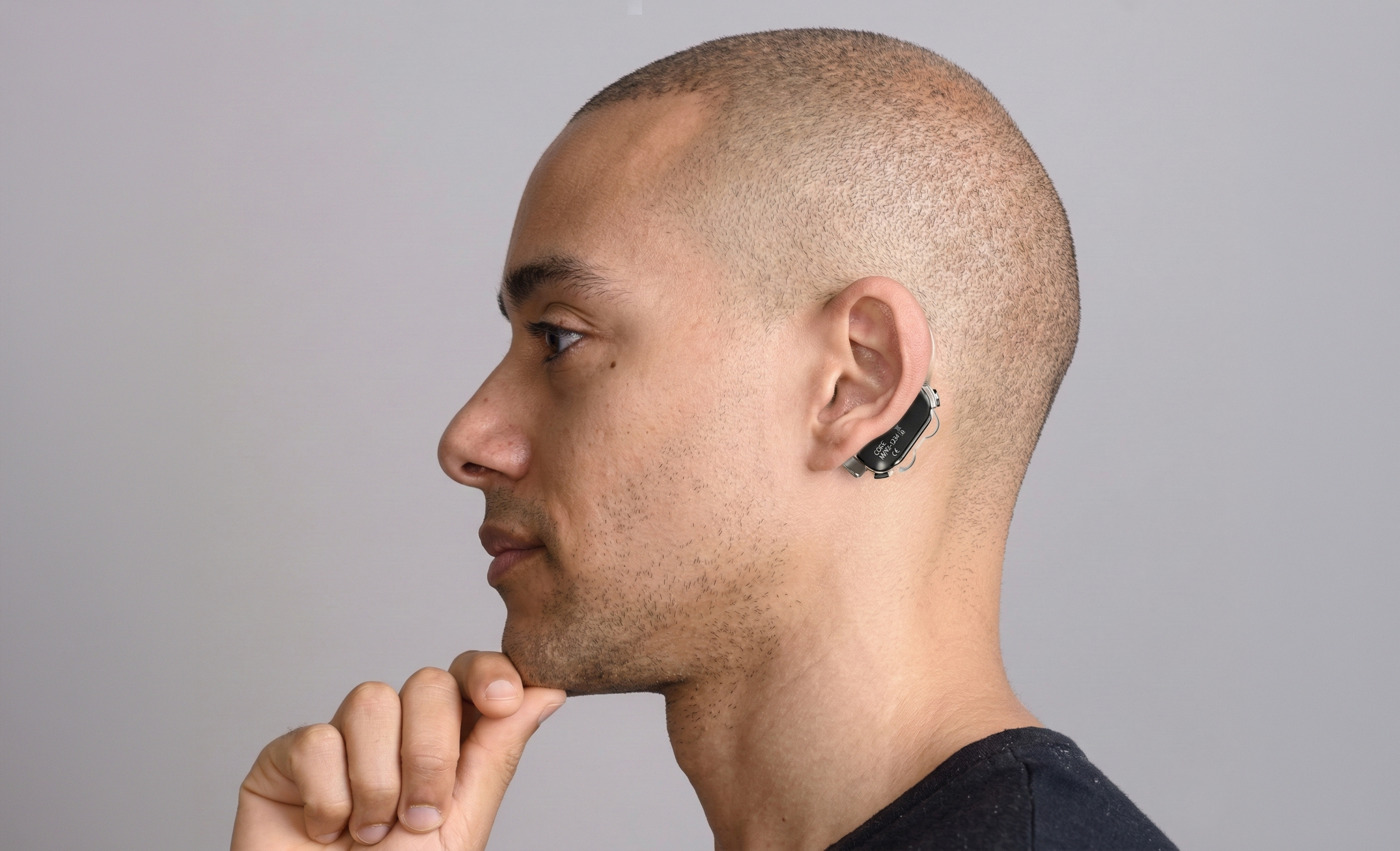
A wearable that reads your brain — and an app that trains it
Wild Brains is a direct-to-consumer brain optimization platform built around a lightweight EEG headband. The device measures neural activity in real time while the companion app translates that data into personalized training programs — creative exercises, focus sessions, and behavioral tracks designed to improve how users think, feel, and perform.
I joined as lead designer during the company’s seed round, carrying the product from discovery through definition — all initial UX and UXR, the original UI, and the investor pitch deck — working directly with the founder and a small engineering team. The challenge was twofold: make neuroscience accessible to a mainstream consumer audience, and create an experience compelling enough to drive daily engagement with a novel device category.
The hardest part wasn’t visualizing brain data — it was making people feel something when they saw it.
0+
Screens designed end-to-end
0
Brain metric dimensions tracked
0+
Personalization questions
0
Seed round secured
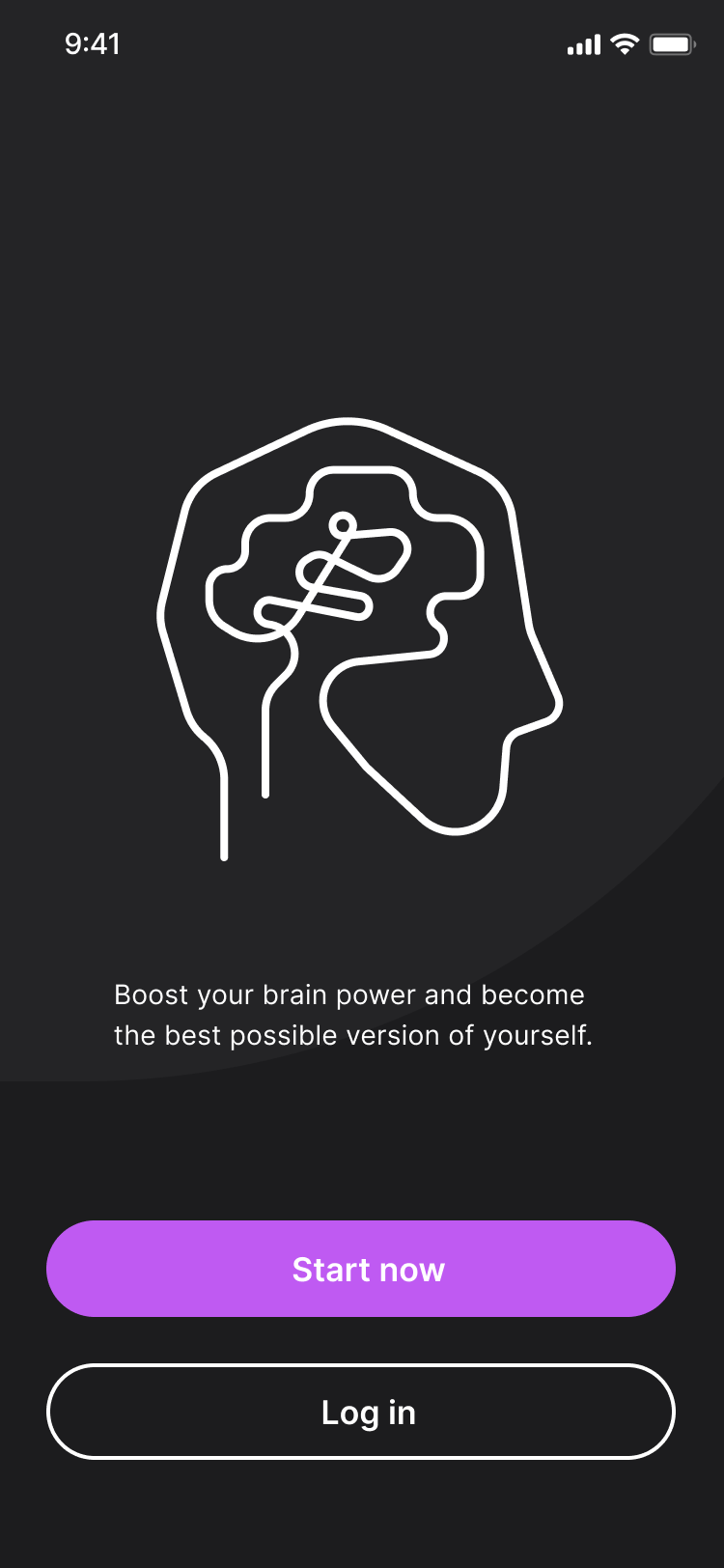
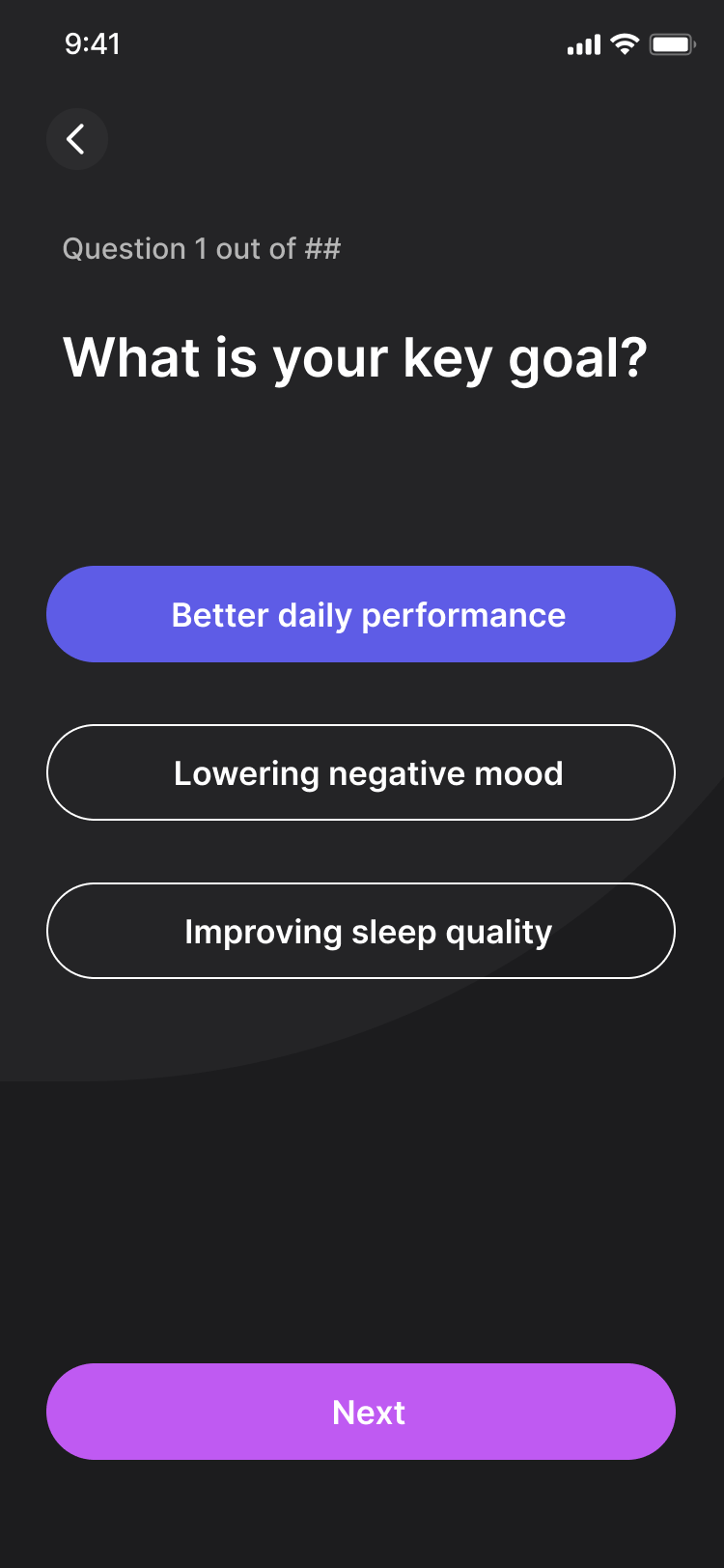
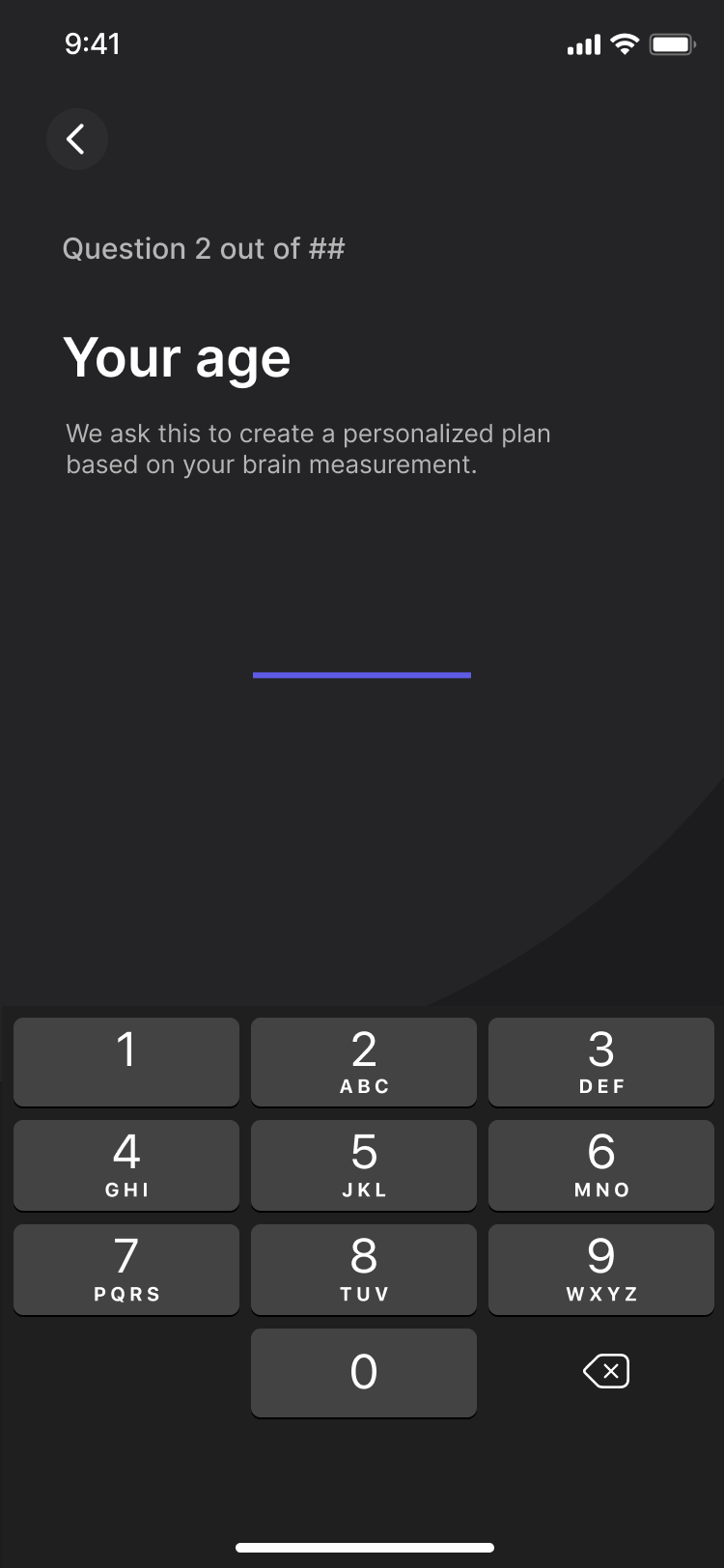
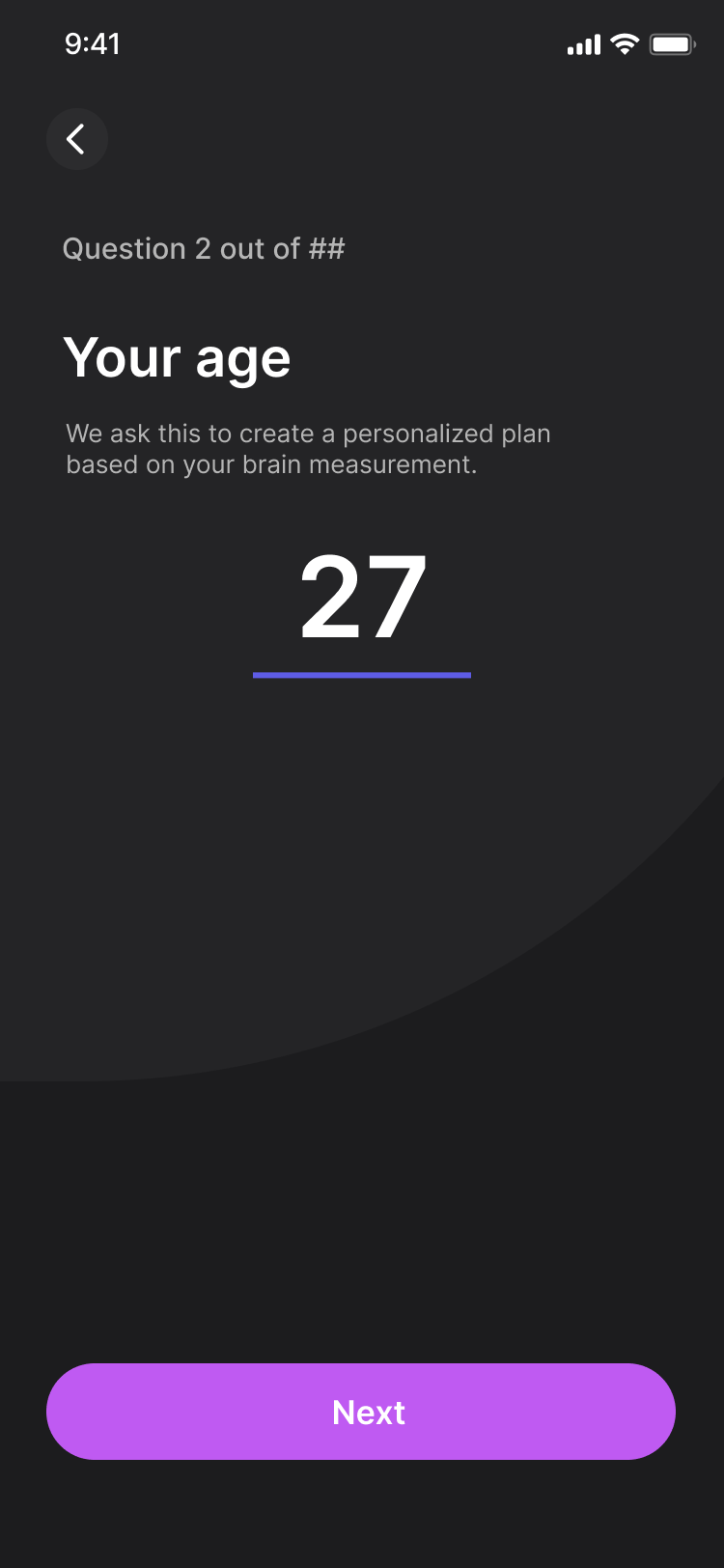
First touch — goals and basic profiling
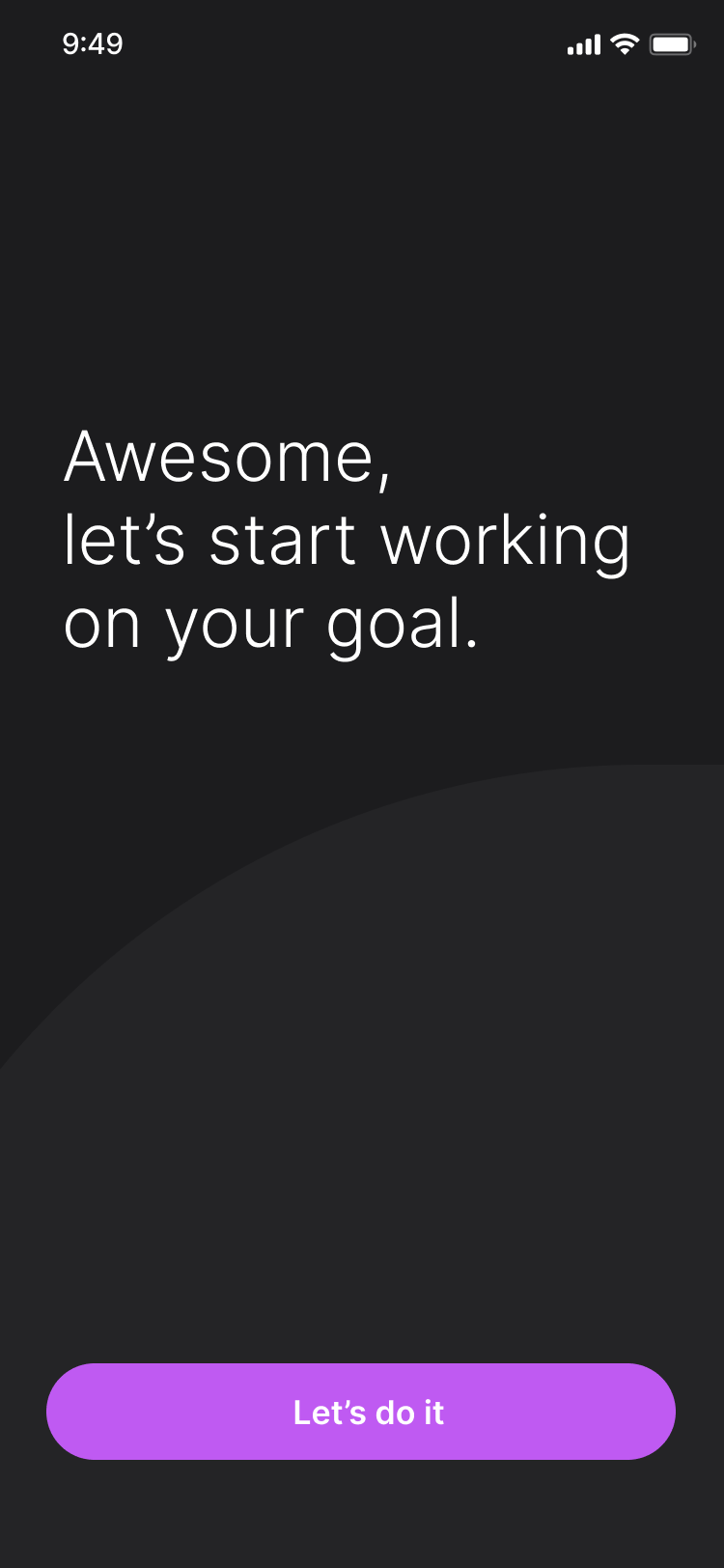
The app opens with a brand moment, then immediately gets to work. Users set their primary goal and enter basic demographics — just enough to start generating a personalized plan. No account creation friction, no feature tours.
Building a behavioral and psychological profile
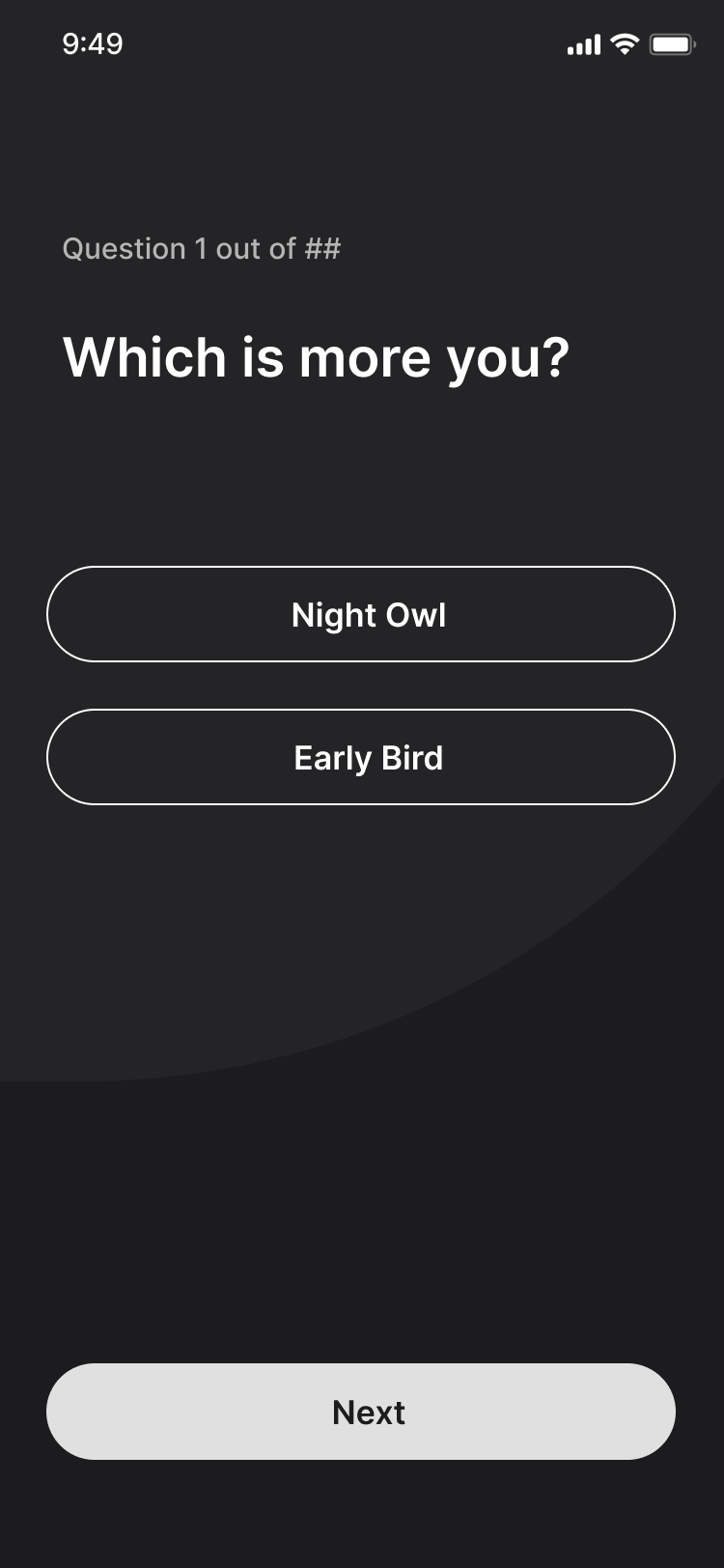
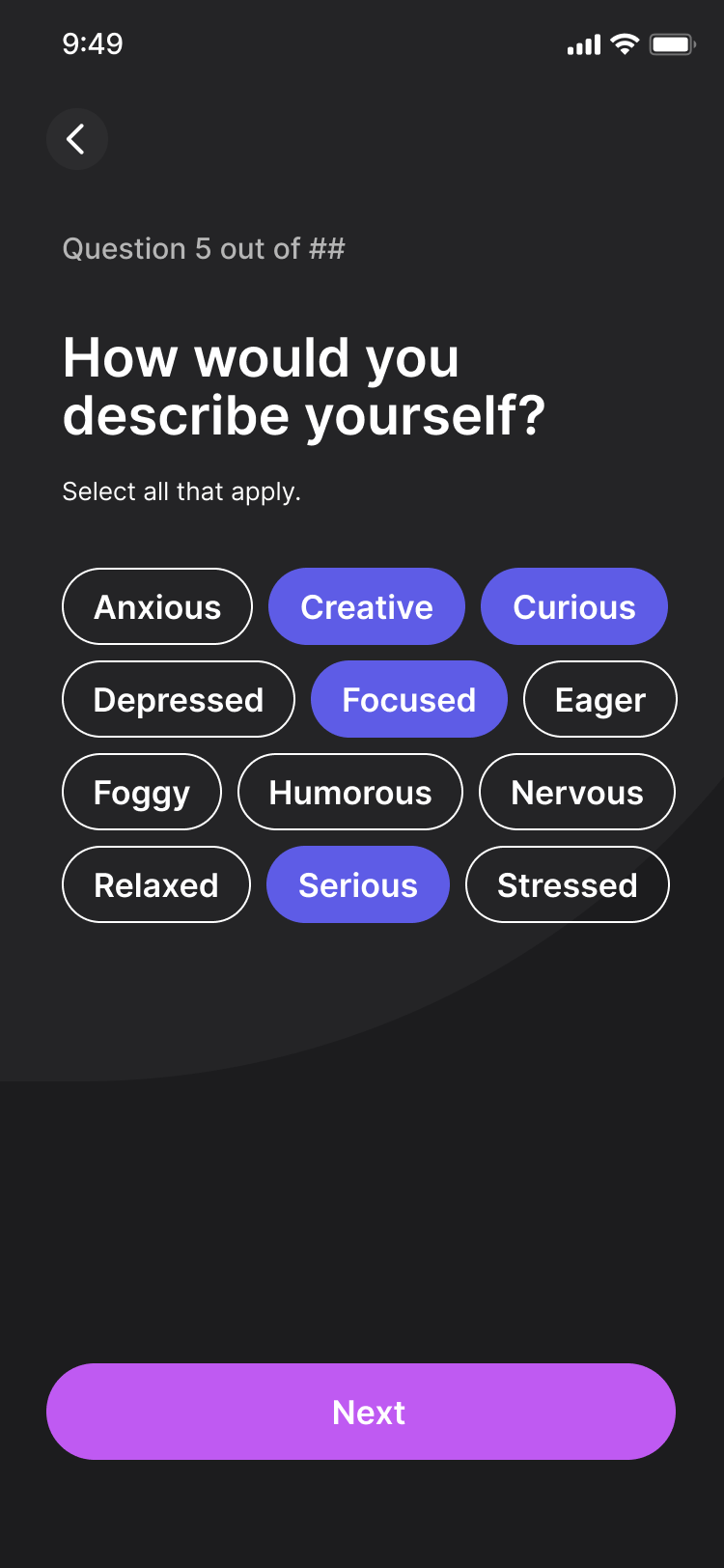
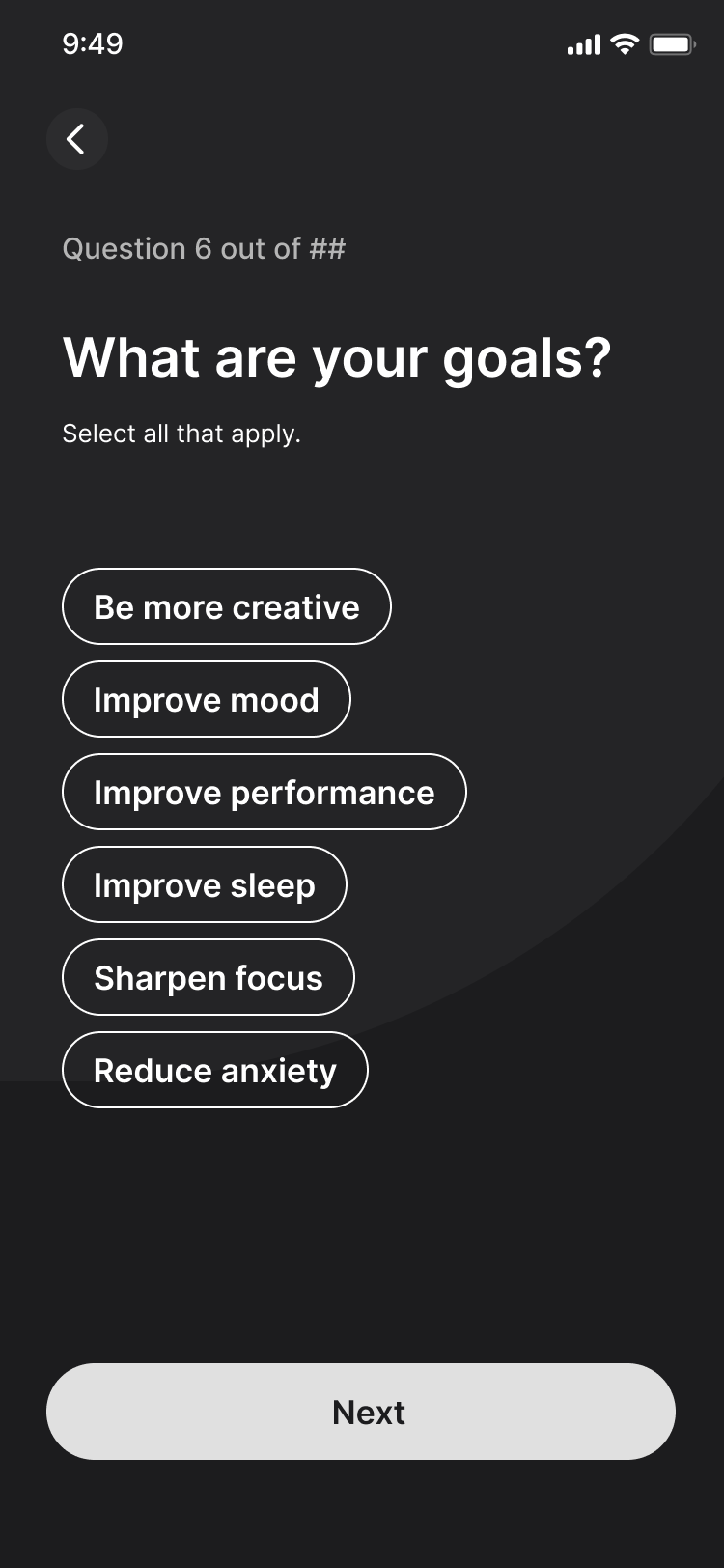
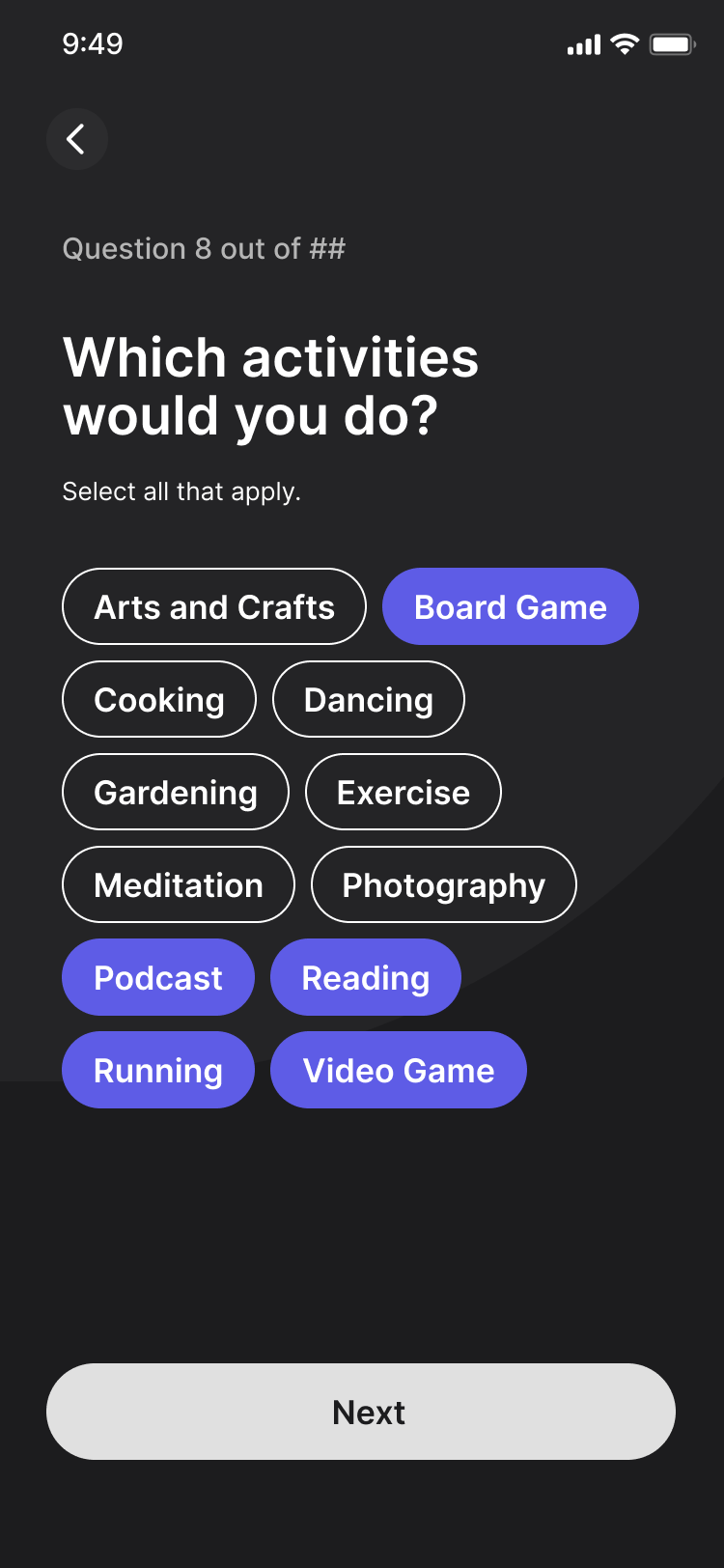
The deeper assessment unfolds across eight questions — moving from binary personality dimensions to multi-select grids and analog sliders. Each interaction type is calibrated to the data it captures: chronotype, personality, self-perception, goals, focus capacity, and activity preferences.
This data seeds the recommendation engine. By the time the assessment completes, the app has enough signal to generate a personalized 2-week training program.

Turning neural signals into something you can feel
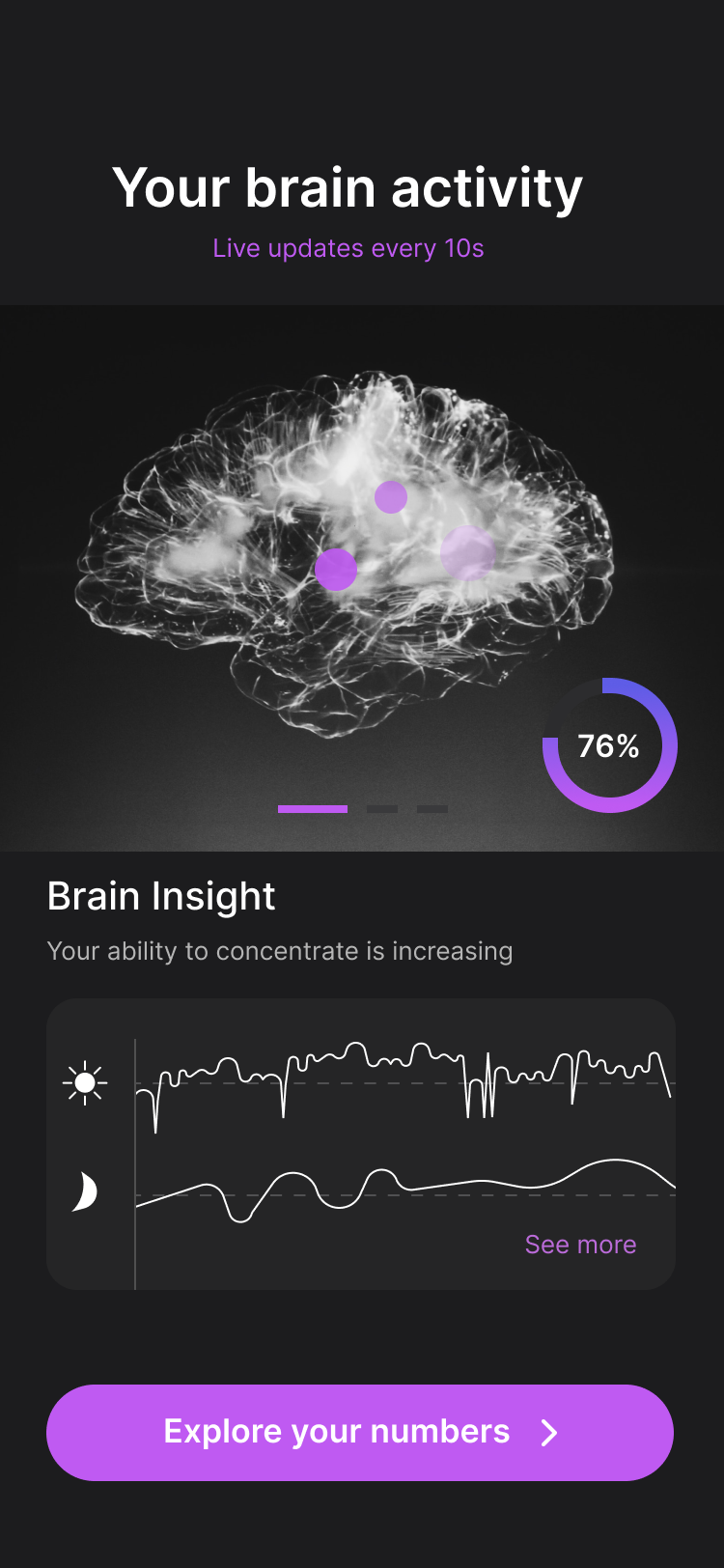
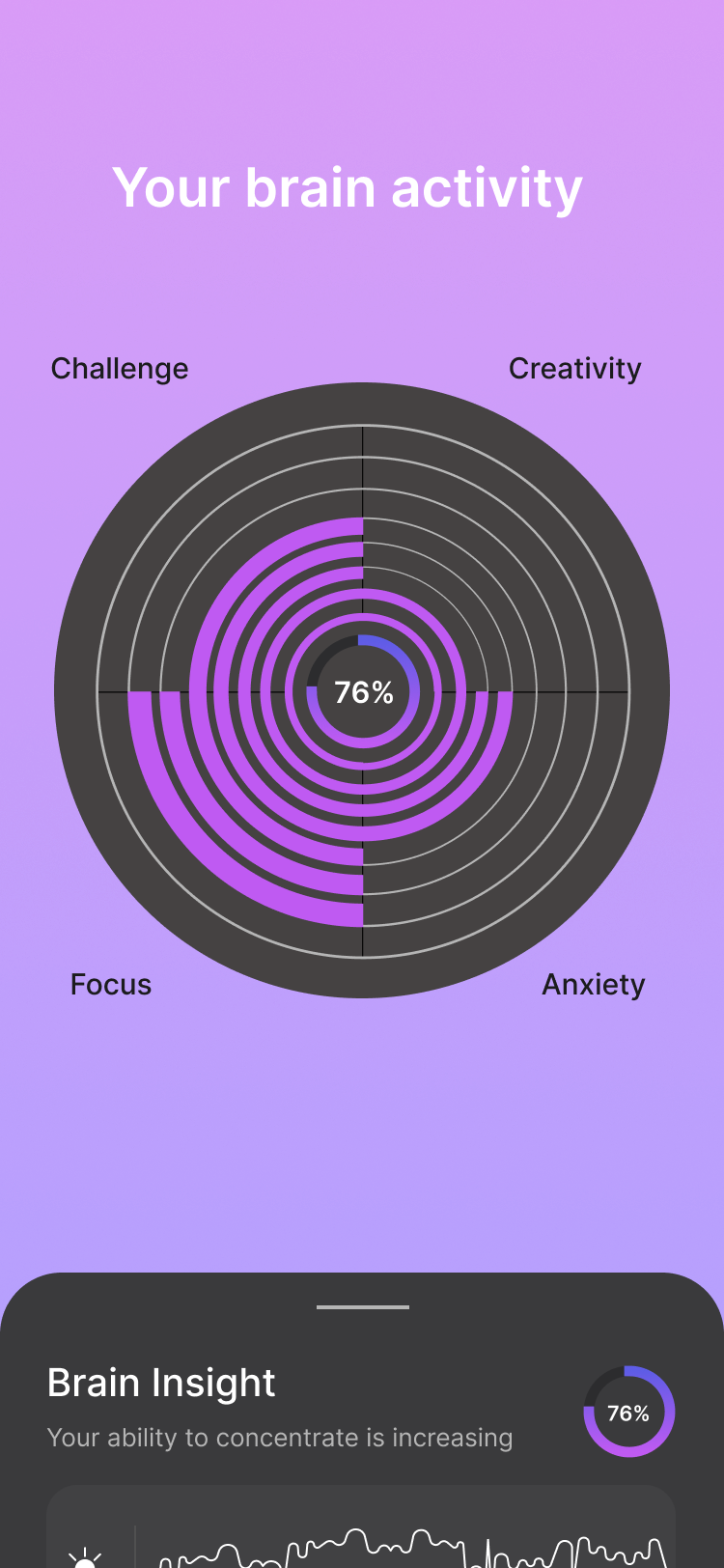
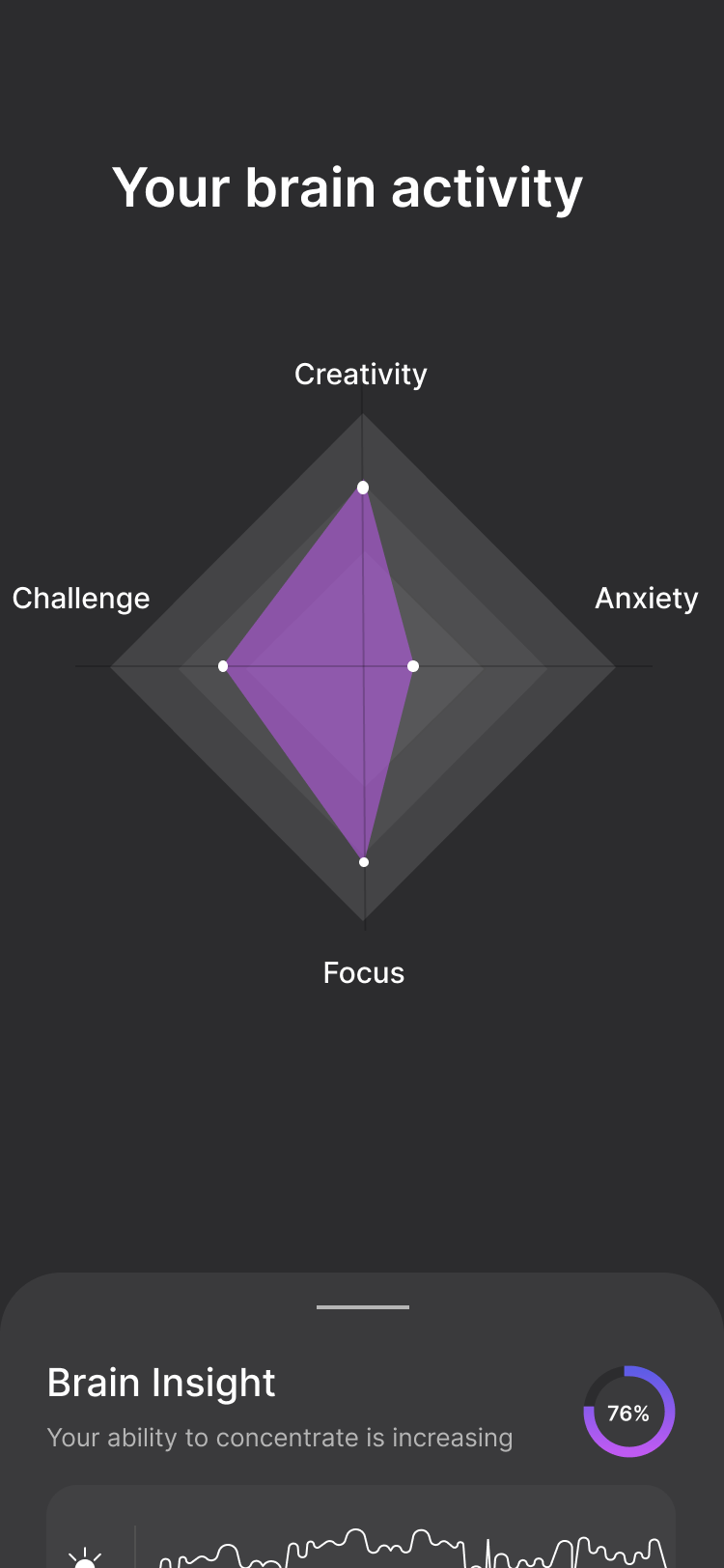
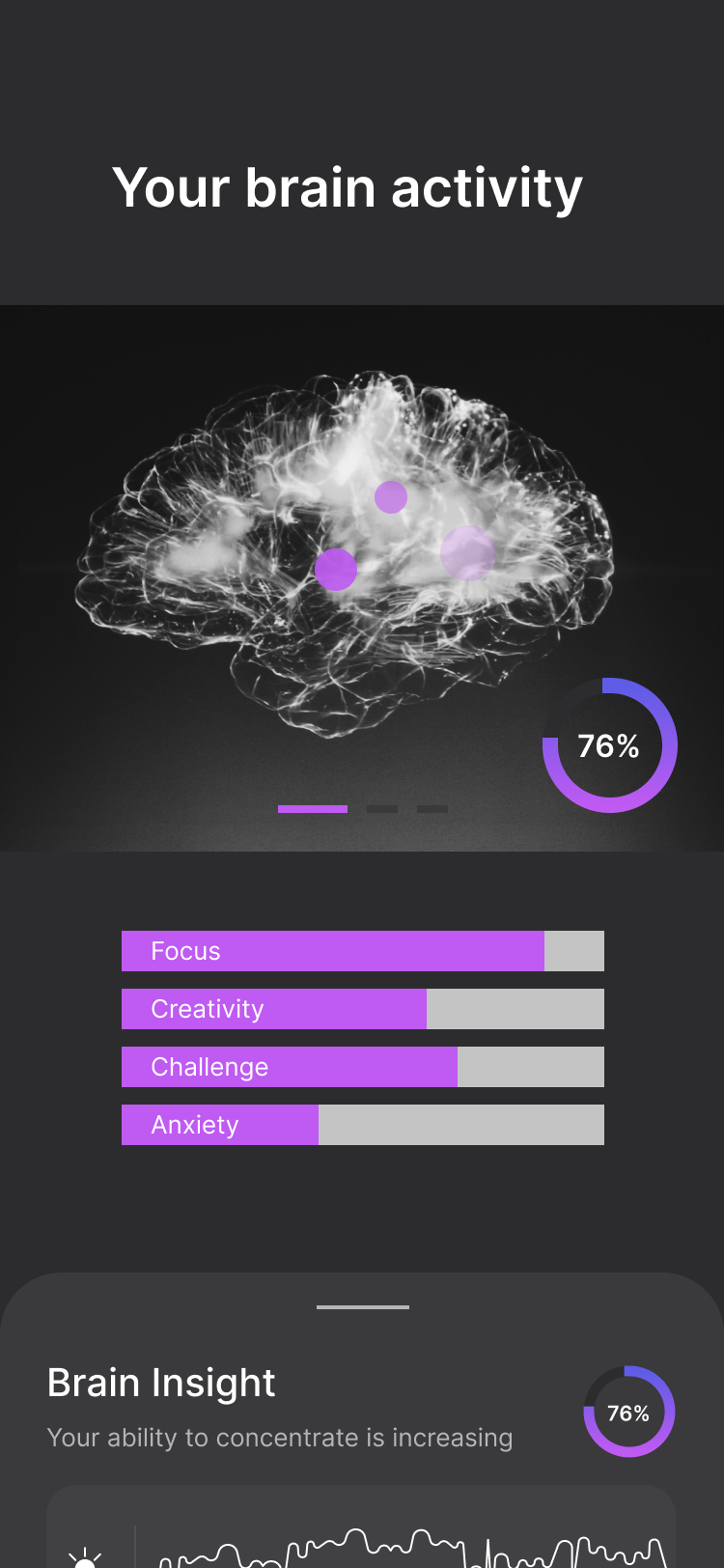
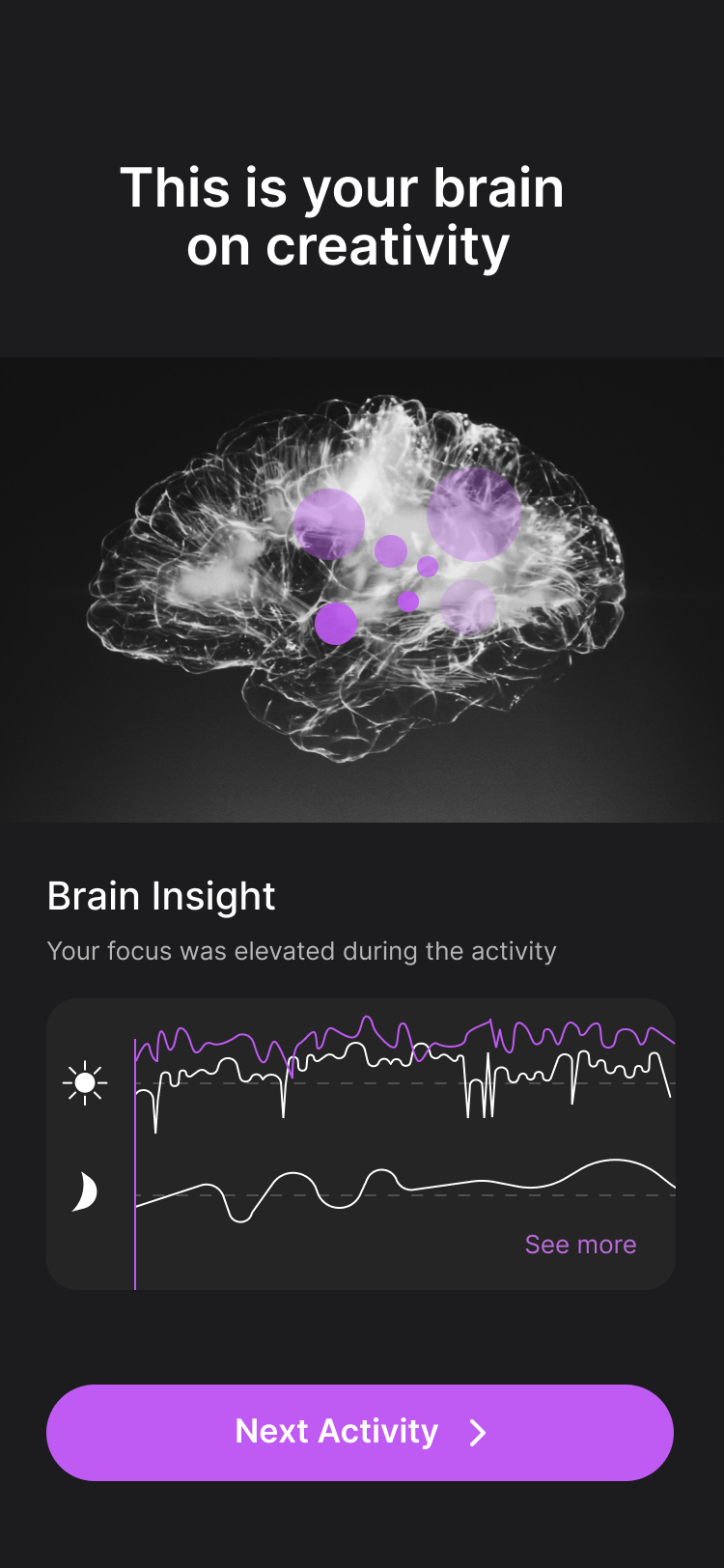
This was the core design challenge: how do you make EEG data legible to someone who isn’t a neuroscientist? We explored multiple visualization approaches — from radar charts mapping four cognitive dimensions, to 3D brain renderings with activity hotspots, to simple bar breakdowns.
Each approach served a different context. The radar chart works for at-a-glance brain profiles, the 3D rendering creates an emotional connection to the data, and the bar charts support comparison across sessions.
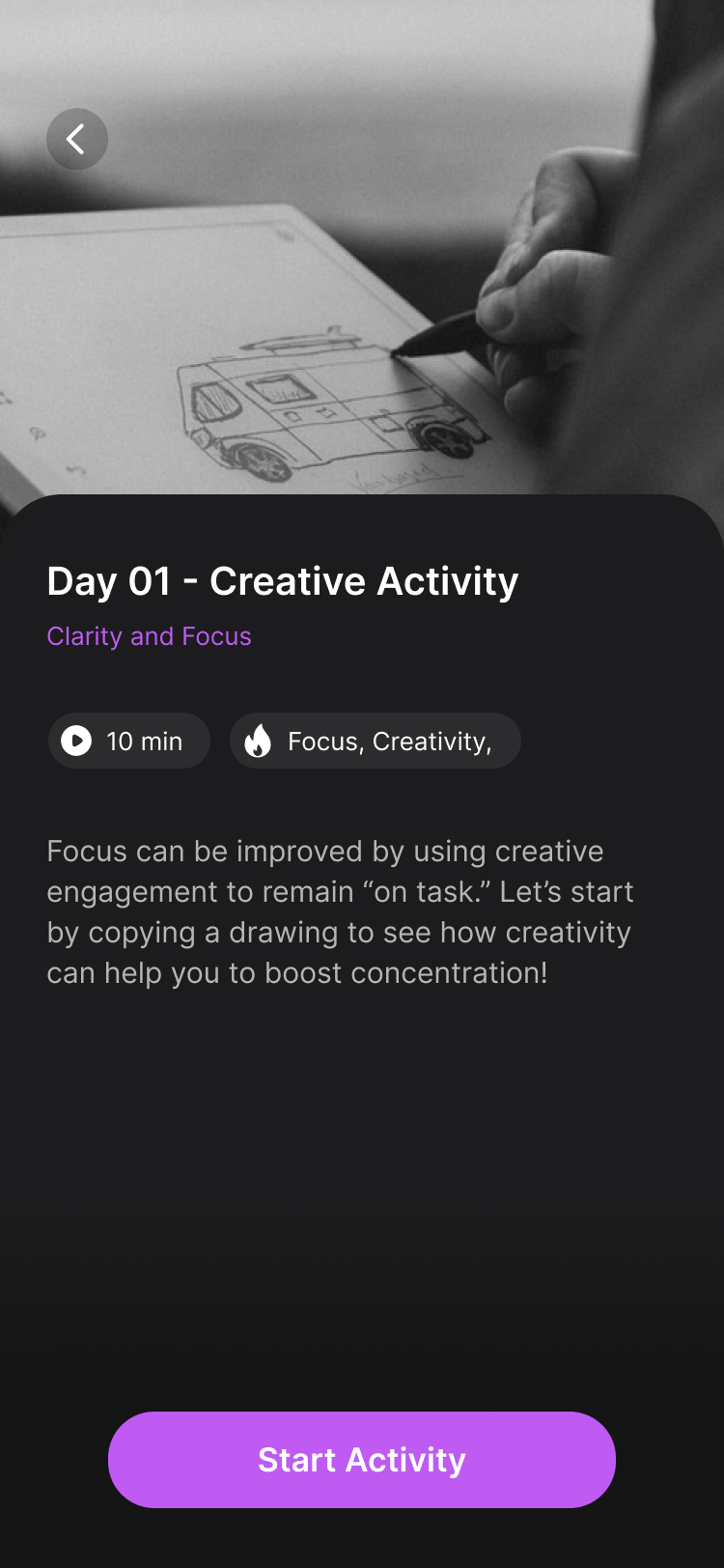
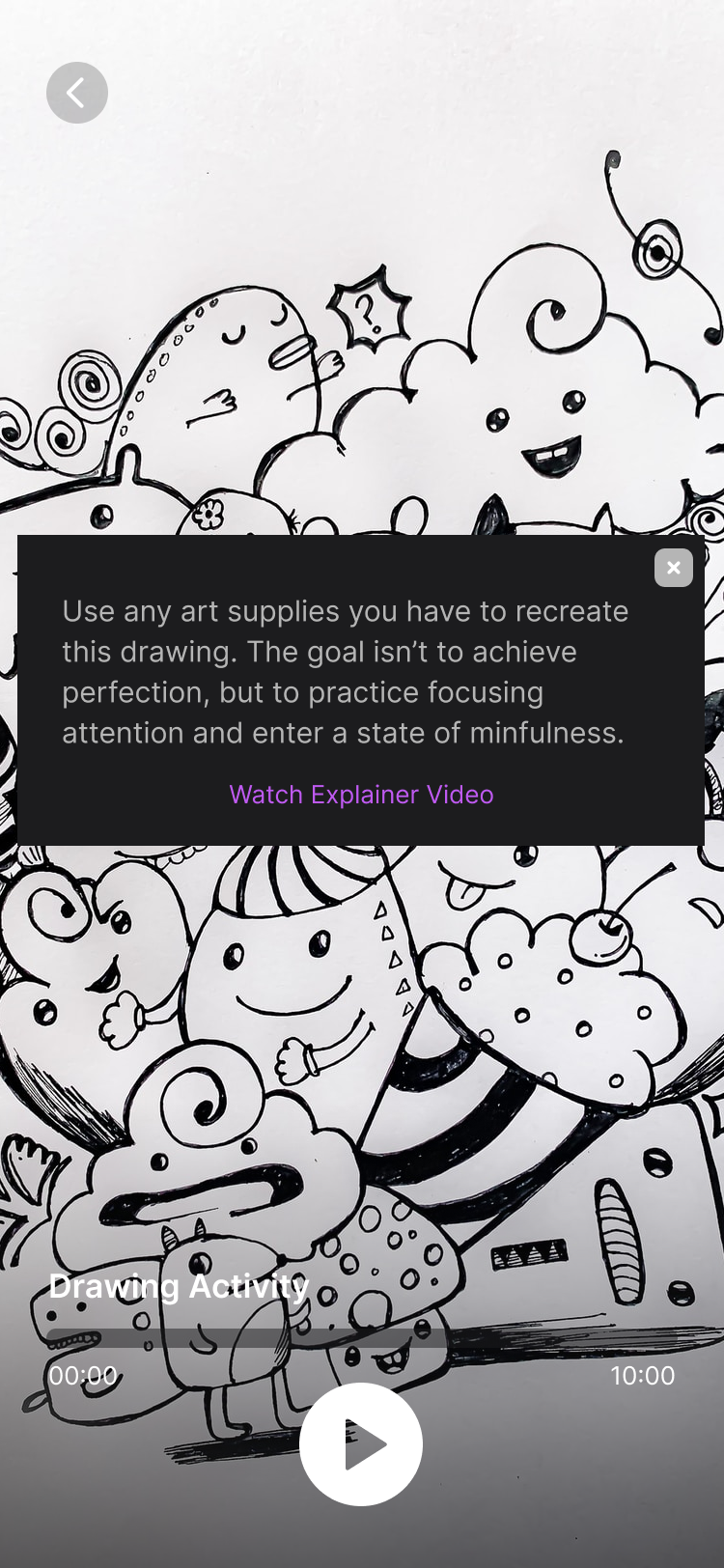
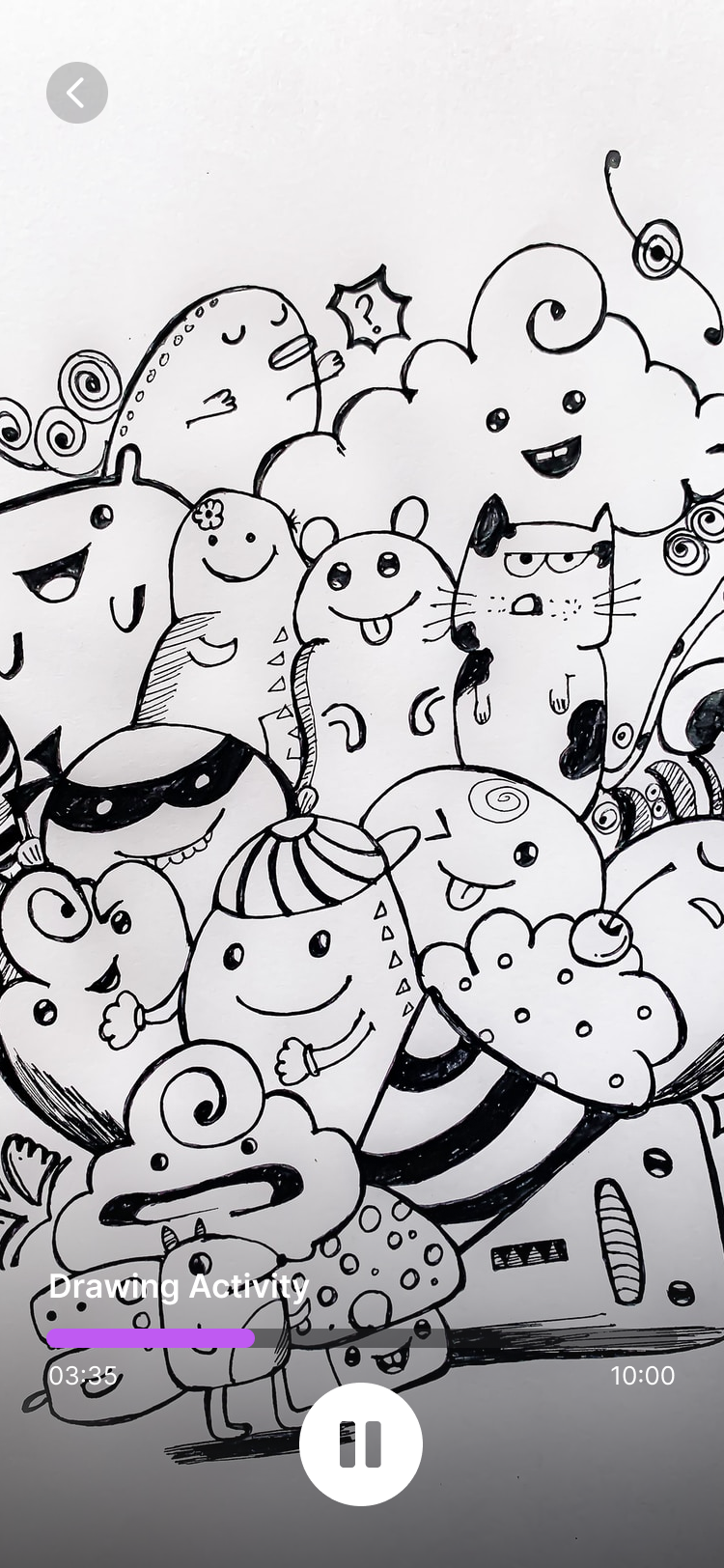
Structured brain training through creative exercises
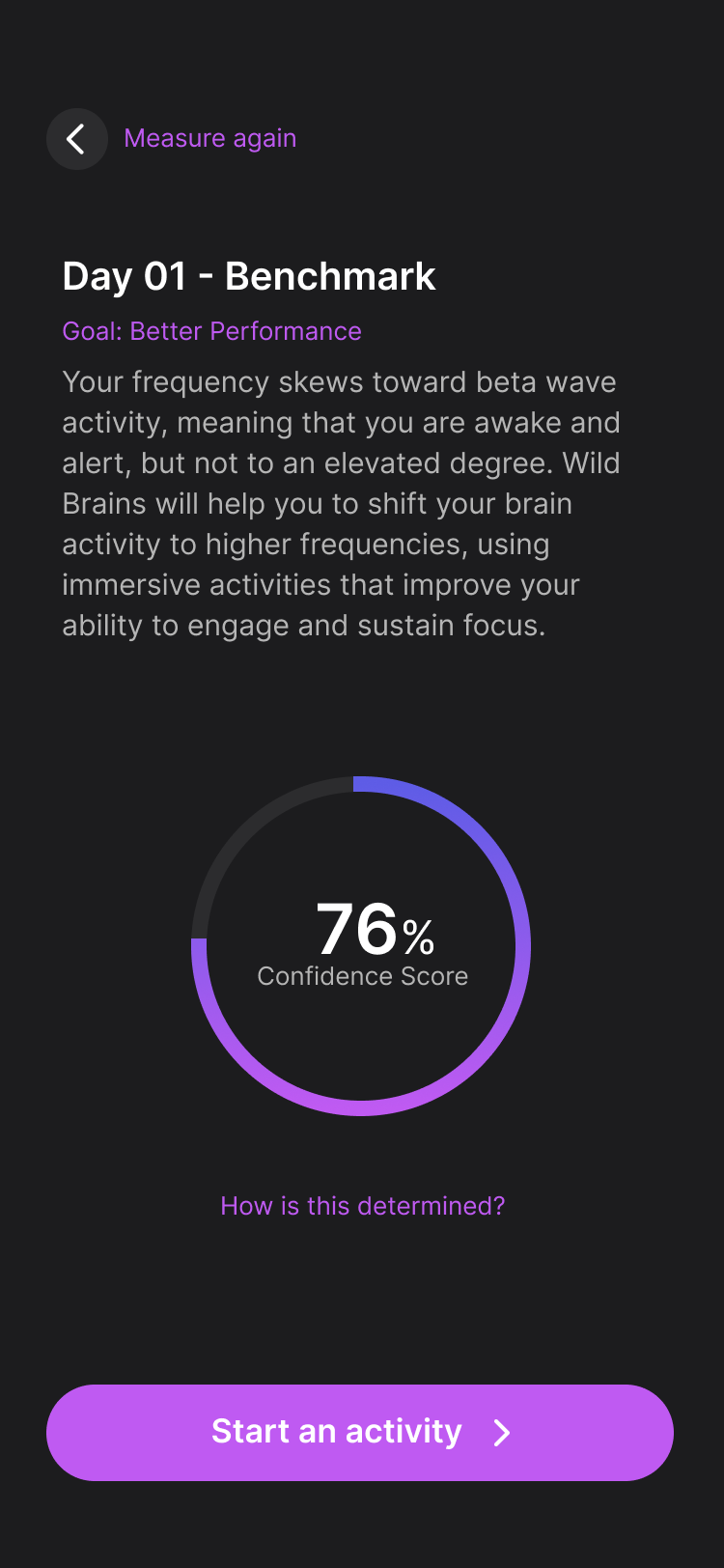
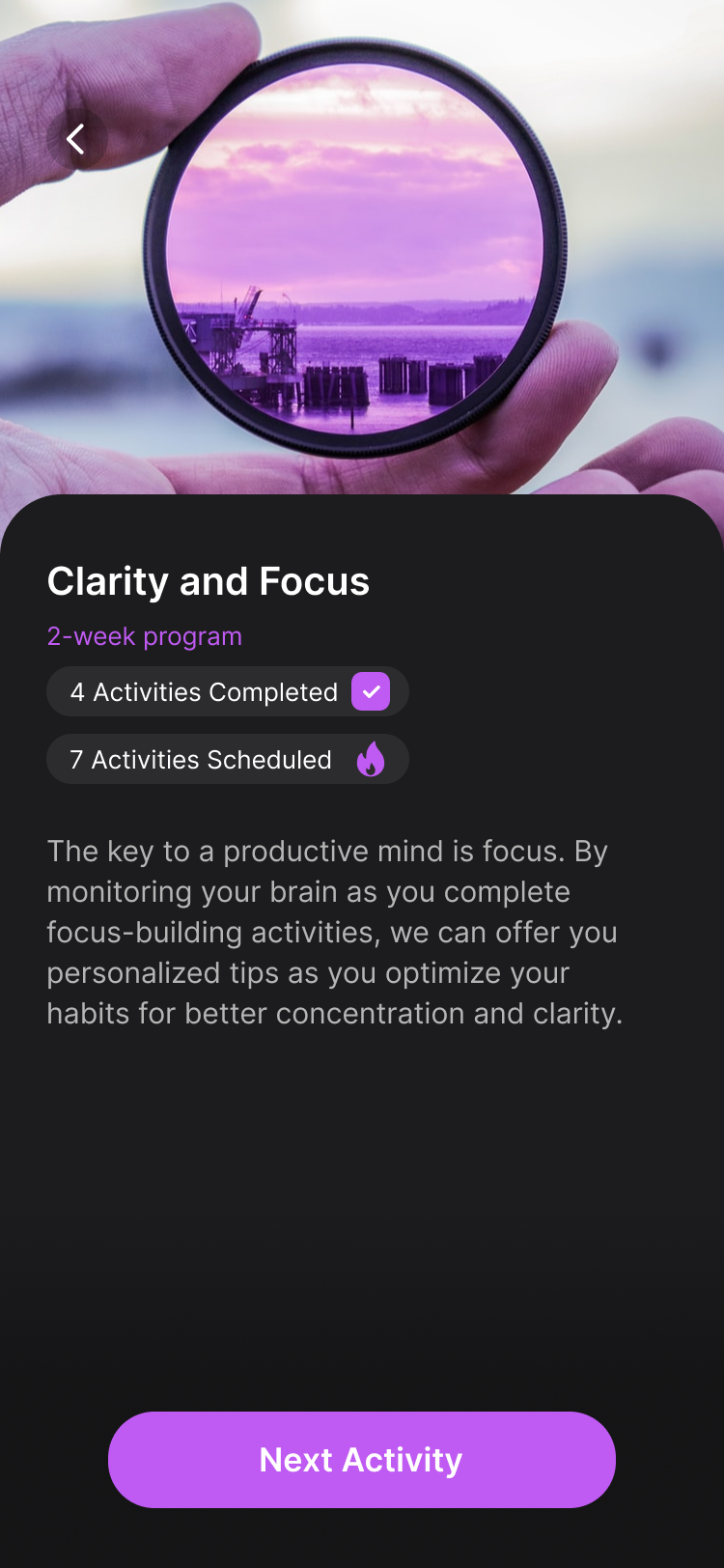
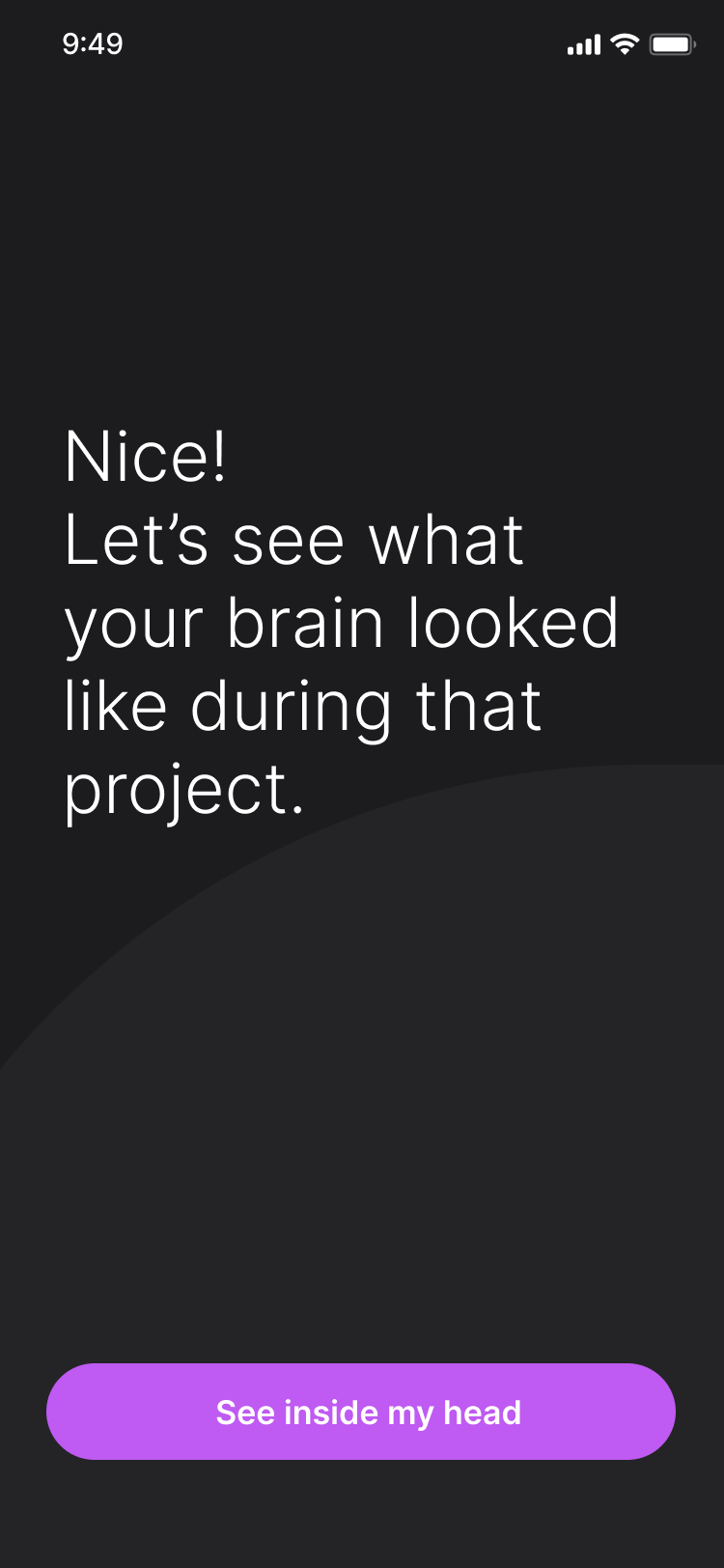
Training programs are the core engagement loop — structured 2-week curricula of daily activities calibrated to the user’s brain profile. The headband captures EEG data during each exercise, then reveals what the brain was doing afterward — creating a feedback loop between effort and neural response.
A daily loop that makes progress visible
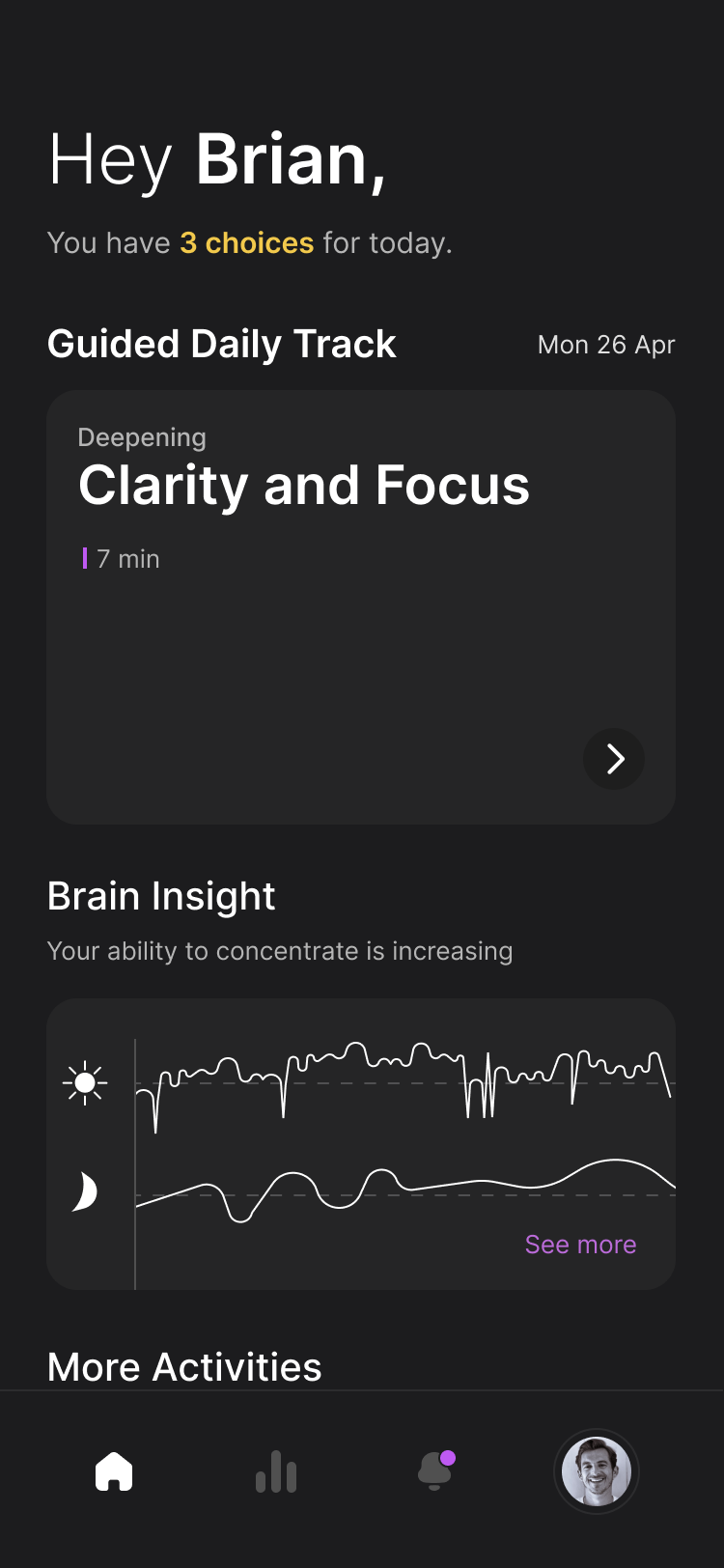
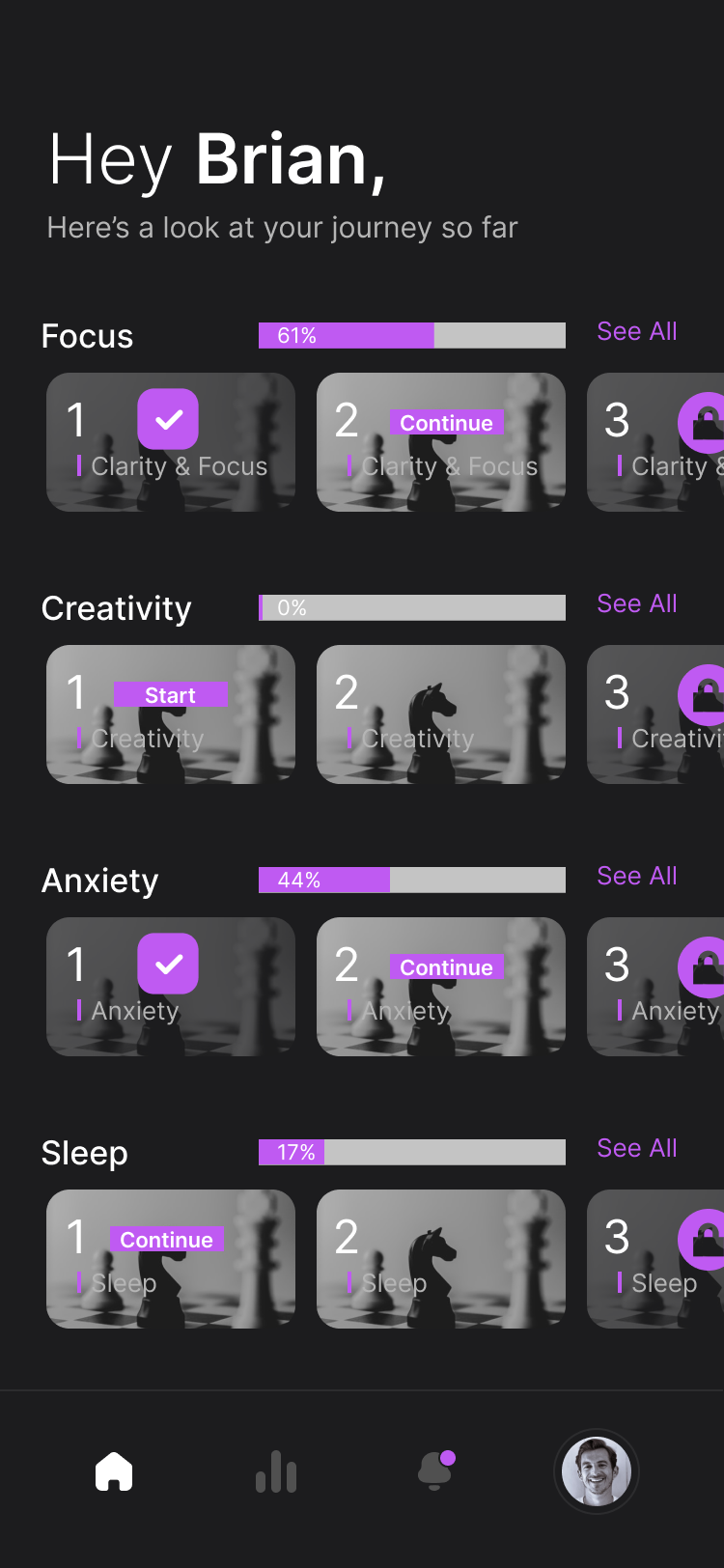
The home screen anchors the daily experience — surfacing the active training track, brain insight score, and weekly progress. The progress view maps the user’s journey across four dimensions — Focus, Creativity, Anxiety, and Sleep — turning abstract cognitive improvement into a visible trajectory.
From funded prototype to Atlas
The design work I delivered — end-to-end initial UX and UXR, the original UI, and the investor pitch deck — became the foundation of Wild Brains’ product vision during their seed round. The comprehensive screen designs, data visualization system, and personalization framework demonstrated a clear, compelling product experience, and the pitch deck helped secure funding and the opportunity to scale.
By borrowing engagement patterns from fitness and wellness apps, we made brain training feel approachable. By investing in data visualization, we made the science feel real. The combination gave investors confidence that this wasn’t just a device — it was a daily habit.
The company continues today as Atlas, building a nanotechnology-powered brain wearable — currently with an active waitlist at atlasmankind.com.
My contribution
Product Discovery & Definition
Initial UX & UXR
Original UI Design
Investor Pitch Deck
Data Visualization
Collaborators
Founder
Engineering Team
Tools
Figma
Next project
Content Studio
Enterprise Content Platform